
On June 29, 2018, OPPO officially launched the Find X. The device features OPPO Facekey 3D technology, offering far superior security compared to traditional facial recognition technology. It is powered by a Qualcomm Snapdragon 845 processor. The phone uses third-generation AIE artificial intelligence technology and supports VOOC flash charging. With such advanced technological configurations, how about its workmanship? Today, we will take apart the phone to explore its internal structure and craftsmanship.
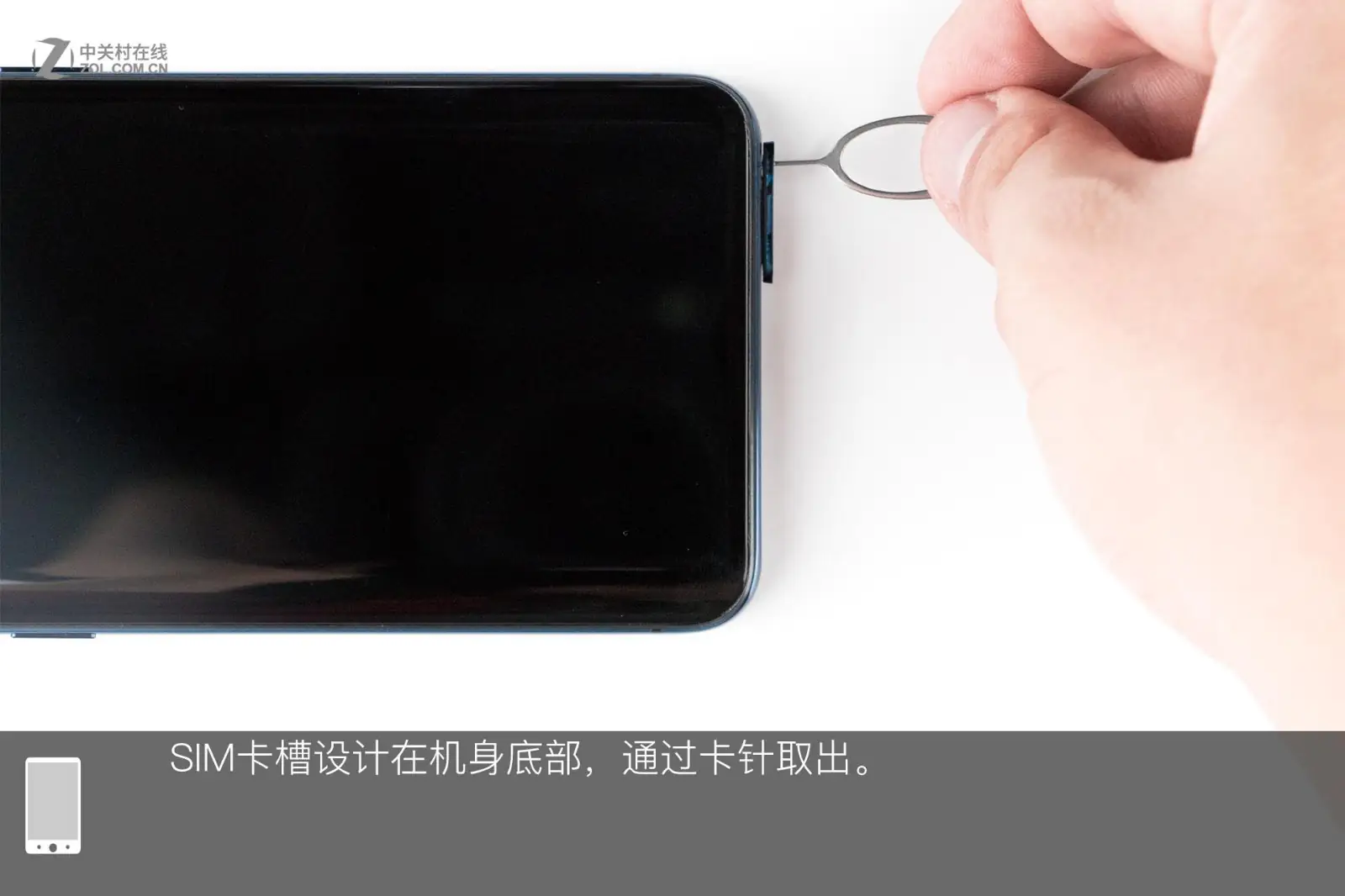
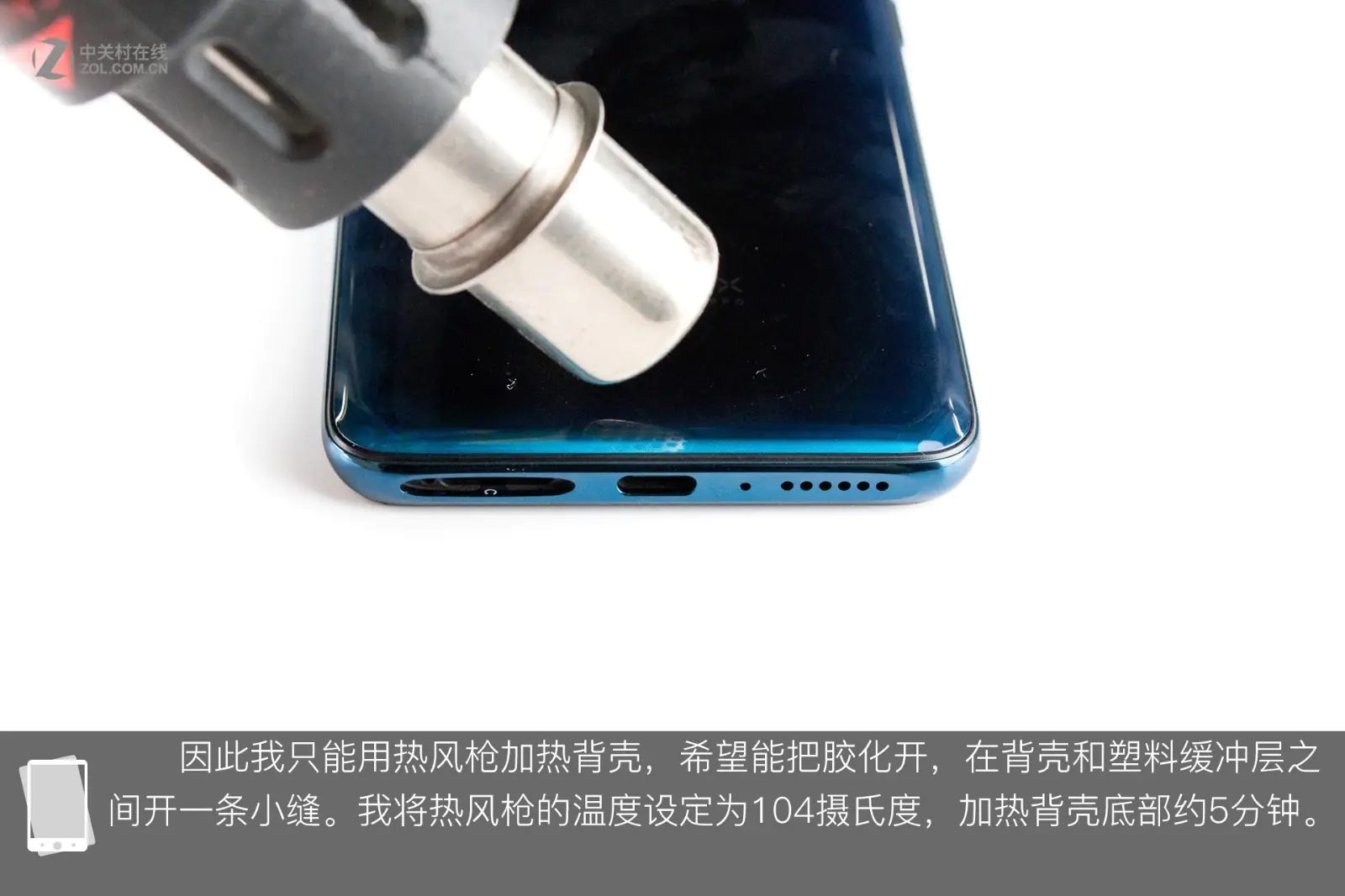
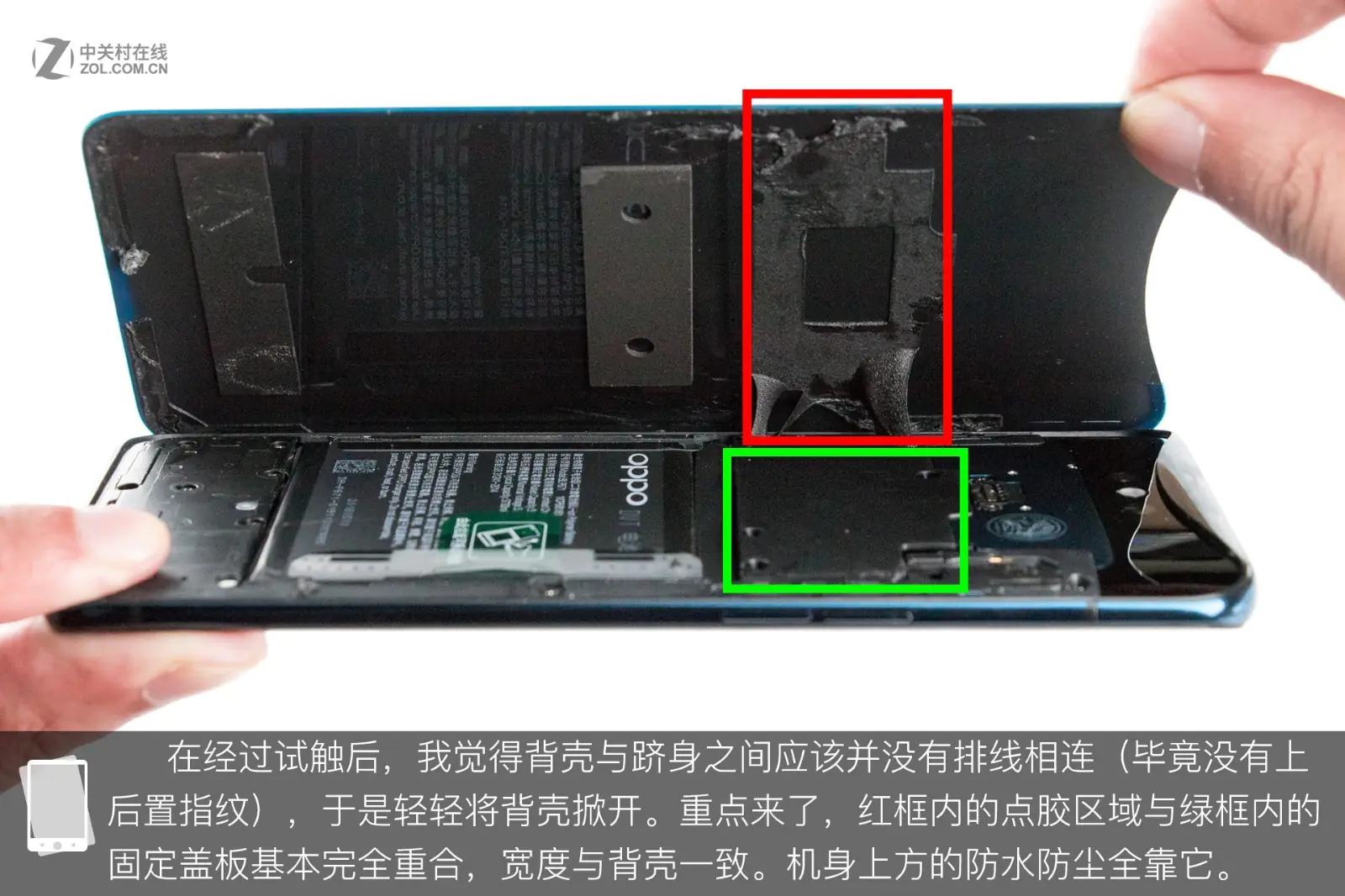
The SIM card tray is located at the bottom of the phone. Use a SIM card clip to remove it. Considering the phone’s structure, I need to heat the back cover with a heat gun to melt the adhesive, creating a gap between the back cover and the cushioning pad. I set the heat gun to 104°C and heated the back cover for about five minutes. Since there are no cables between the back cover and the phone body, I easily separated the back cover from the phone.
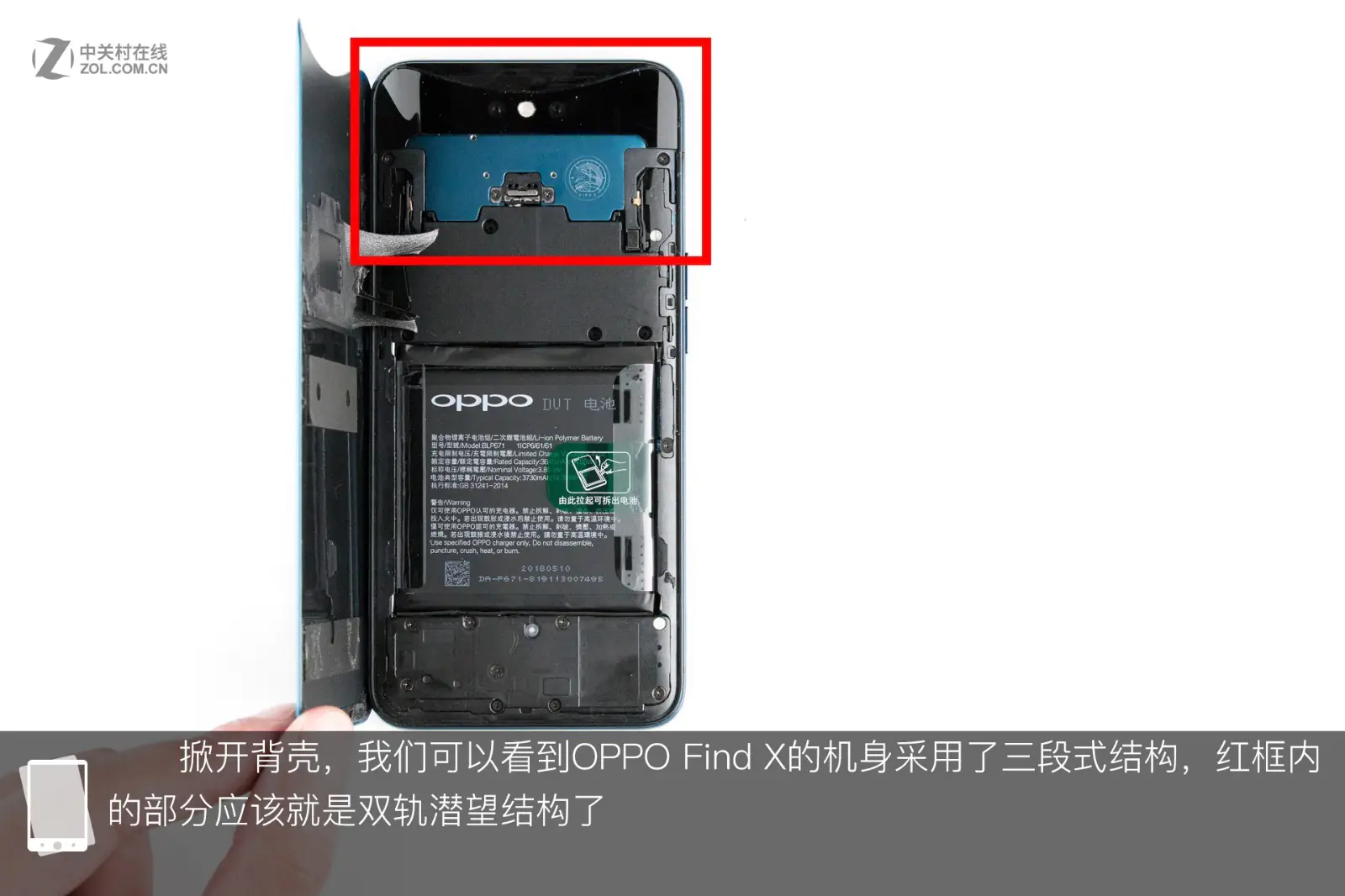
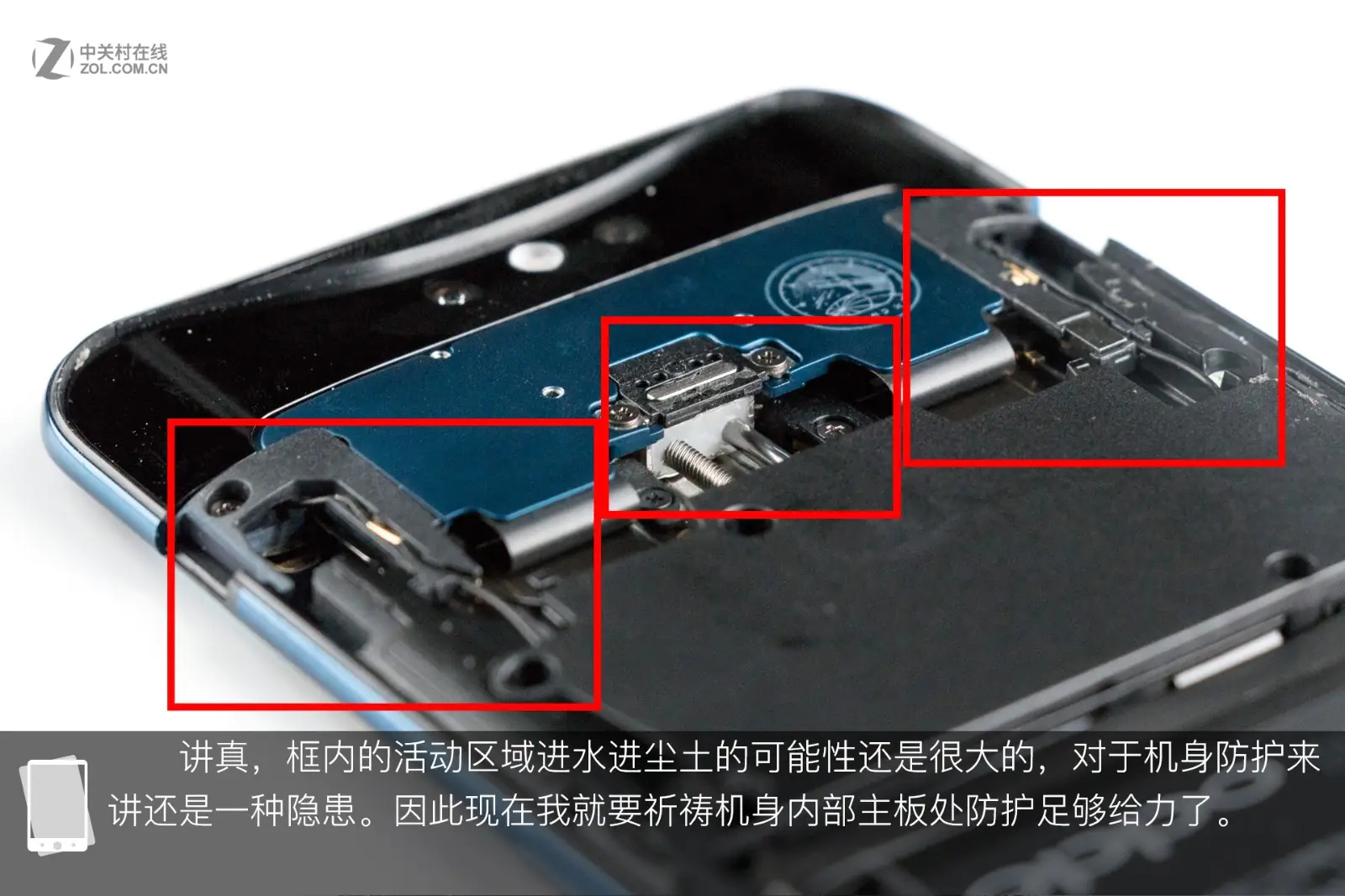
The perfect pairing of red and green components ensures excellent waterproof and dustproof performance at the top of the phone. After removing the back cover, it can be seen that the body adopts a three-section design, and the part circled in red is the dual-track periscope structure.
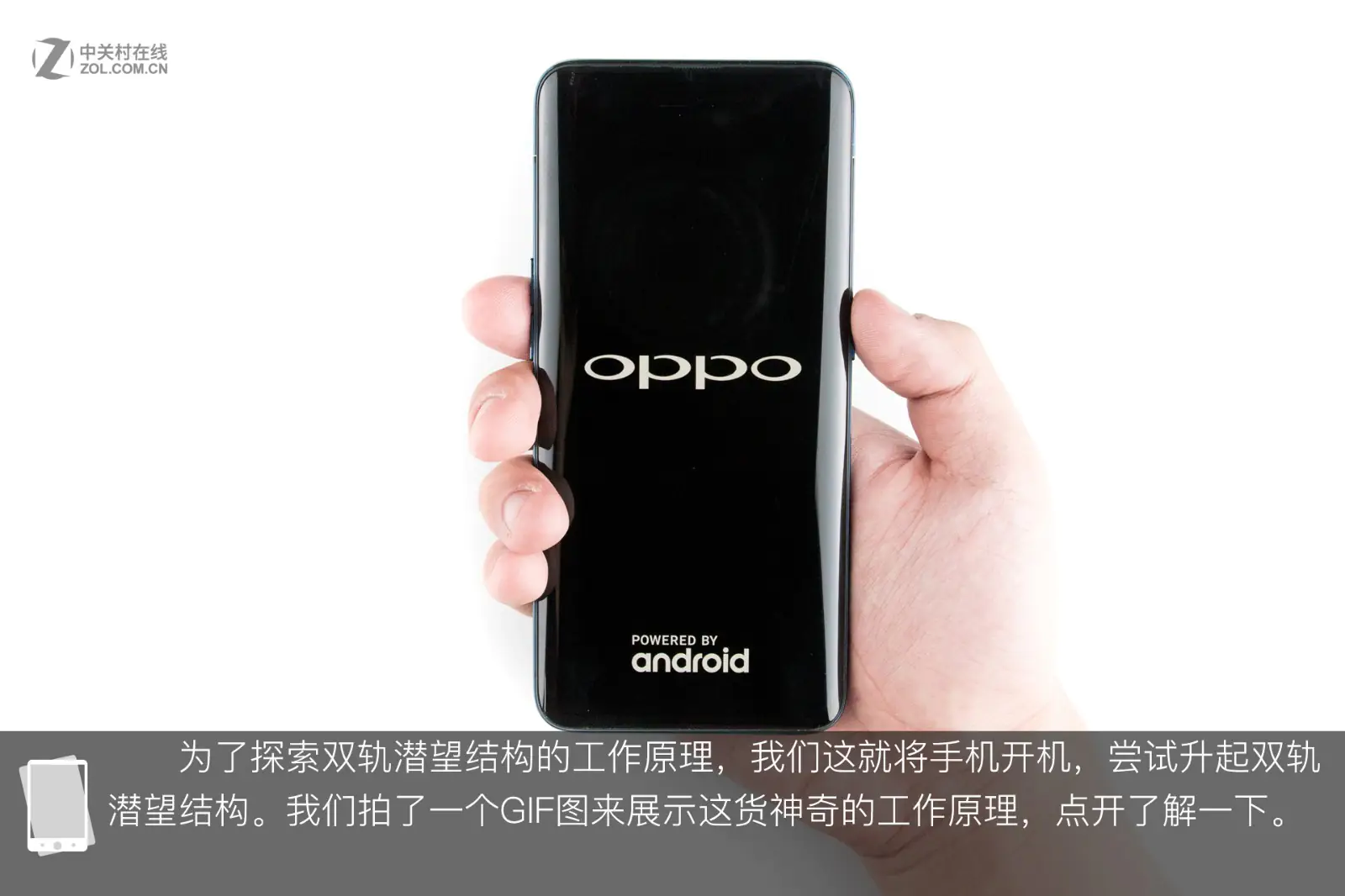
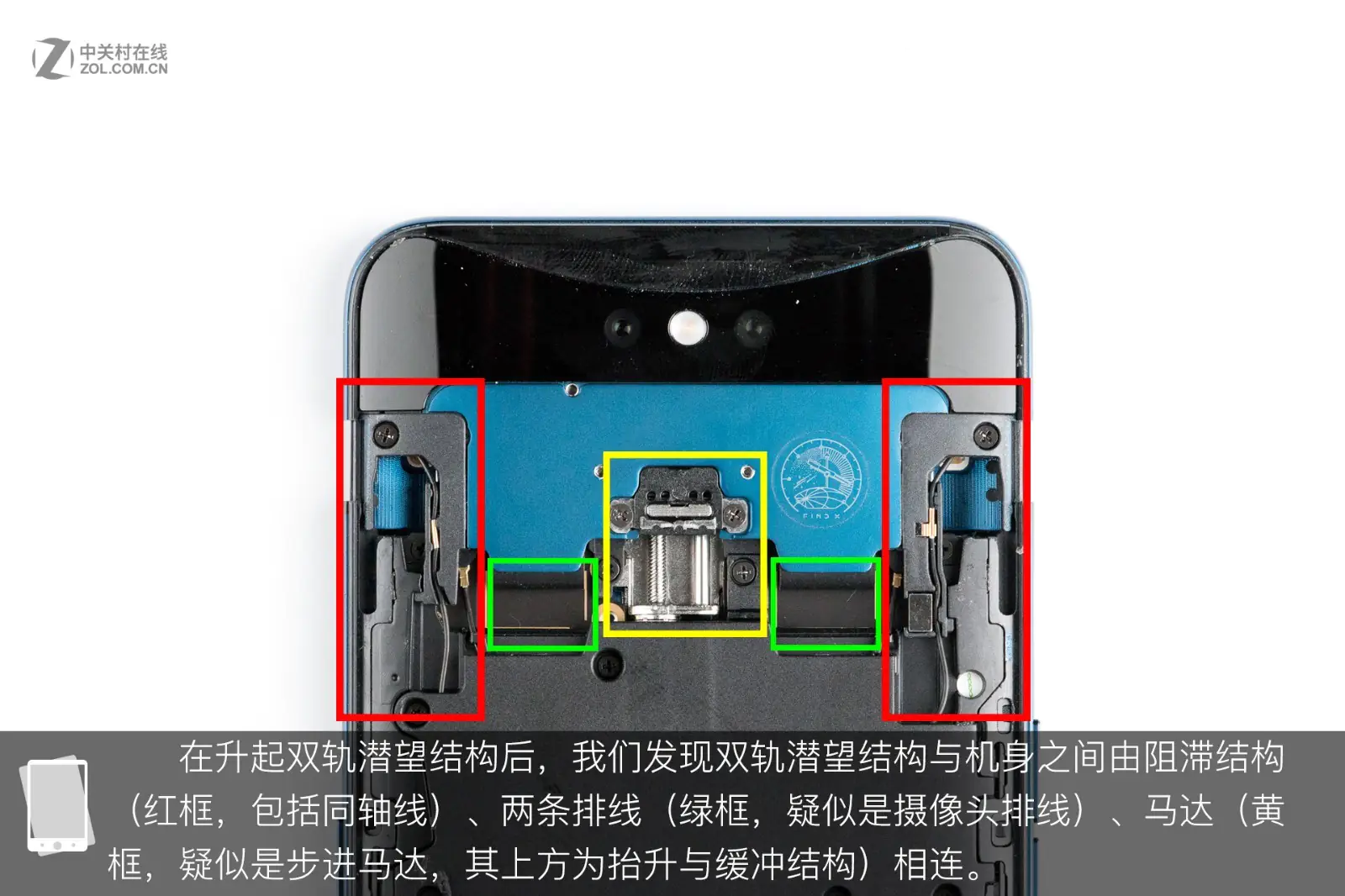
To understand how this structure works, I turned on my phone and tried to get it to work. This GIF fully demonstrates the working process of the dual-truck periscope structure. When this structure is in operation, the block components circled in red, the motor circled in yellow, and the two cables circled in green are visible.
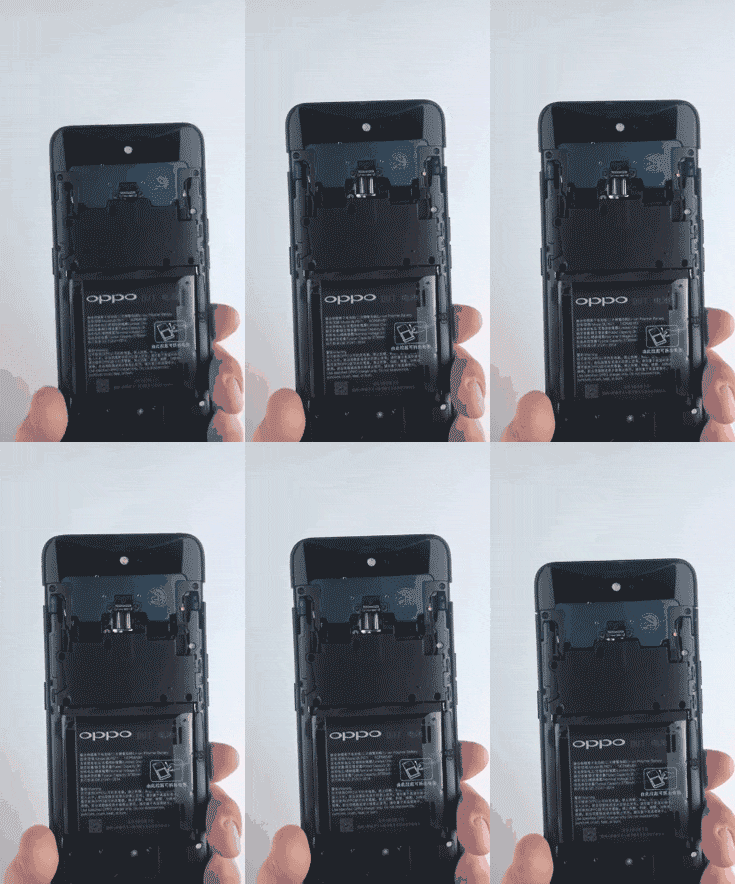
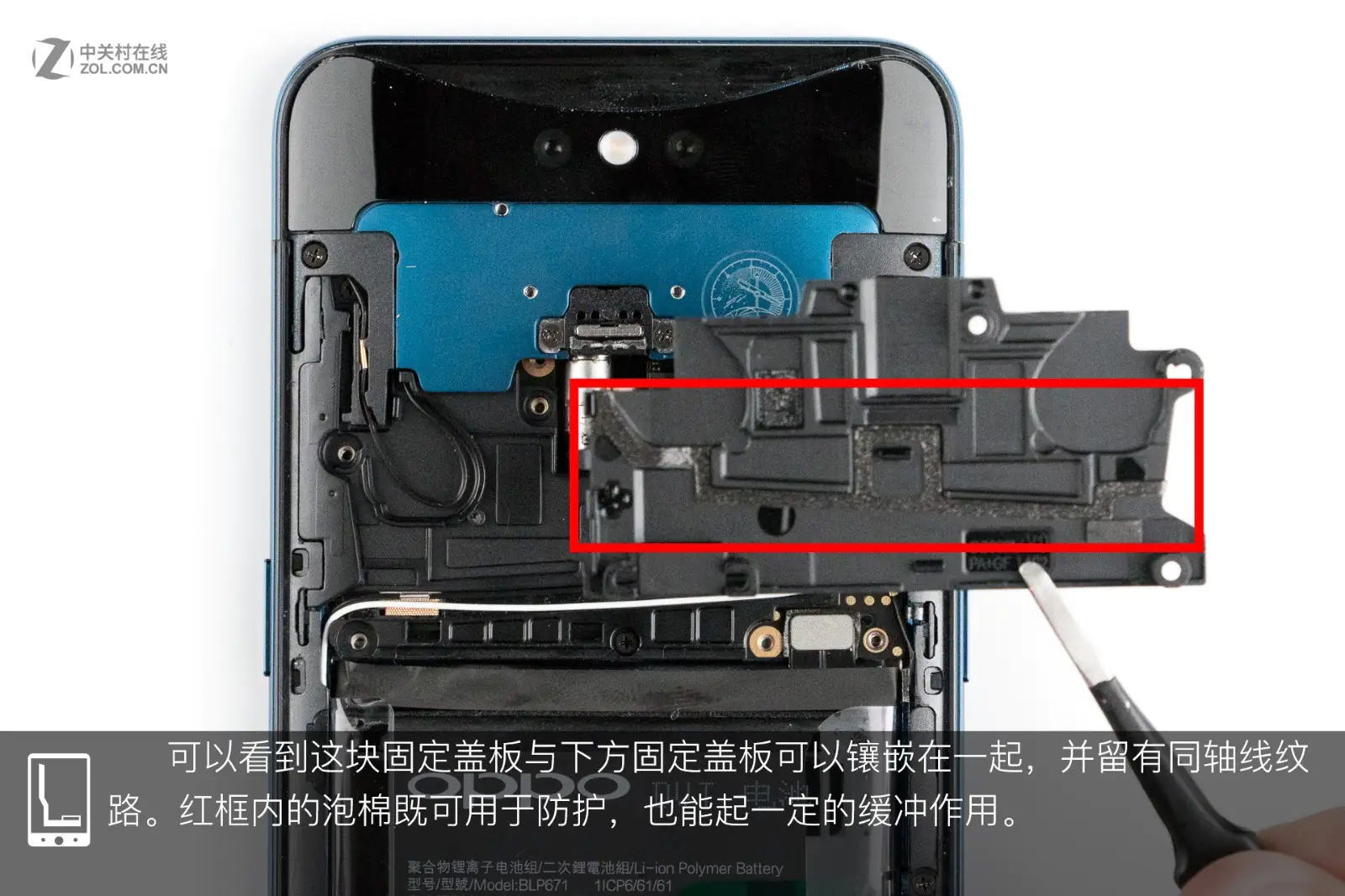
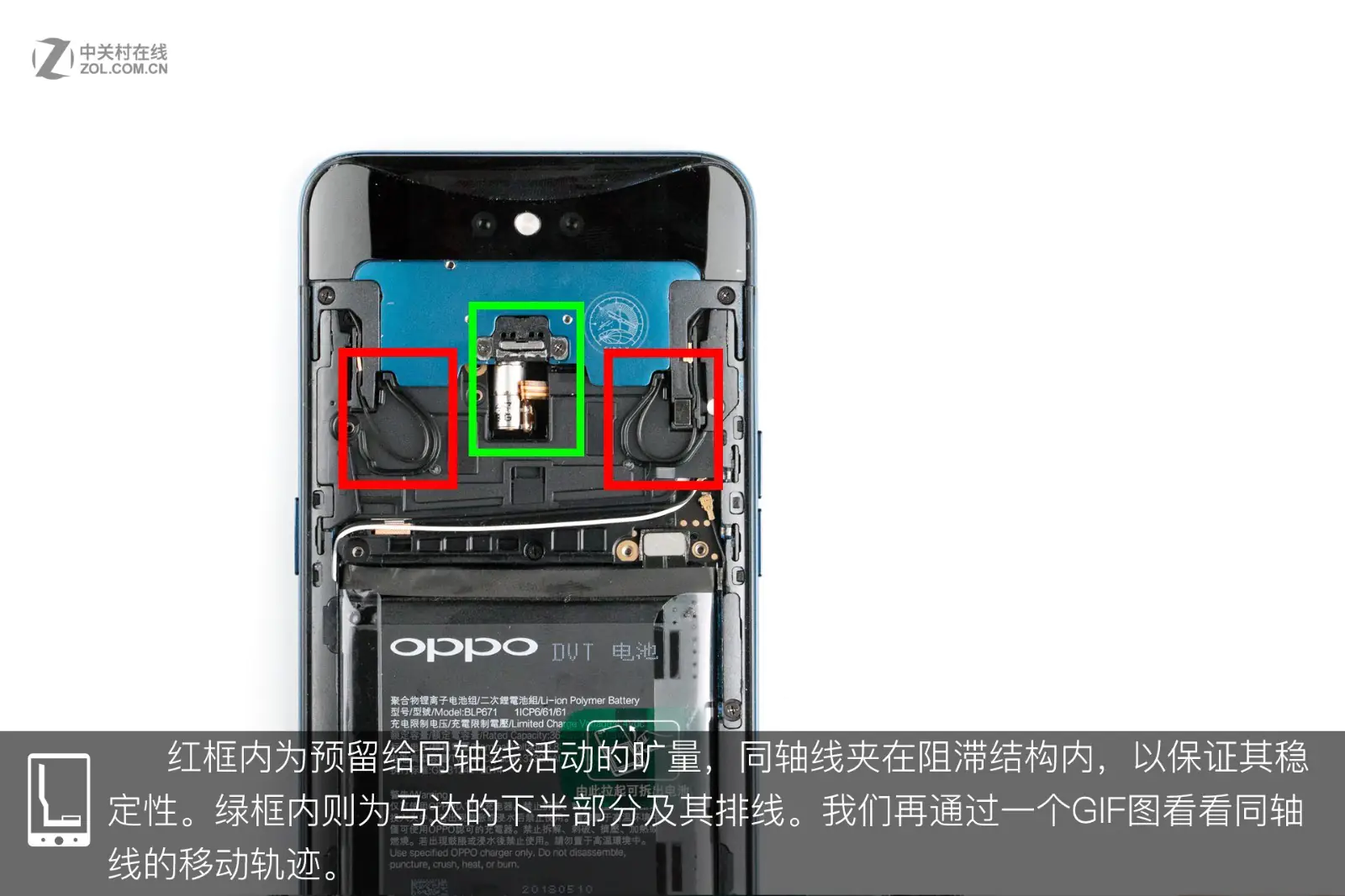
We can see that the cover plate can be embedded into the bottom cover plate. The foam material in the red-circled area serves as a buffer. The reserved space in the red-circled area is for the movement of the coaxial cable. The green-circled area is the lower part of the motor and its cable.
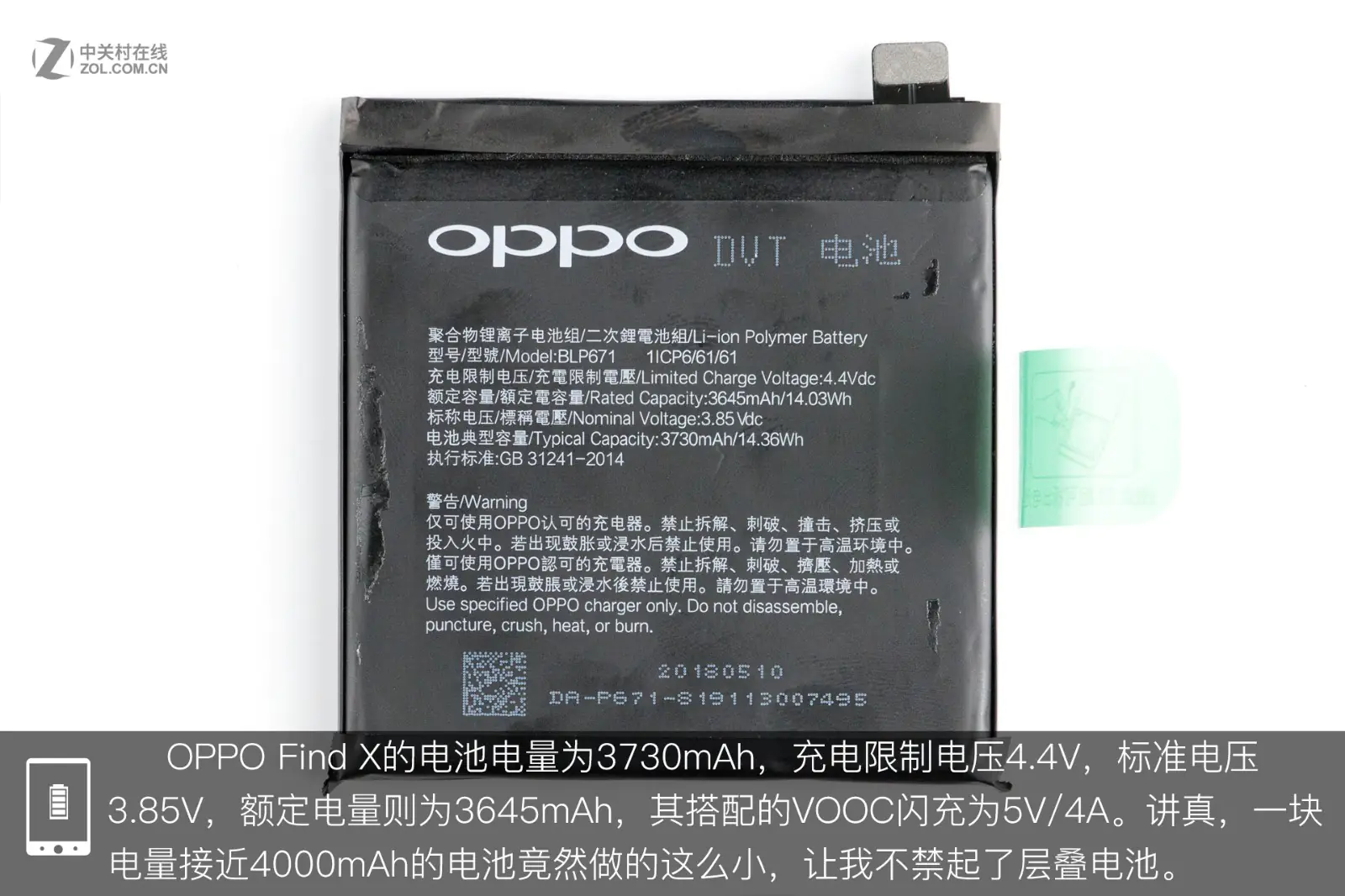
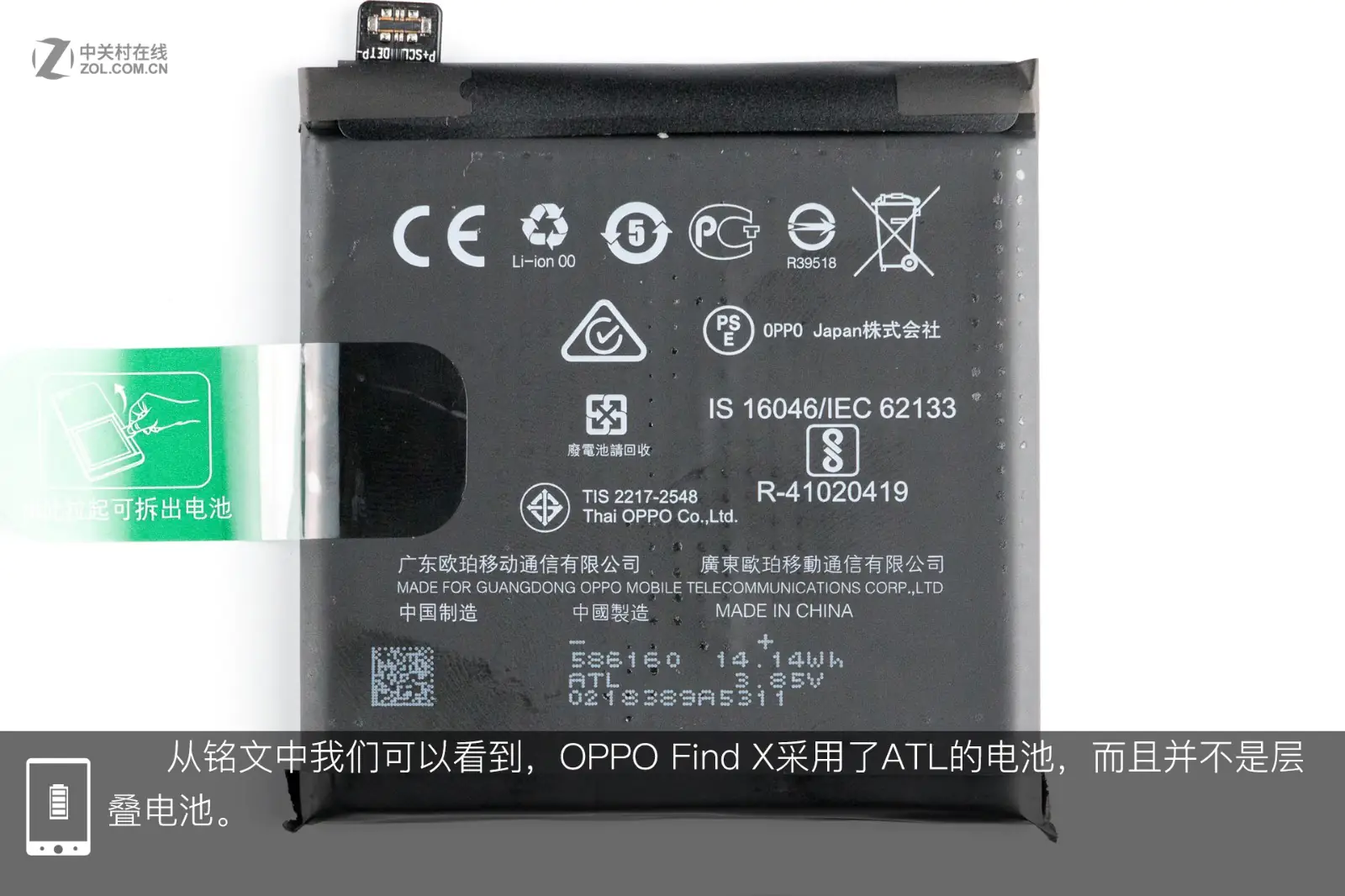
The phone comes with a 3730mAh battery. Its limited charge voltage is 4.4V, the nominal voltage is 3.85V, and the rated capacity is 3645mAh. Additionally, it supports 20W VOOC flash charging. From the back of the battery, we can see that this battery cell is manufactured by ATL.
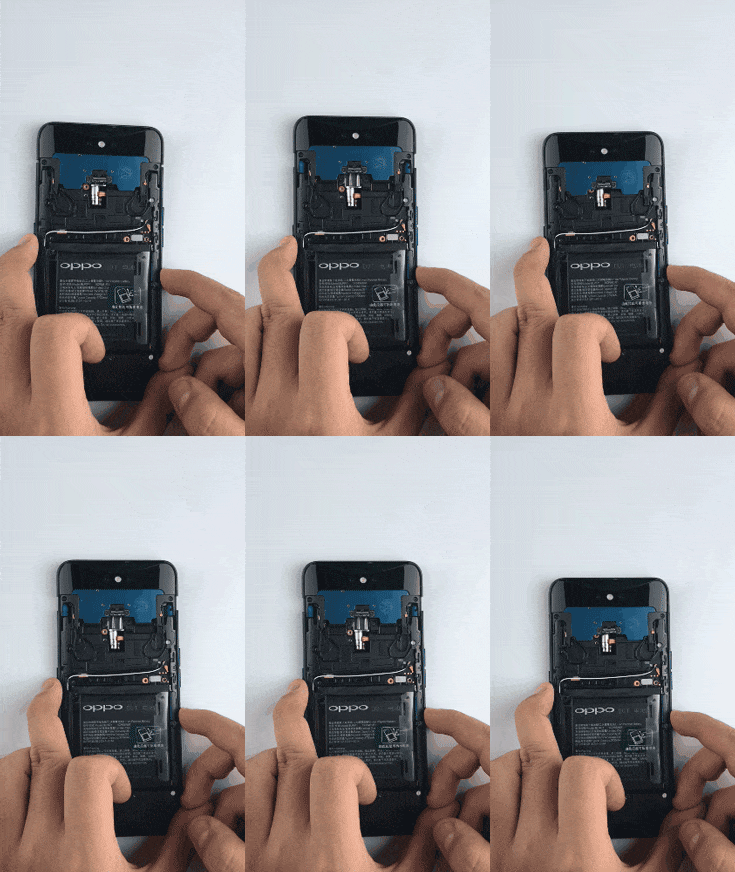
This GIF shows the movement of the coaxial cable.
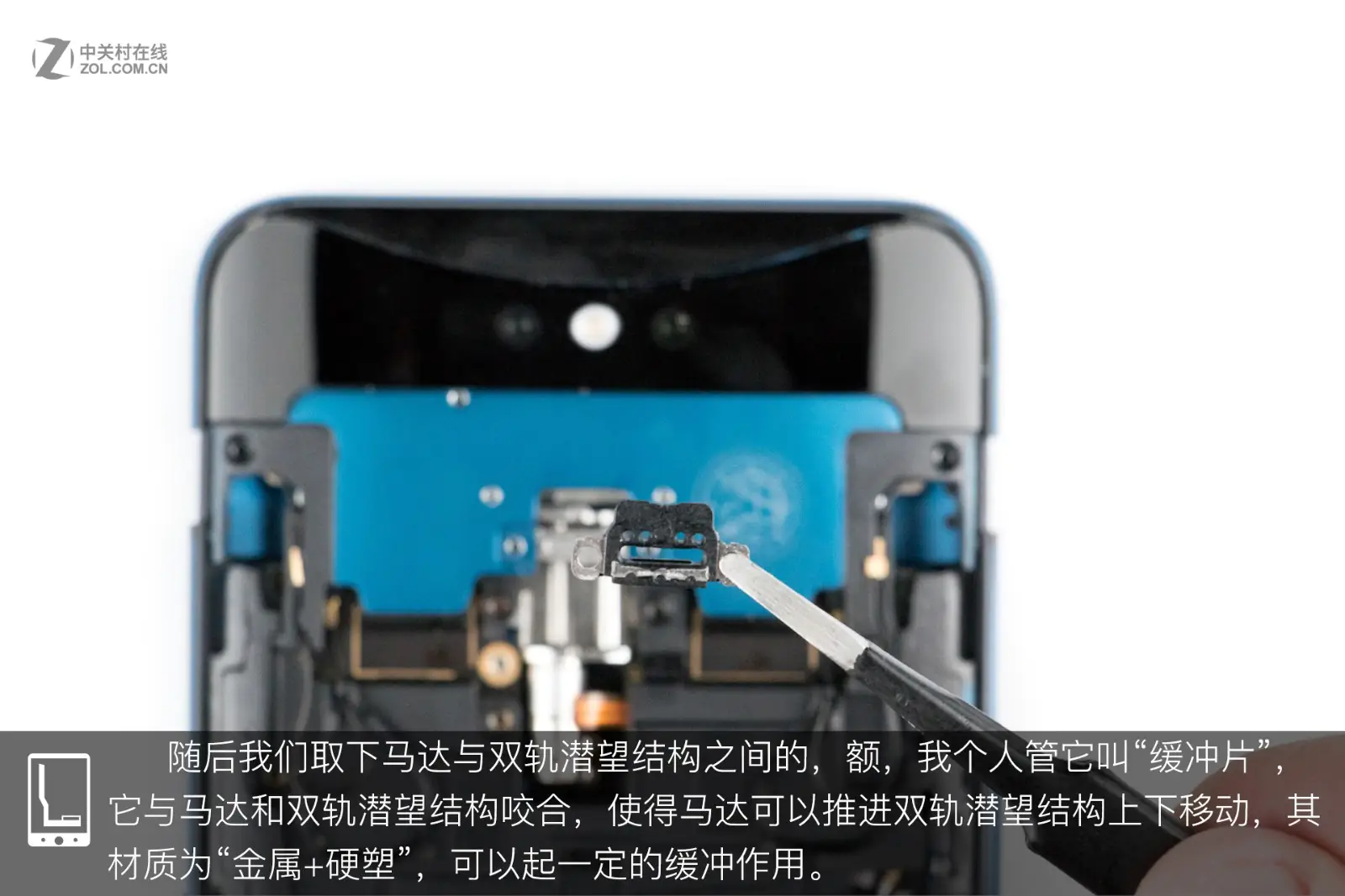
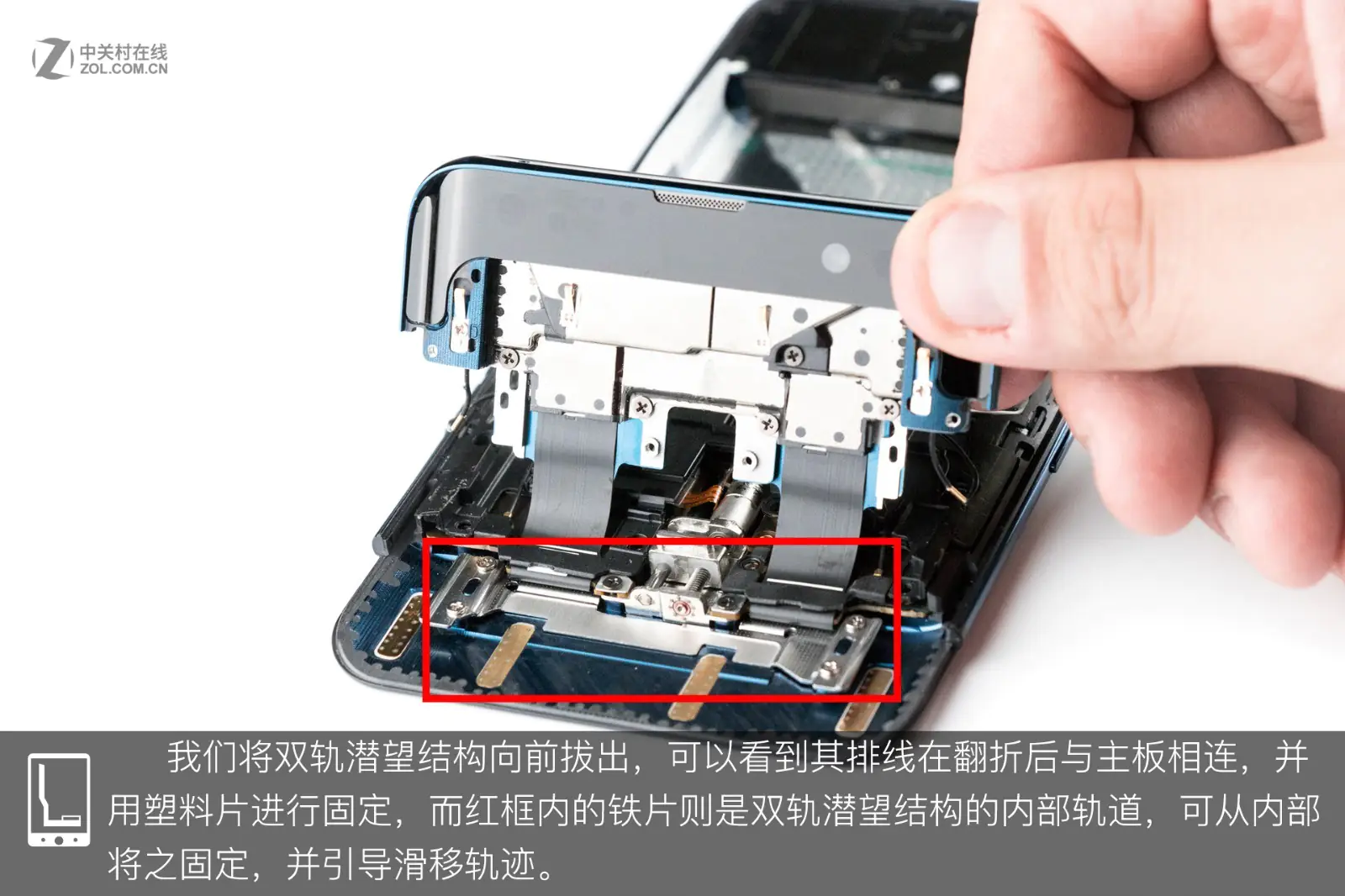
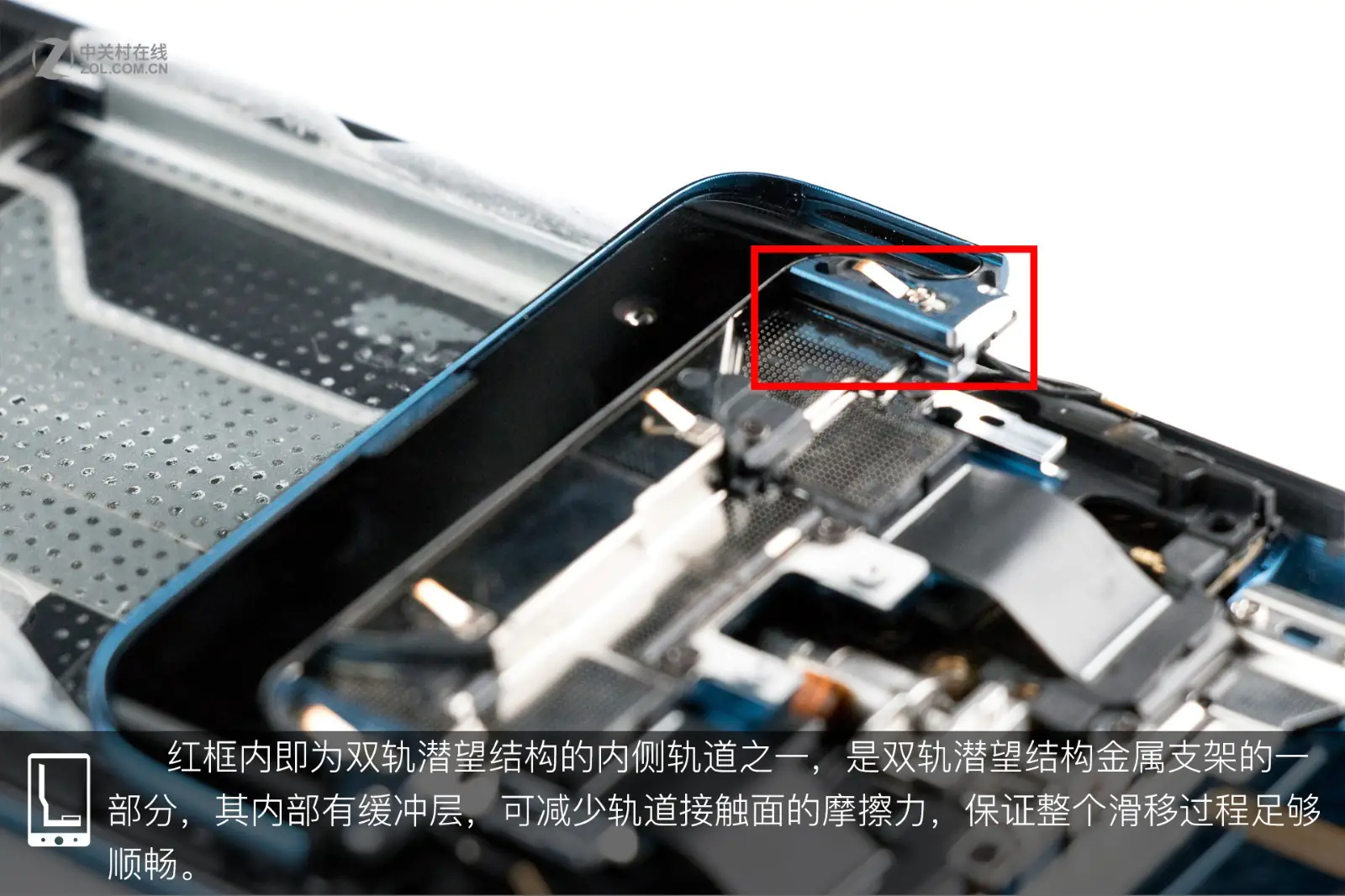
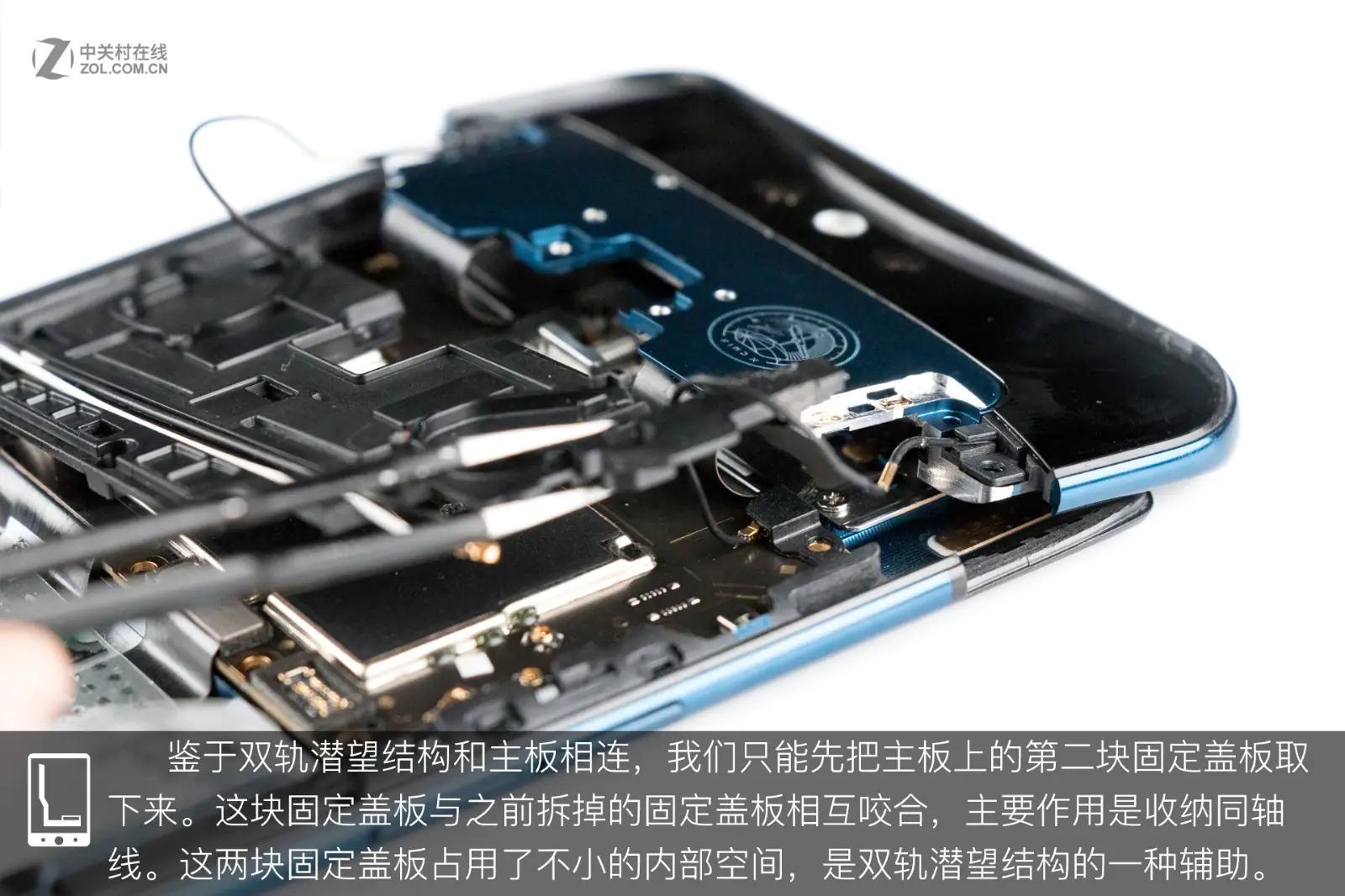
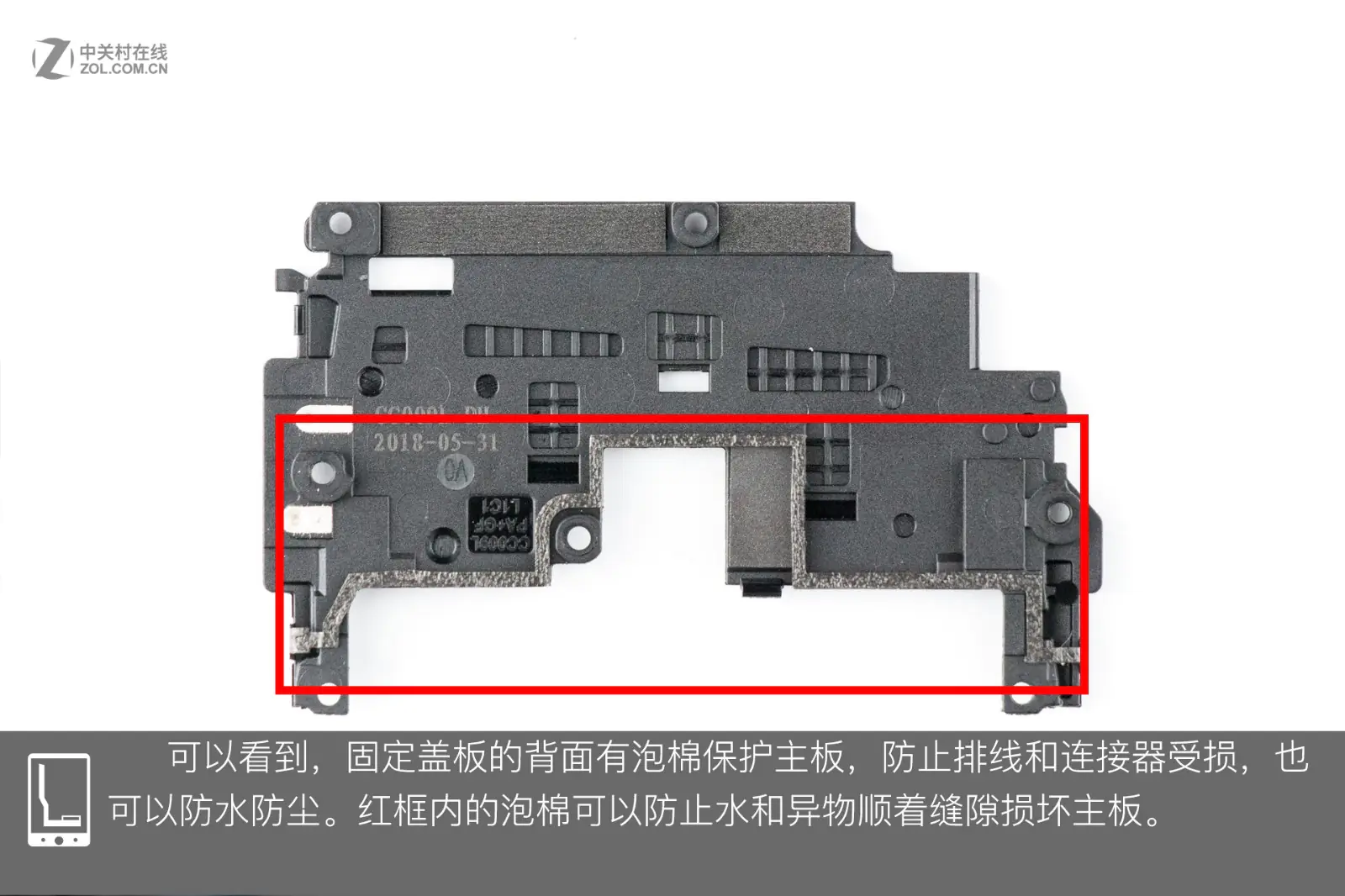
Then I remove the component between the motor and the dual-track periscope. This component drives the motor to enter the dual-track periscope structure and move up or down. It uses metal and plastic, which can function as a cushion. We can see that the cable for the dual-track structure is connected to the motherboard. The metal plate in the red circle is the internal track of the dual-track periscope structure. The red-circled area is one of the inner tracks of the dual-track periscope structure. It has a cushion layer inside that reduces friction between the track and the base, ensuring smooth overall sliding. Since the dual-track periscope structure is connected to the motherboard, I have to remove the second cover plate first. These two covers take up a lot of interior space, which is of help for the dual-track periscope structure. The foam on the back of the cover plate protects the motherboard, cables, and connectors, and prevents vapor and dust from entering. The foam in the red circle can prevent water and other substances from damaging the motherboard.
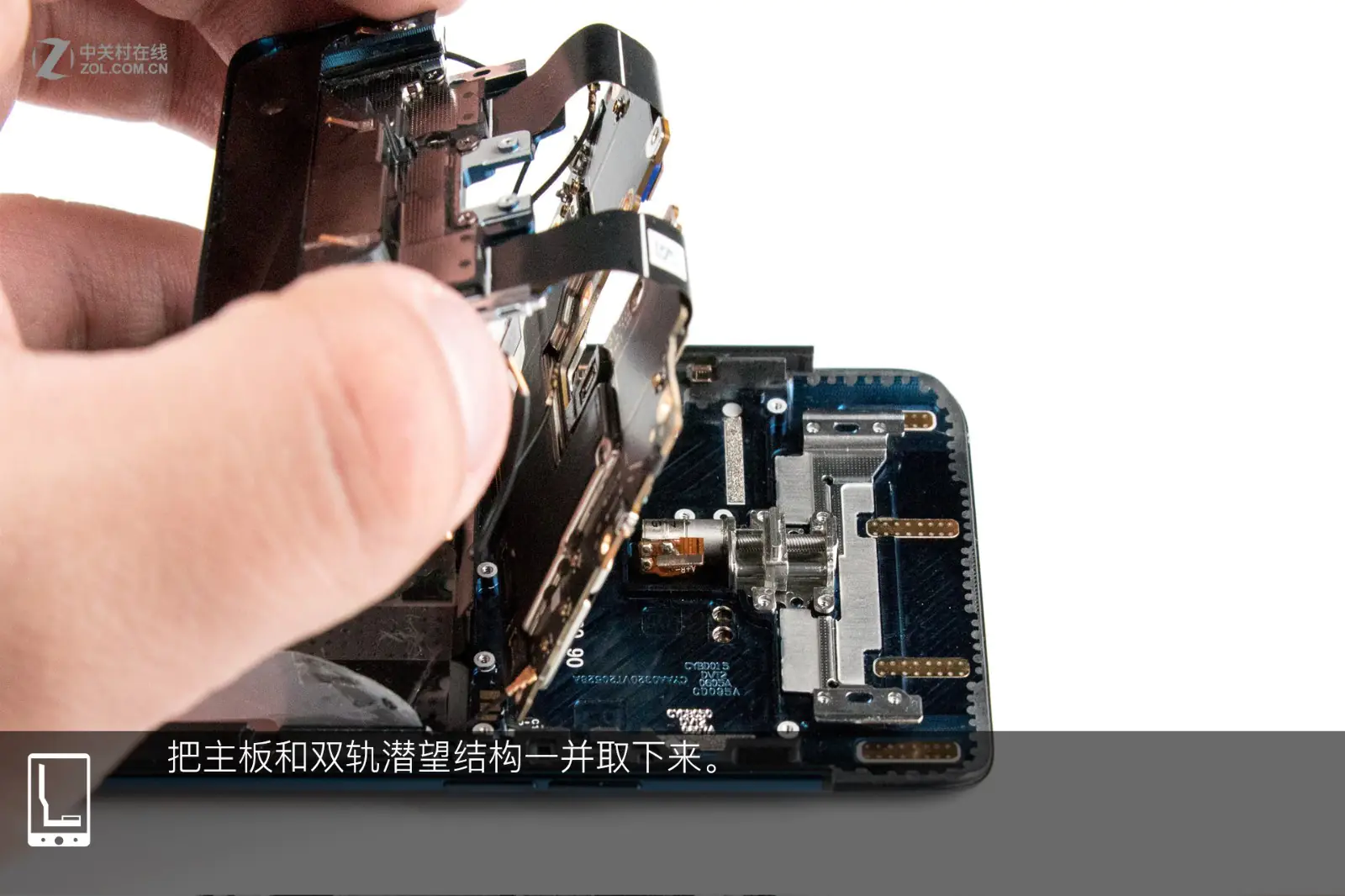
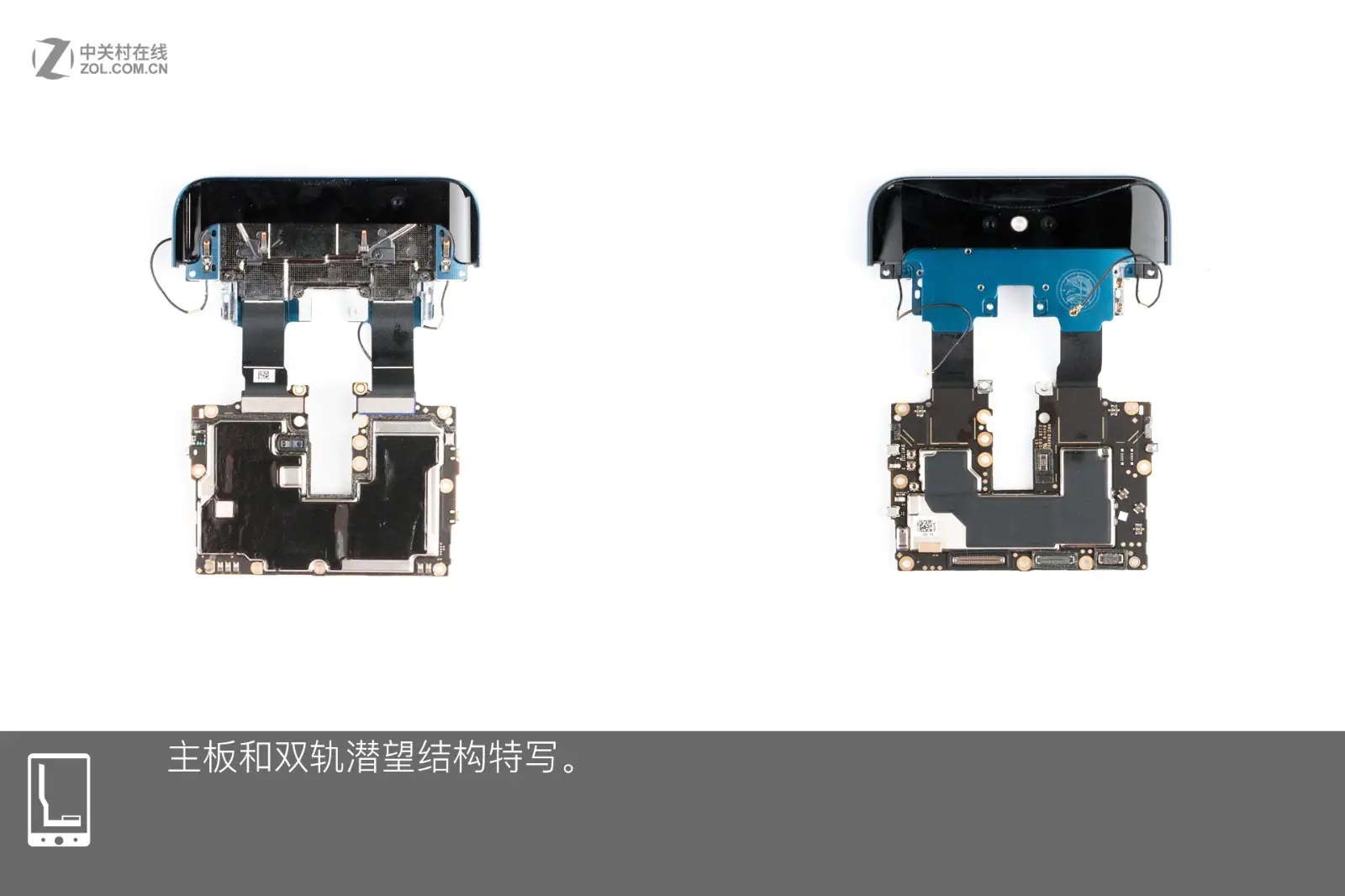
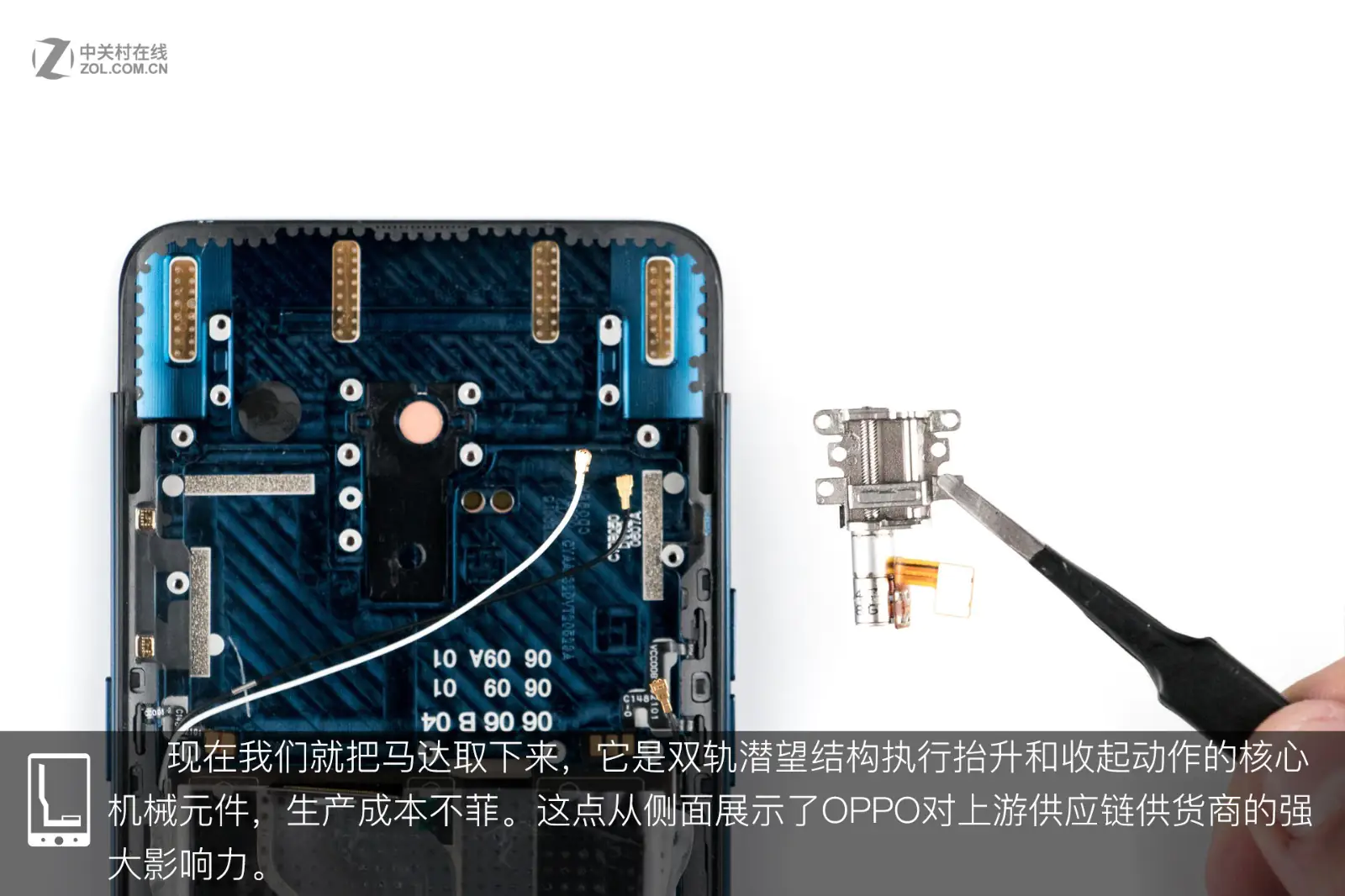
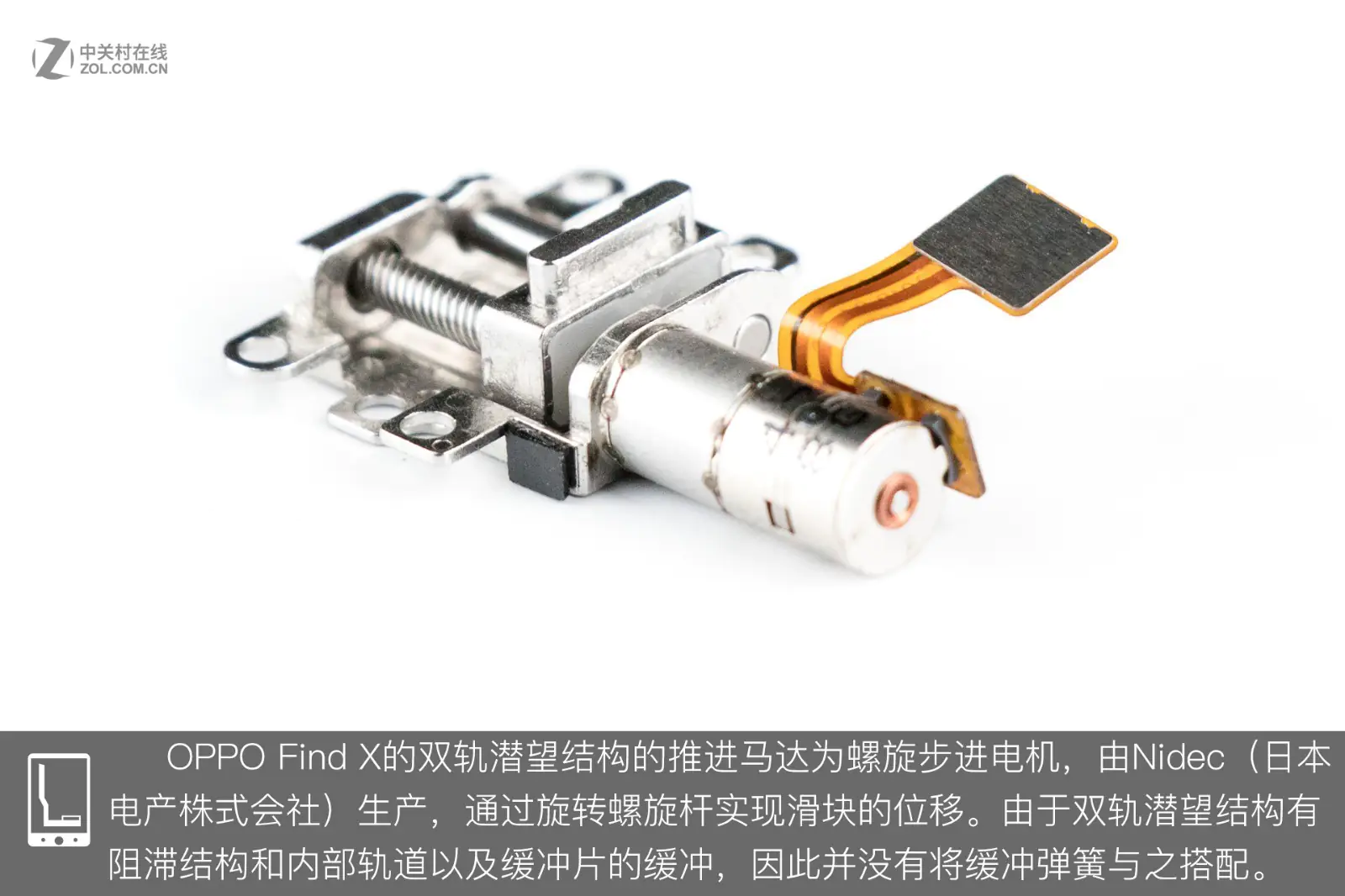
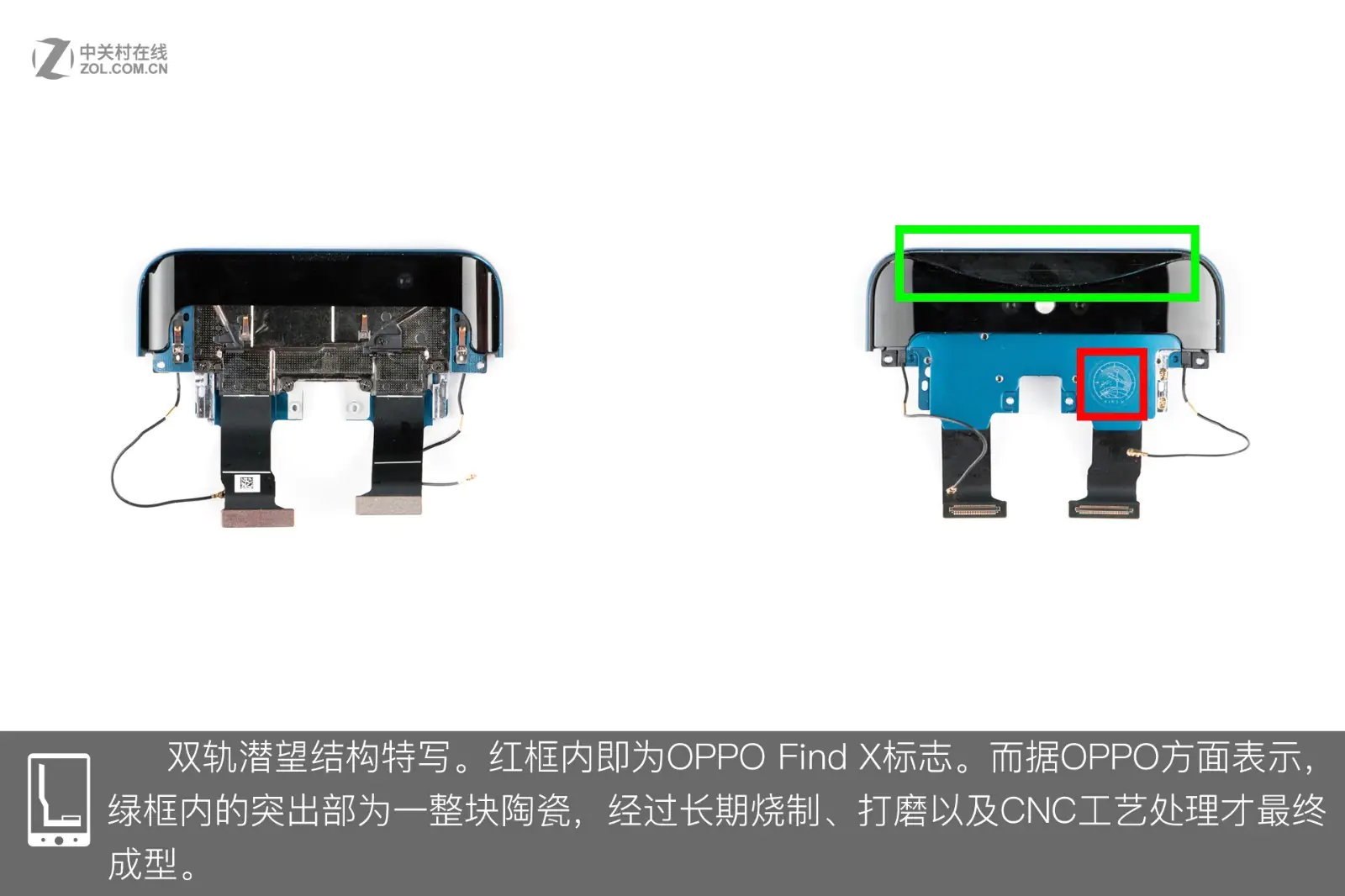
Next, take out the motherboard and the dual-track periscope structure. Then remove the motor, which is the core component of the dual-track periscope structure and is quite expensive. The dual-track periscope structure is driven by a screw stepper motor, which is manufactured by Nidec. The rotating screw allows the slider to move continuously. The dual-track periscope structure does not use a spring design because it has a cushioning component. This is the main body of the dual-track periscope structure. The circled area on the right is the iconic element of the OPPO Find X. According to OPPO, the ceramic component marked with the green circle needs to be processed by CNC.
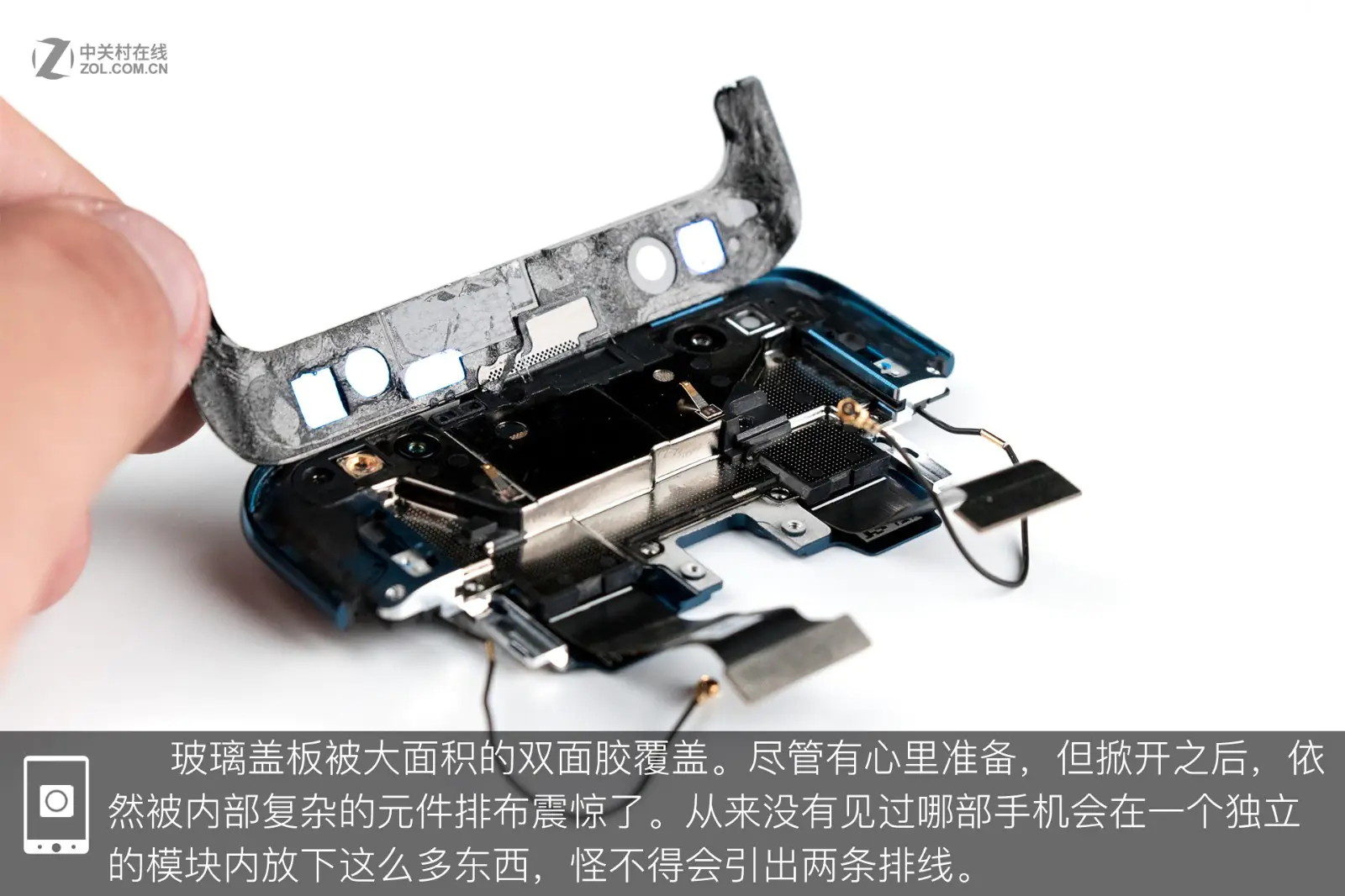
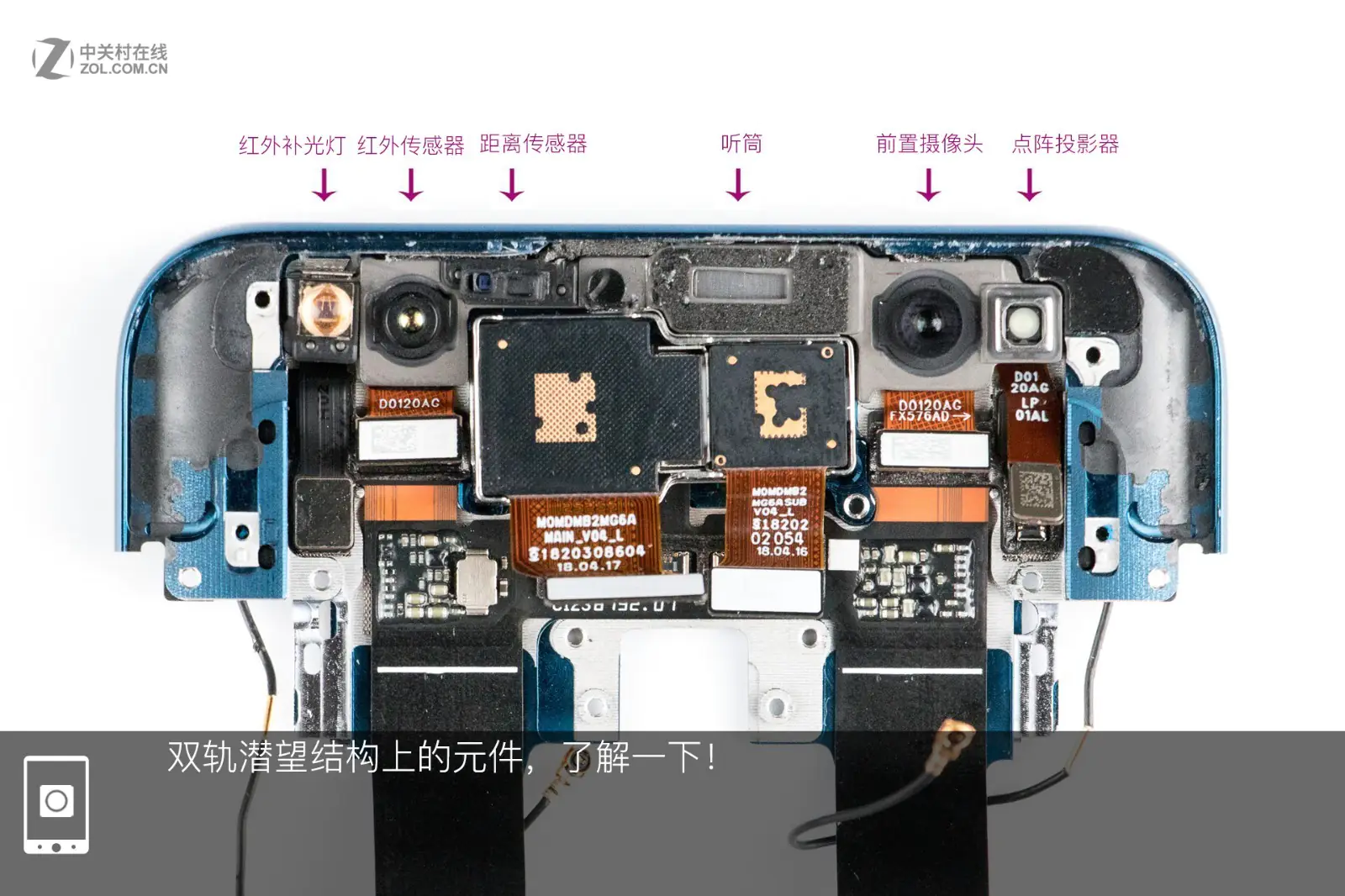
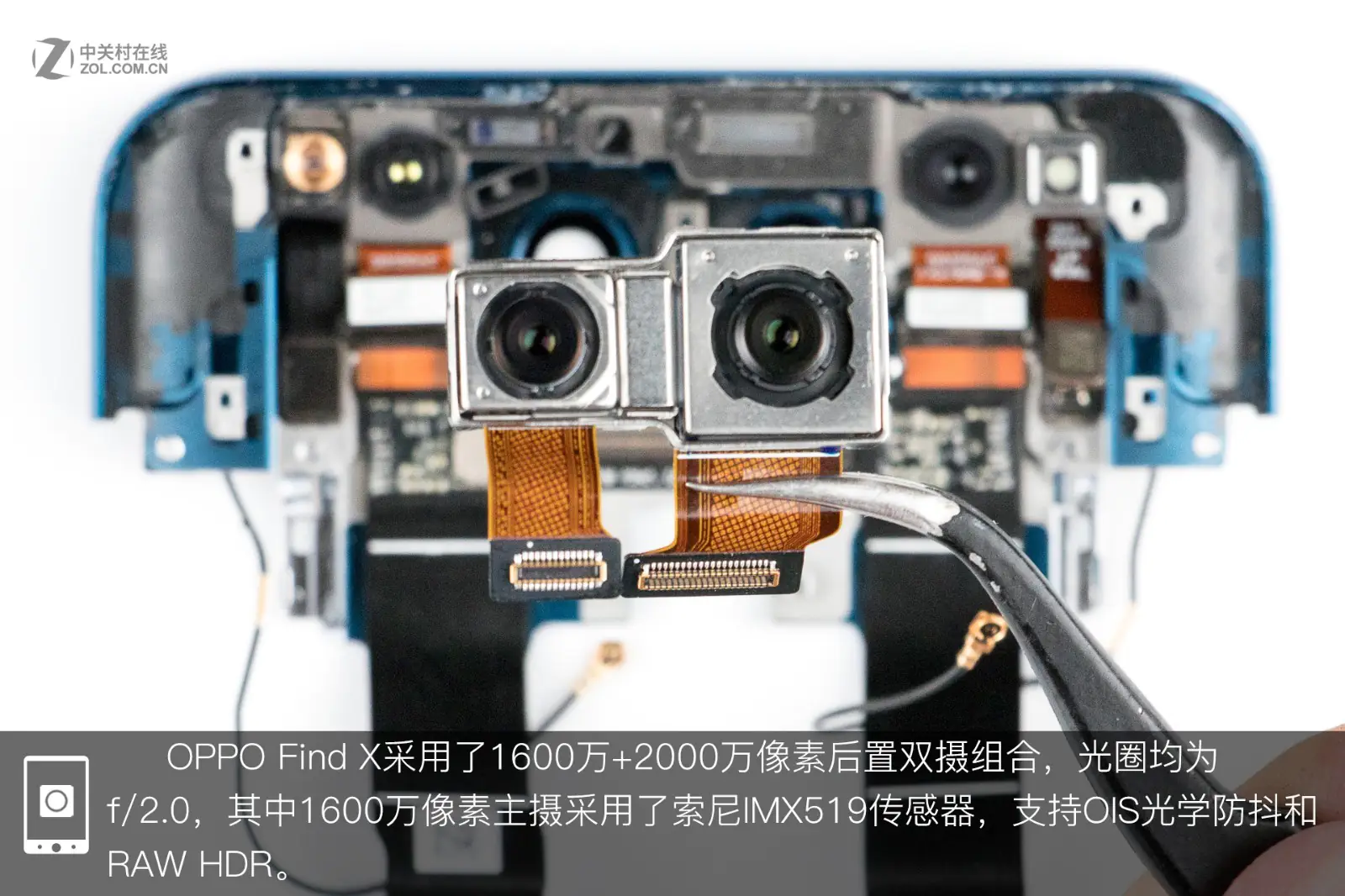
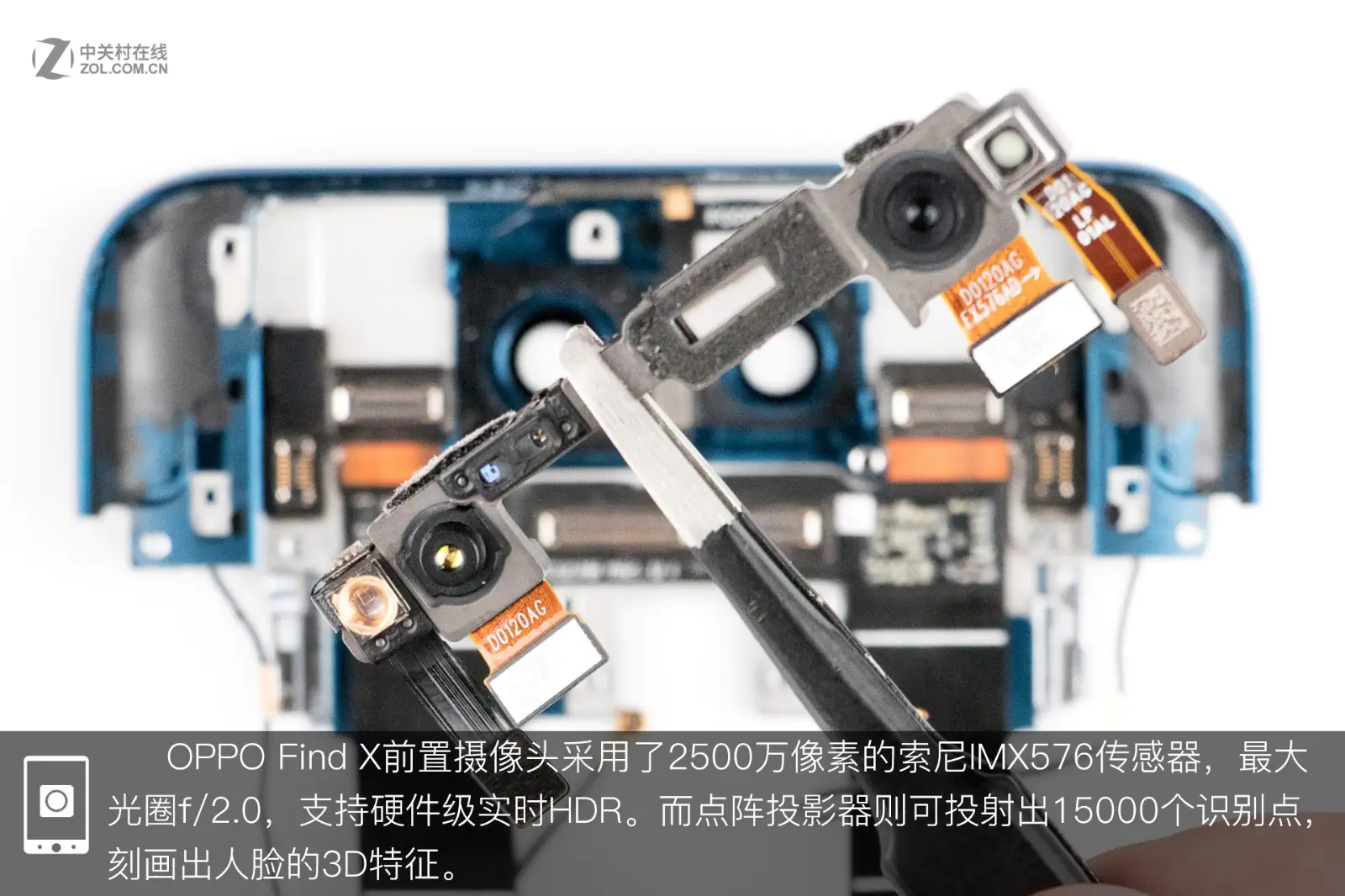
Most of the glass plate is covered with double-sided tape. After peeling off the tape, its complex component layout is astonishing. The components of the dual-track periscope structure include an infrared LED, an infrared sensor, a distance sensor, an earpiece, a front camera, and a dot projector (from left to right). The OPPO Find X features a dual rear camera setup with a 16MP lens with an F/2.0 aperture and a 20MP lens with an F/2.0 aperture. The 16MP main camera uses the Sony IMX519 sensor, supporting optical image stabilization and RAW format HDR shooting. The phone features a 25MP front camera (Sony IMX576 sensor) with an F/2.0 aperture and supports HDR. This dot projector projects 15000 invisible dots onto your face to build your unique 3D facial map.
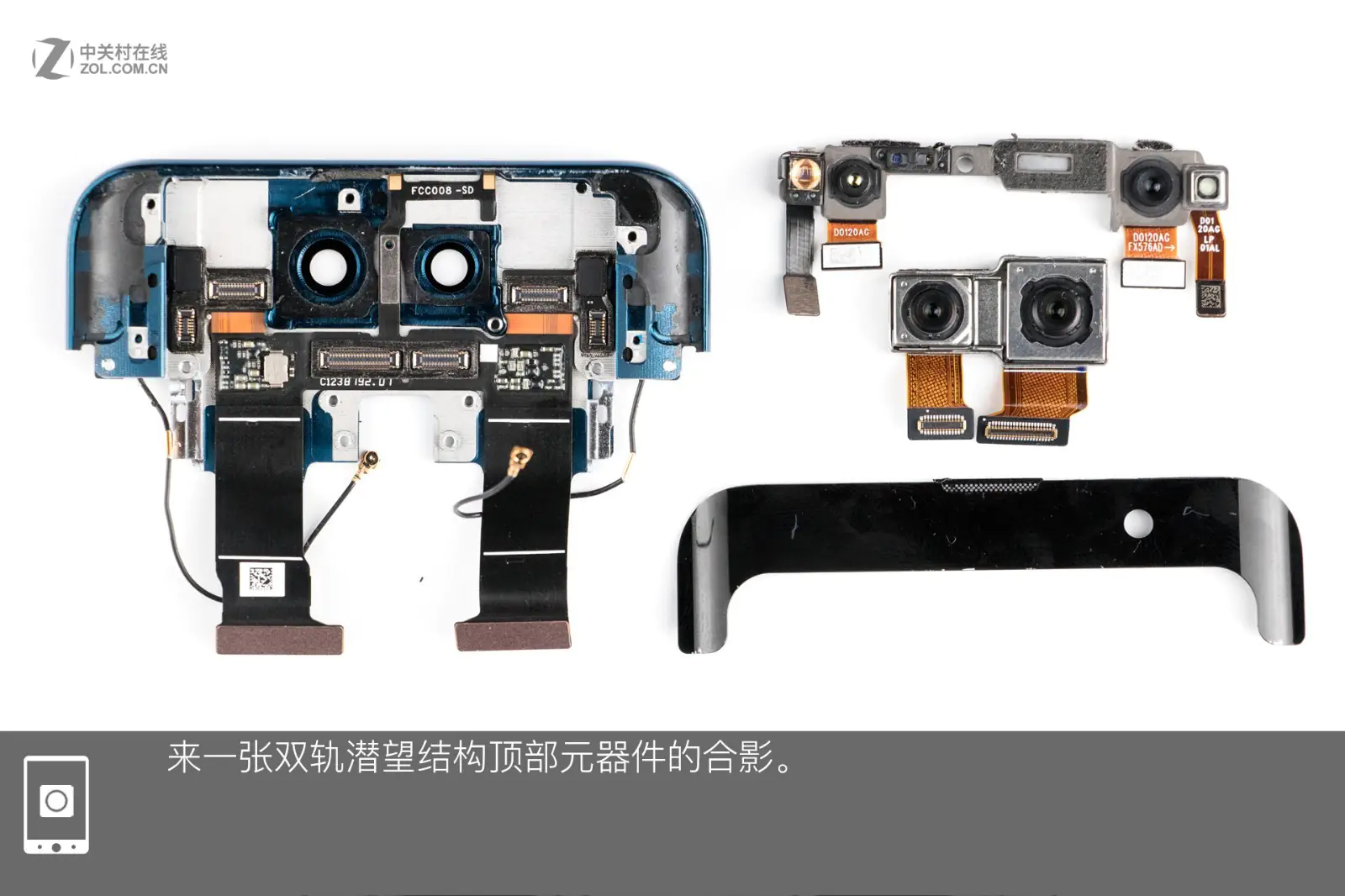
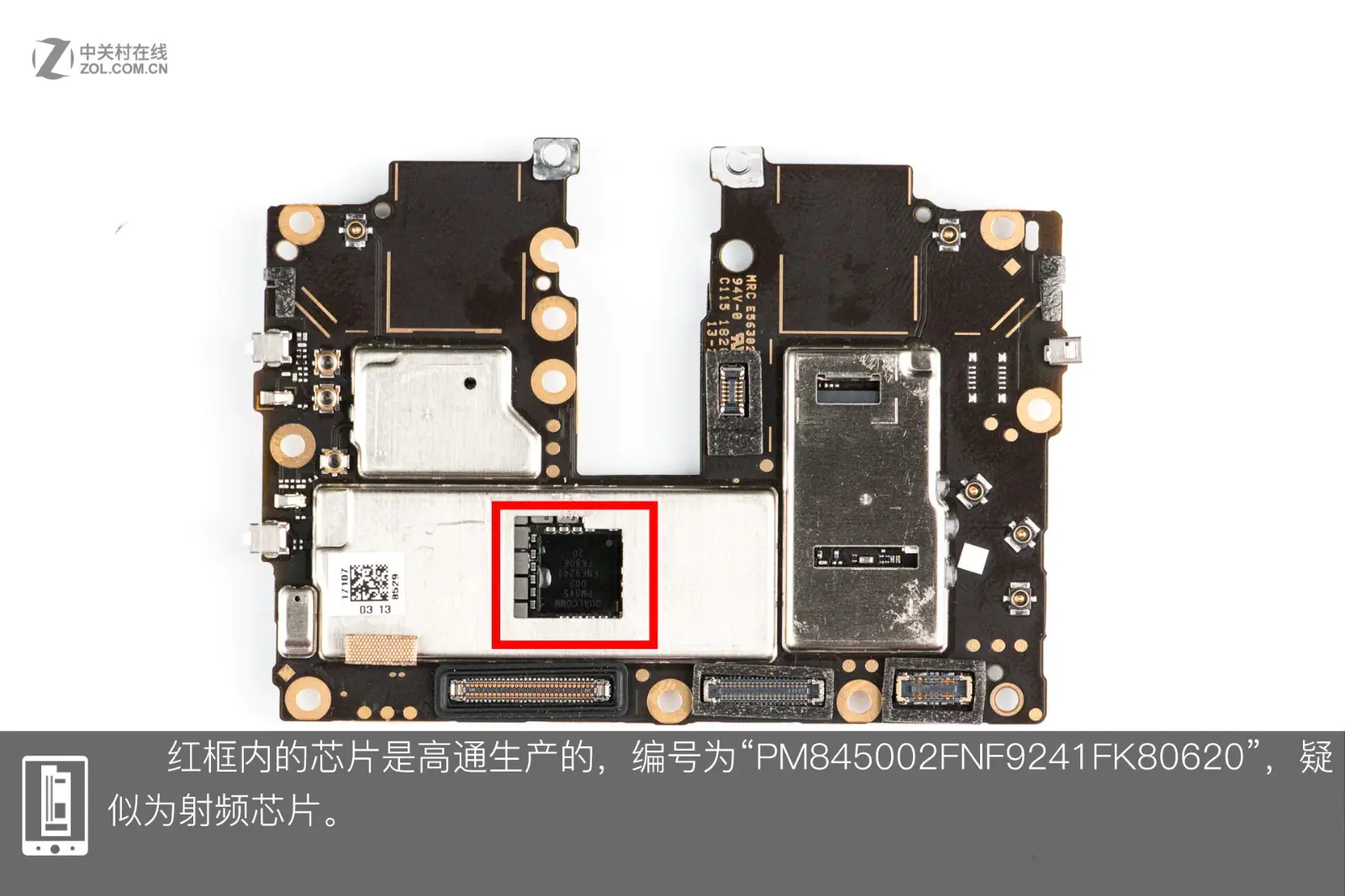
These are the components at the top of the dual-track periscope structure. The chip in the red circle is a Qualcomm PM845002FNF9241FK80620 RF chip.
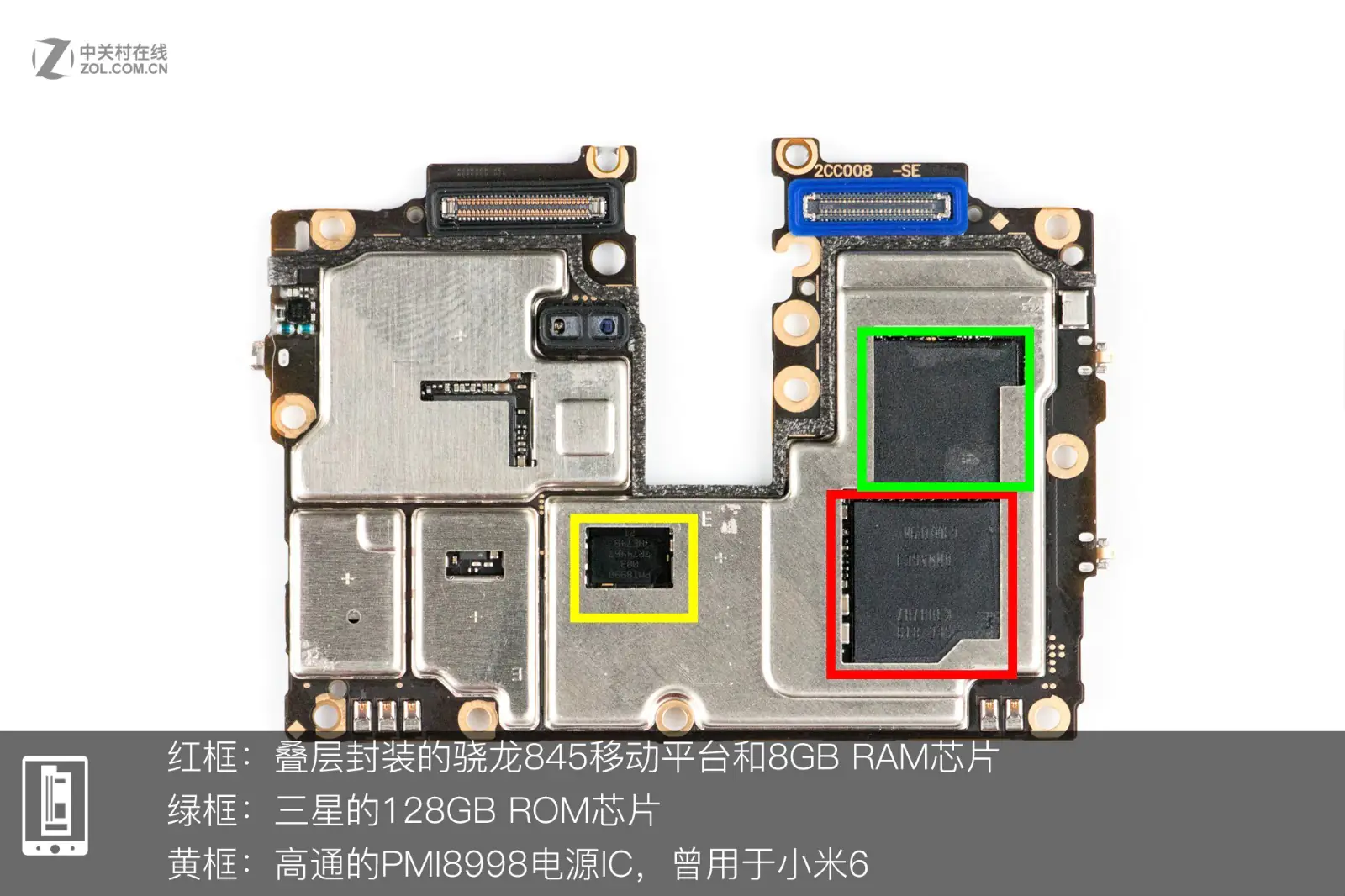
The red circle marks the Qualcomm Snapdragon 845 SoC and 8GB of RAM. The green circle marks the Samsung 128GB ROM. The yellow circle marks the PMI8998 power IC, which has been used in the Xiaomi Mi 6.
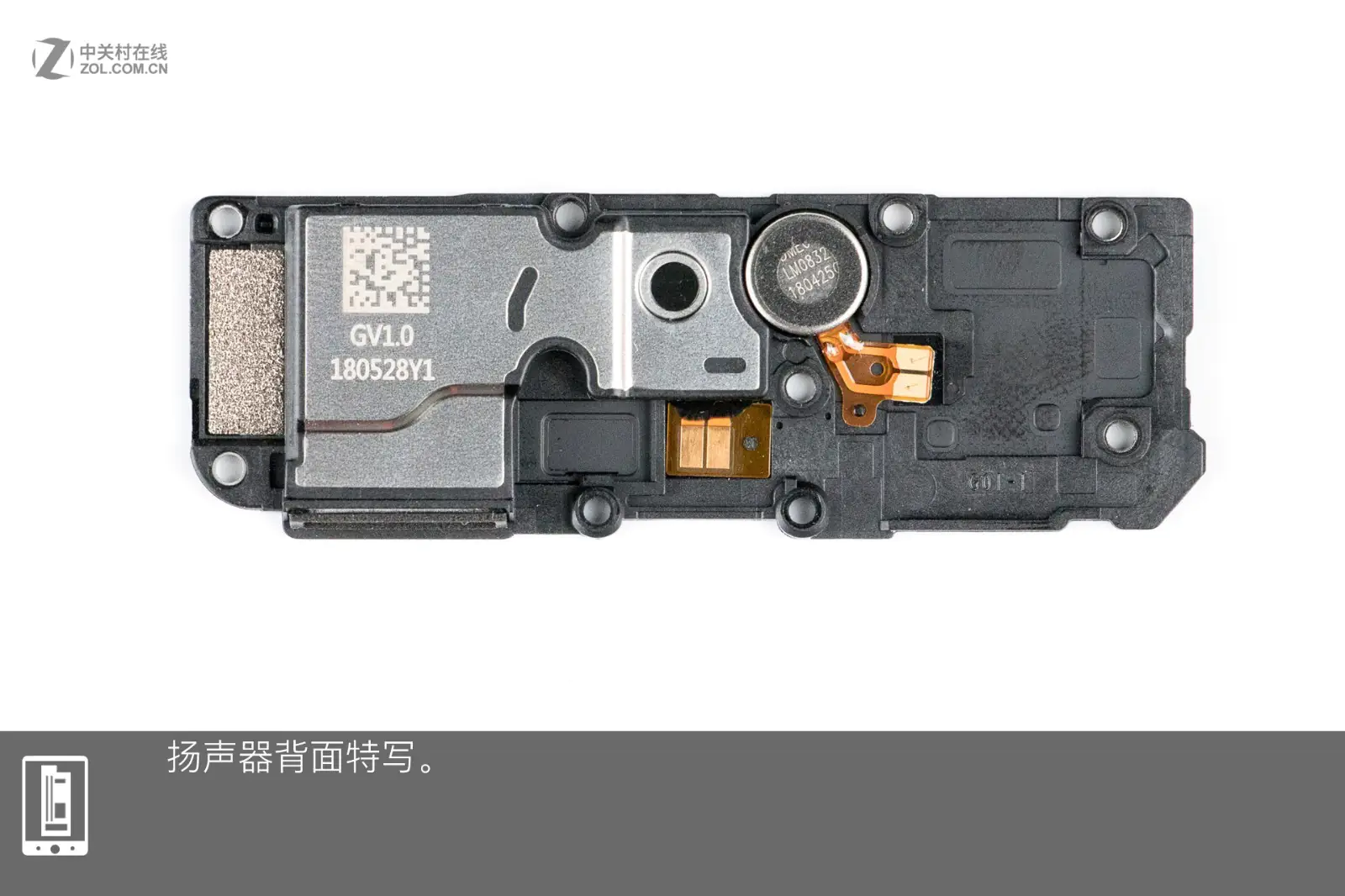
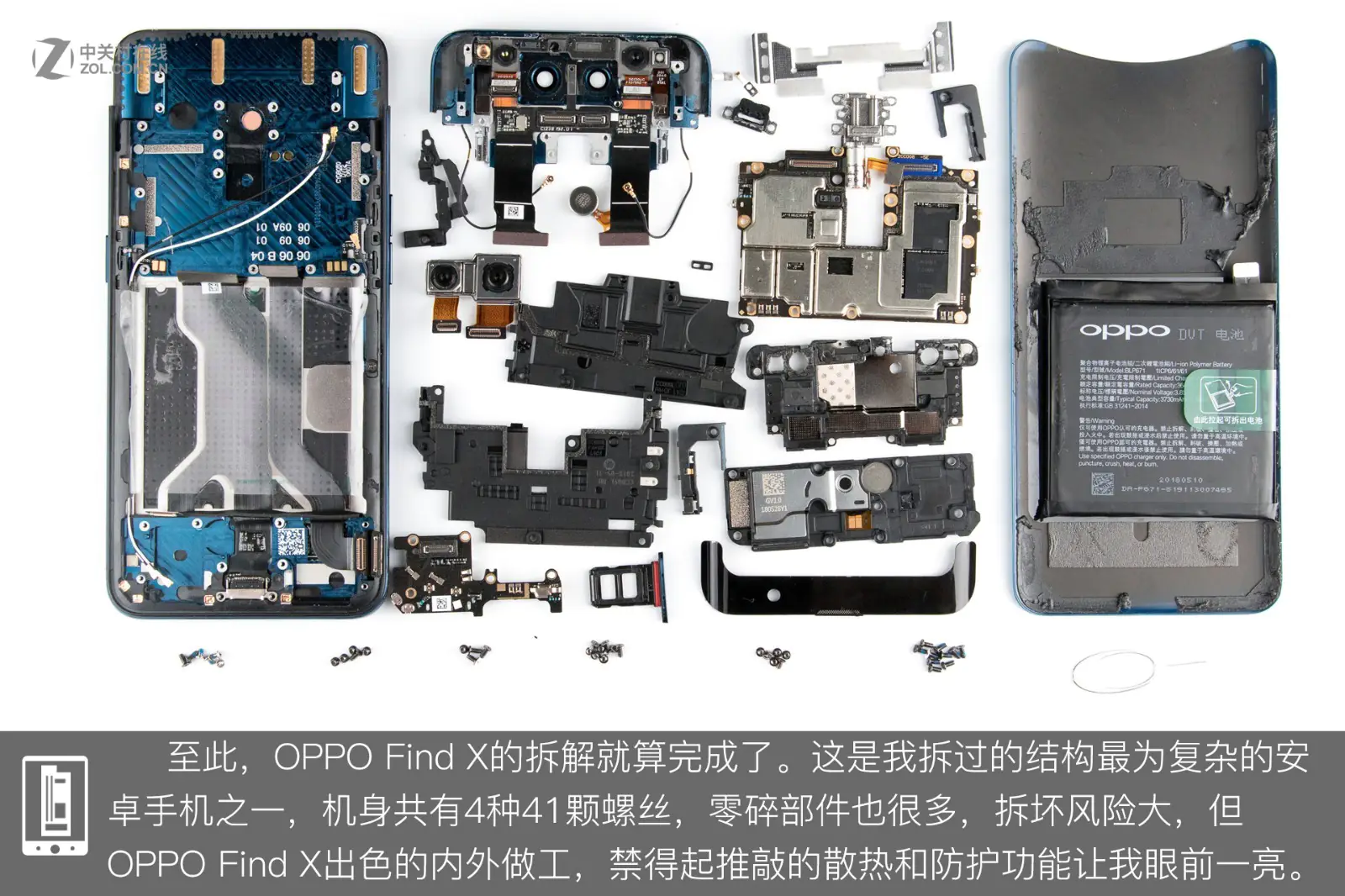
At this point, the teardown of the OPPO Find X is complete. It is one of the most complex Android phones I have ever taken apart, with 41 screws and many small components. However, there is no doubt that this phone features exquisite craftsmanship and excellent heat dissipation performance.
Summary
As OPPO’s high-end smartphone, the OPPO Find X features an innovative design and reliable workmanship. The dual-track periscope is considered one of the most creative. In addition, it is also a durable smartphone. The device features a curved glass panel and a complex internal structure, using various sizes of screws and numerous small components. The teardown process of this phone is also difficult, and the risk of teardown is high.
I have an issue with the mobile connection that cuts out from time to time and gets fixed when I pull the camera. Is it easy to fix the antenna?