
Today, Ming-Chi Kuo released his latest research report, stating that the TWS earphones market will continue to grow in 2021, but AirPods shipments may decline.
Kuo stated in his research report: ‘We have lowered our 2021 AirPods shipment forecast by 30-35% to 75-80 million units, which implies a year-on-year decline of 10-15%. Our forecast diverges from market consensus, which expects a 25-30% year-on-year increase in AirPods shipments to 110-120 million units in 2021.’
The report pointed out that even though market demand for the new AirPods 3 in the third quarter of 2021 exceeded expectations, AirPods shipments for that quarter will still decline by about 25% year-on-year to 55 million units; AirPods shipments in the fourth quarter of 2021 will remain flat year-on-year at 23 million units. Total AirPods shipments for 2021 will drop to around 78 million units. In 2020, annual AirPods shipments were about 90 million units, and a significant decline is expected in 2021.
Kuo also stated that he is pessimistic about AirPods 2 sales following the launch of AirPods 3, mainly because it is difficult to determine whether AirPods 2 will be discontinued after AirPods 3 begin mass production. Apple faces two major dilemmas: if the old AirPods 2 are sold at a lower price, it may affect the demand for the new AirPods 3. However, if there are no cheaper AirPods models, it will be detrimental to the total shipments of the AirPods series. At the same time, the new AirPods Max has a minimal impact on AirPods shipments, with annual shipments of about 1 million units.
If AirPods 2 are discontinued after AirPods 3 begin mass shipments, it is estimated that the proportion of AirPods 3, AirPods Pro, AirPods 2, and AirPods Max will be about 40%, 28%, 31%, and 1%, respectively, in 2021. If AirPods 2 continue to be produced after the mass shipment of AirPods 3, it is estimated that the proportion of AirPods 3, AirPods Pro, AirPods 2, and AirPods Max shipments in 2021 will be approximately 32%, 28%, 39%, and 1%, respectively.
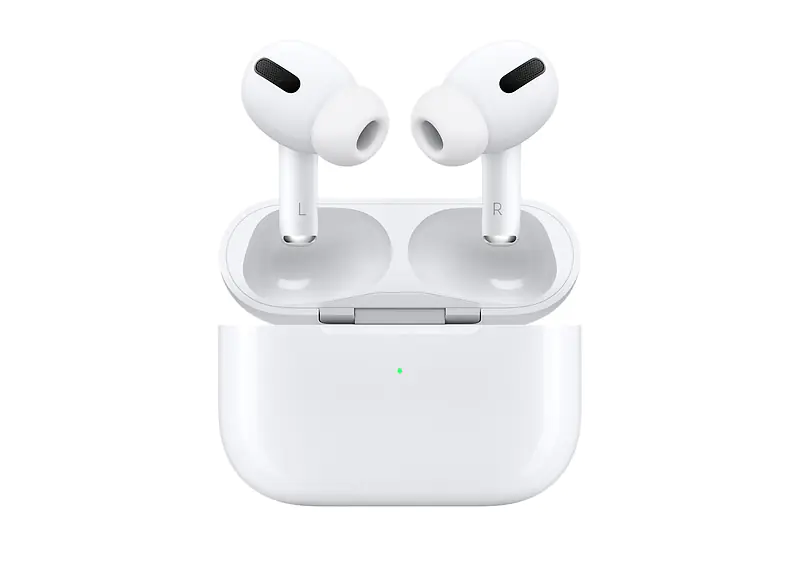
Ming-Chi Kuo believes that the main reason for the decline in AirPods shipments is that its hardware features are difficult to differentiate from competitors’ lower-priced products, and it lacks a strong ecosystem to support shipment growth. The competitive advantage of Apple products lies in providing an ecosystem that integrates ‘software, hardware, and services,’ rather than relying solely on the hardware itself. Take the iPhone as an example: although its market share has declined due to the rapid growth of the smartphone market, the robust ecosystem formed by the App Store and developers still maintains high shipment volumes. However, AirPods’ core software and service ecosystem strength, Siri, is not outstanding. Therefore, when competitors gradually improve user experience and implement low-price strategies, AirPods struggle to maintain market sales due to their lack of ecosystem protection. Kuo also noted that HomePod and HomePod mini shipments are far below expectations for the same reason.
Due to the rapid growth of the TWS market in recent years, AirPods have faced increased competition, leading to a simultaneous decline in both shipments and market share. The latest survey shows that the TWS market grew by about 45% year-on-year in the fourth quarter of 2020, but AirPods’ market share fell to around 30% (compared to about 40% in the same period of 2019). If the market demand for the new AirPods 3 falls short of expectations, investor attention towards AirPods is likely to decline further.
The growth of low-priced true wireless earbuds is accelerating rapidly. The latest survey reveals that over 50% of the top ten best-selling true wireless earbuds globally are priced below $50. We believe the growth momentum of low-priced models continues to accelerate.
The initial success of AirPods was largely due to the convenience of Bluetooth connectivity and high-quality sound. Although AirPods still lead their competitors in these areas, their advantage is gradually being eroded as competitors continue to optimize product experiences and adopt low-cost strategies. From a technology and quality perspective, while the AirPods Pro offers approximately 50% and 20% lower latency compared to AirPods 1 and 2, respectively, and features active noise cancellation, market feedback indicates that consumers are generally reluctant to pay more than a $100 premium for the core features of the AirPods Pro.