
As Meizu’s latest flagship phone, the Meizu 16 is powered by a Qualcomm Snapdragon 845 processor. This phone uses a copper pipe for heat dissipation, which delivers better heat dissipation and ensures games run more smoothly and stably. In addition, its exterior design has also been innovated. The back of the phone uses a 3D four-curved glass panel instead of a metal back cover, with a body thickness of only 7.3 millimeters, making the Meizu 16 the thinnest smartphone on the market to feature an under-display fingerprint reader. Today, we will take apart the phone to explore its internal structure and workmanship.
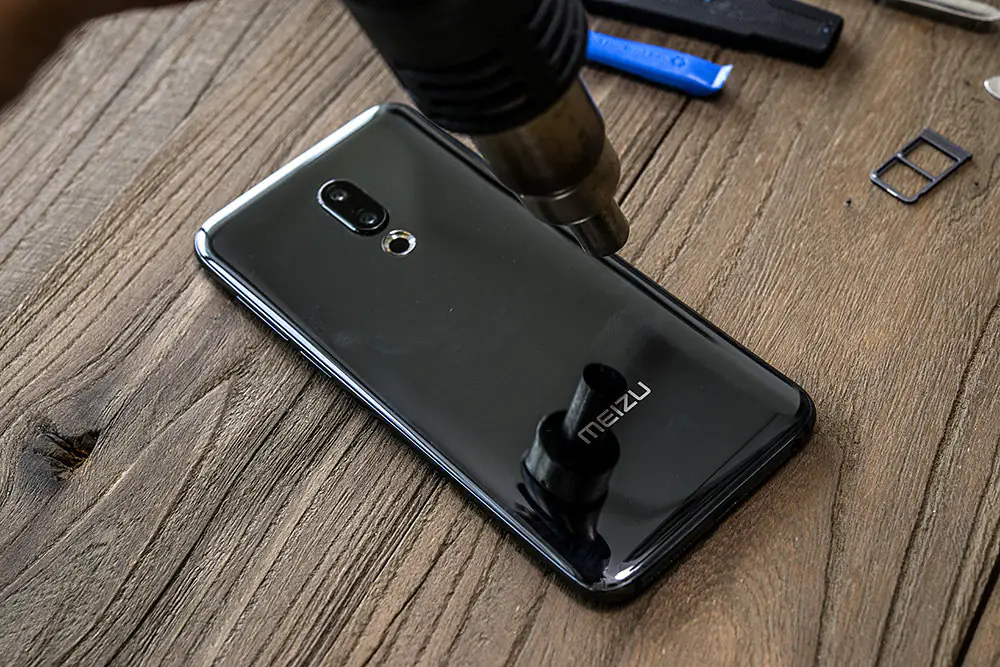
This phone features a glass back cover, which is glued to the body. Therefore, a heat gun is required when removing the back cover. Once the glue has melted, the back cover can be removed.
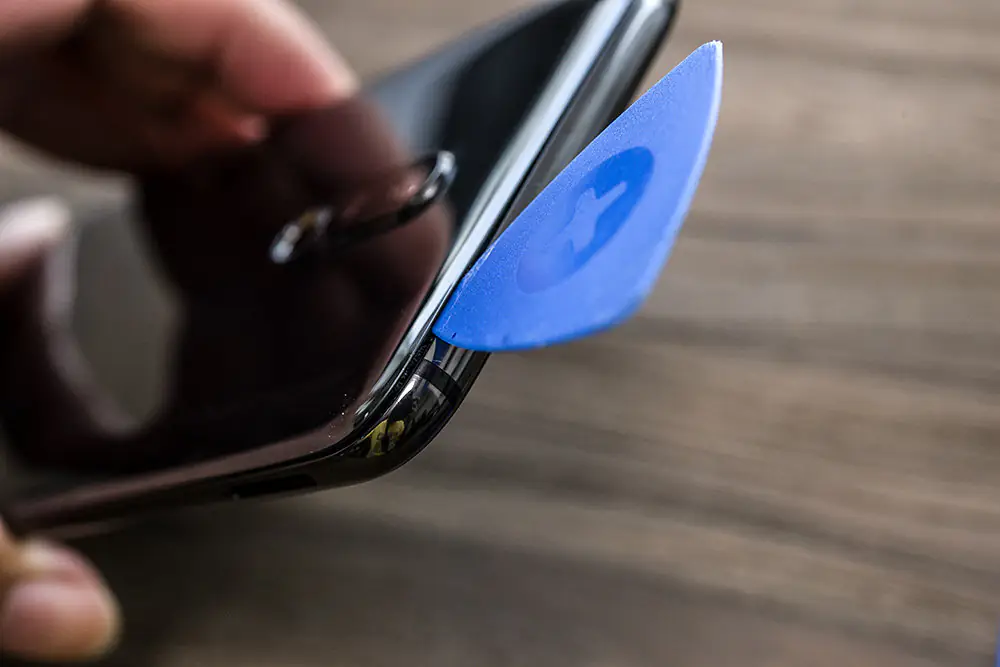
After heating the phone, use a pick to separate the back cover from the body. Be careful during disassembly to avoid damaging the back cover.
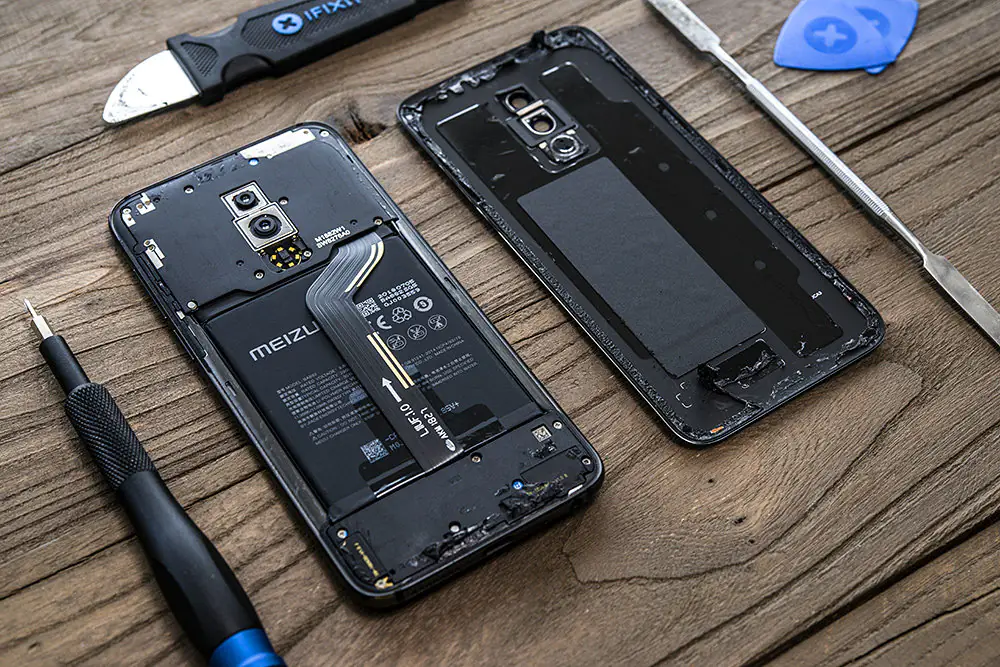
After removing the back cover, we can access its internal structure. The PCB is covered by a plastic plate.
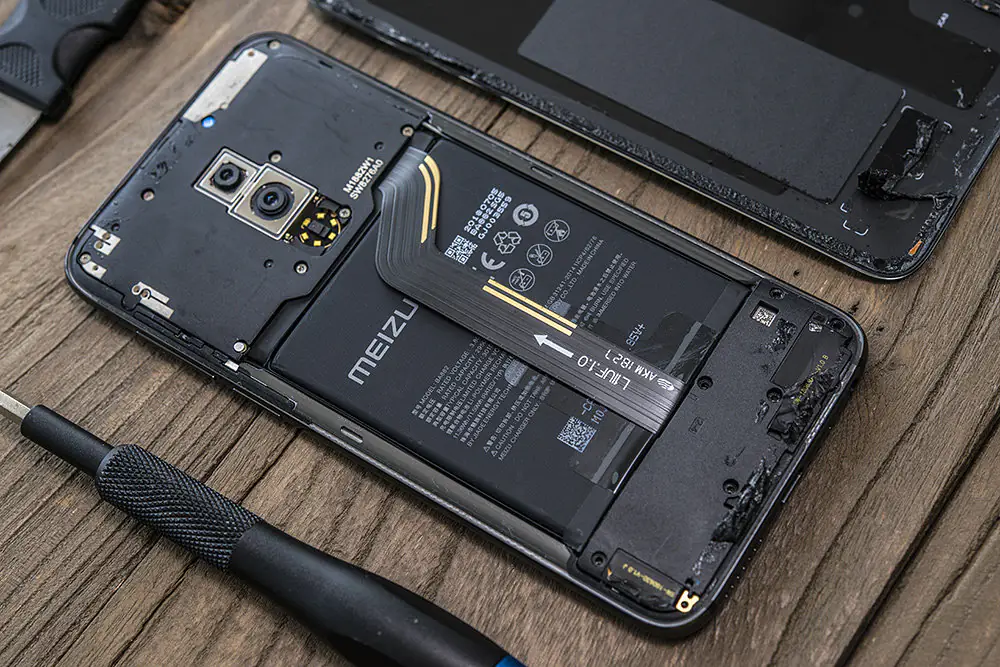
It adopts a classic three-section internal design: the top is the motherboard, the middle is the battery, and the bottom is a small circuit board.
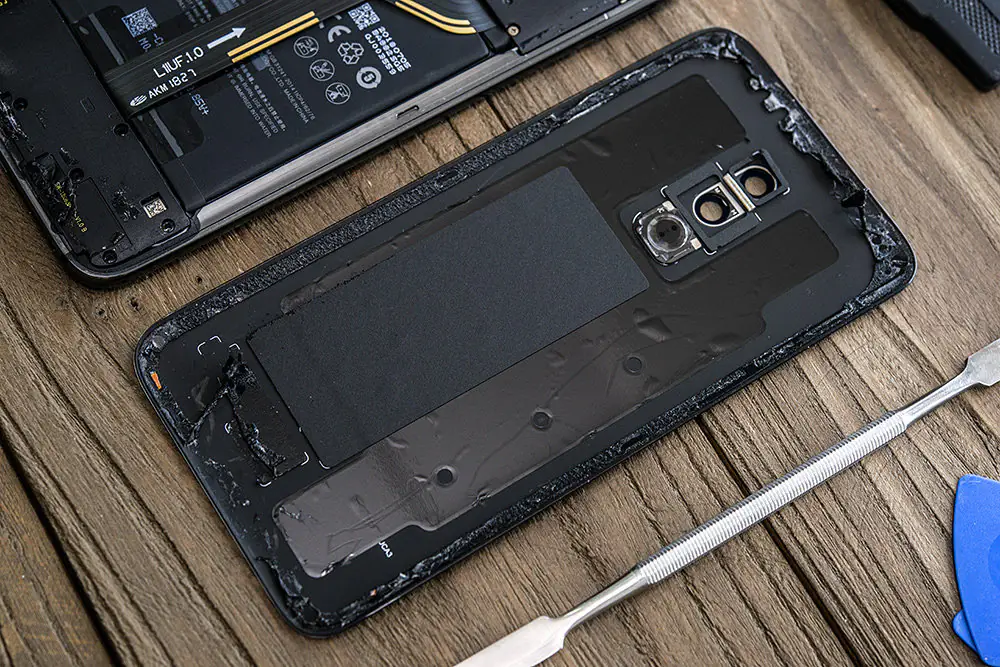
The nanometer-grade seven-layer PVD technology is applied to the back cover, which enables it to deliver a ceramic texture.
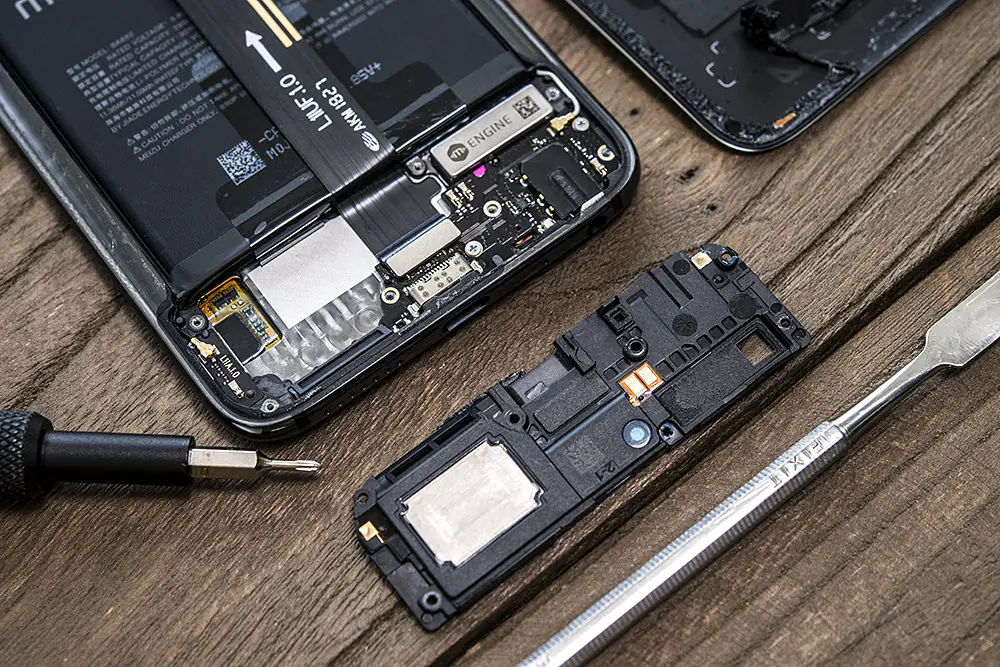
After removing the speakers, you can access the small circuit board. This small circuit board is responsible for connecting various ports and external speakers.
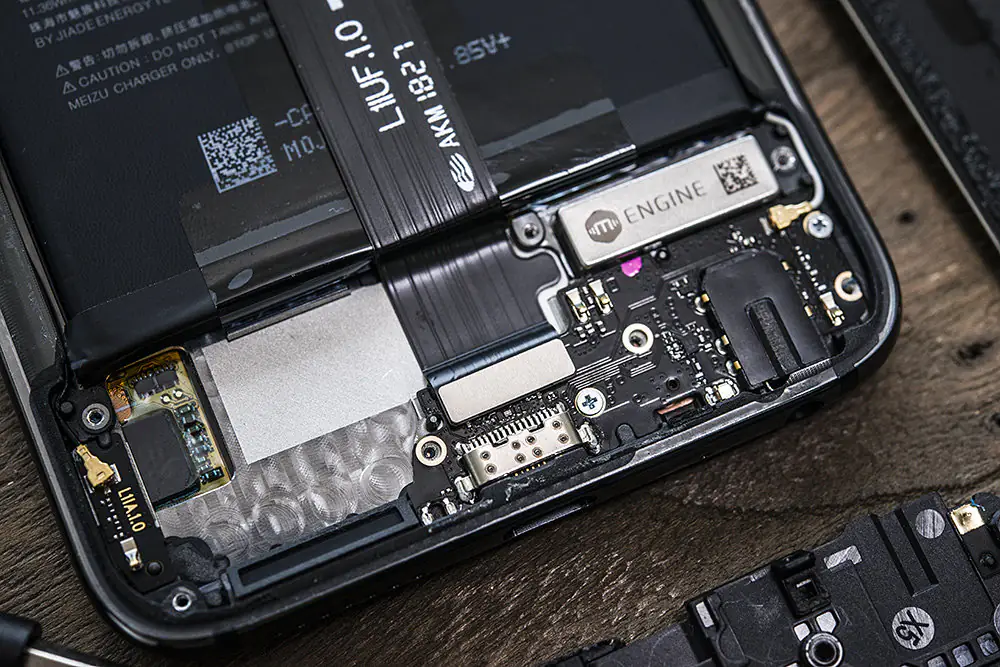
This small board also connects the linear motor, the mEngine, aiming to achieve a better vibration effect.
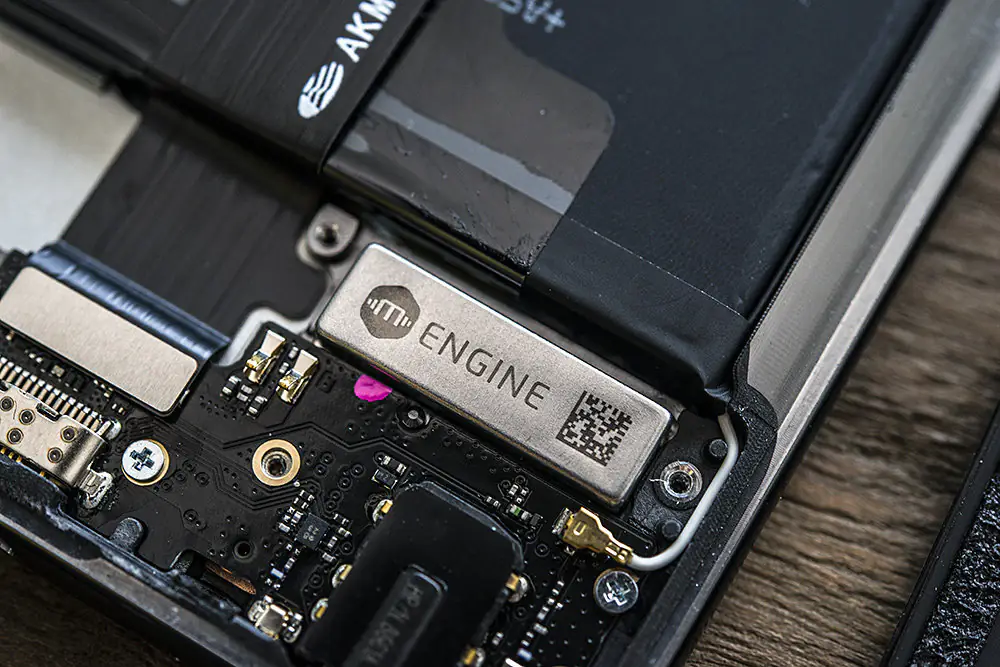
The phone still features the mEngine, but it has been upgraded with new algorithms that provide better feedback on heartbeat, roller simulation, and music vibration.
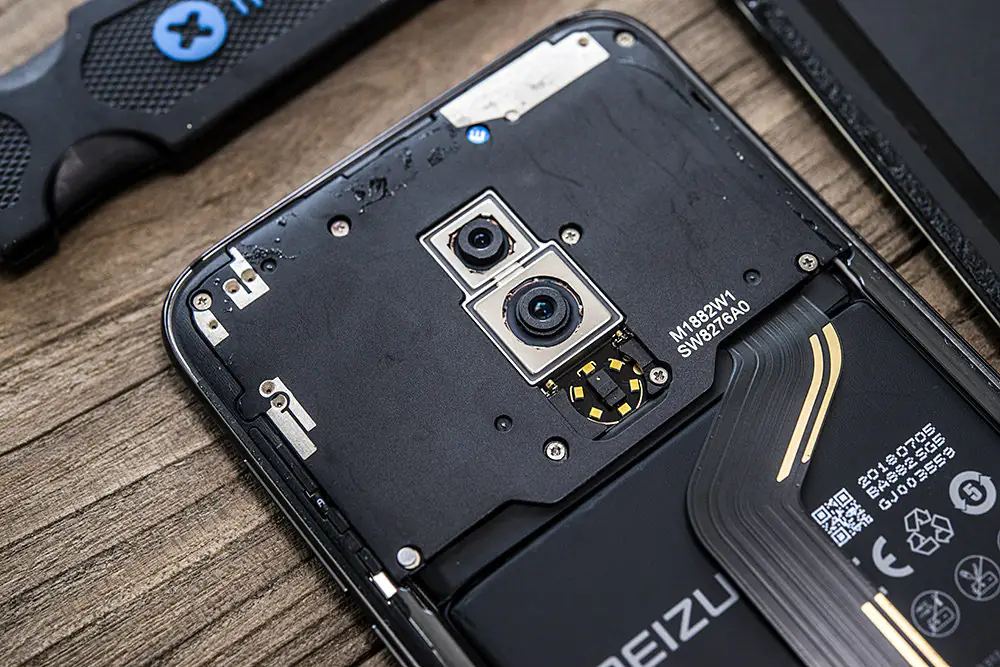
A plastic protective cover is also placed on the motherboard.
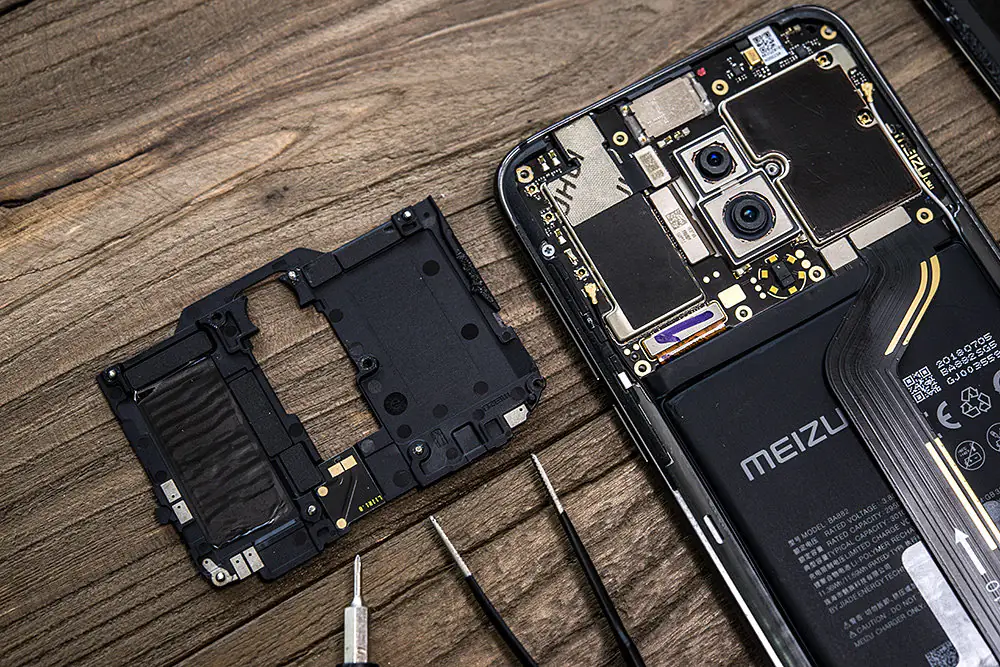
Remove the screws and then use tweezers to remove the plastic protective cover.
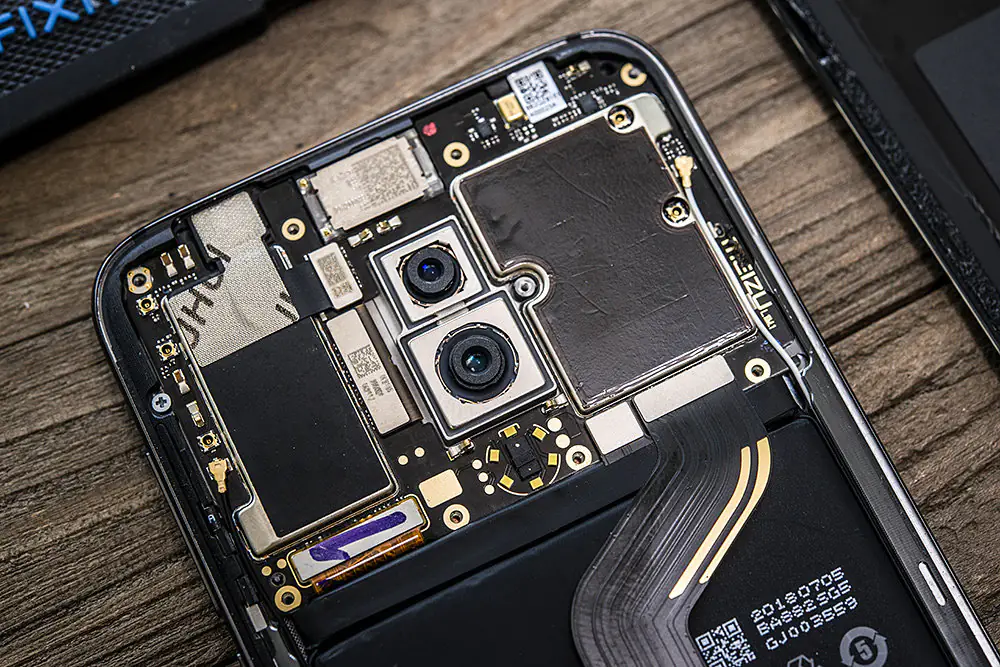
The metal shield on the motherboard covers the graphite sticker, which conducts the heat generated by the motherboard to the back cover.
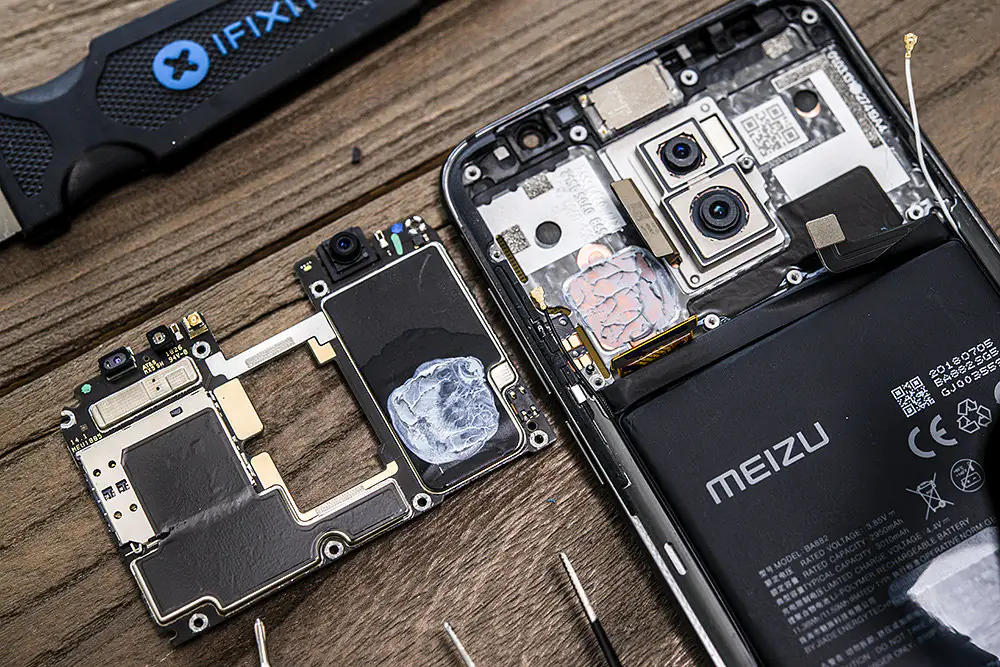
After removing the motherboard, the heat pipe on the middle frame is visible. Thermal paste has been applied to the CPU on the motherboard.
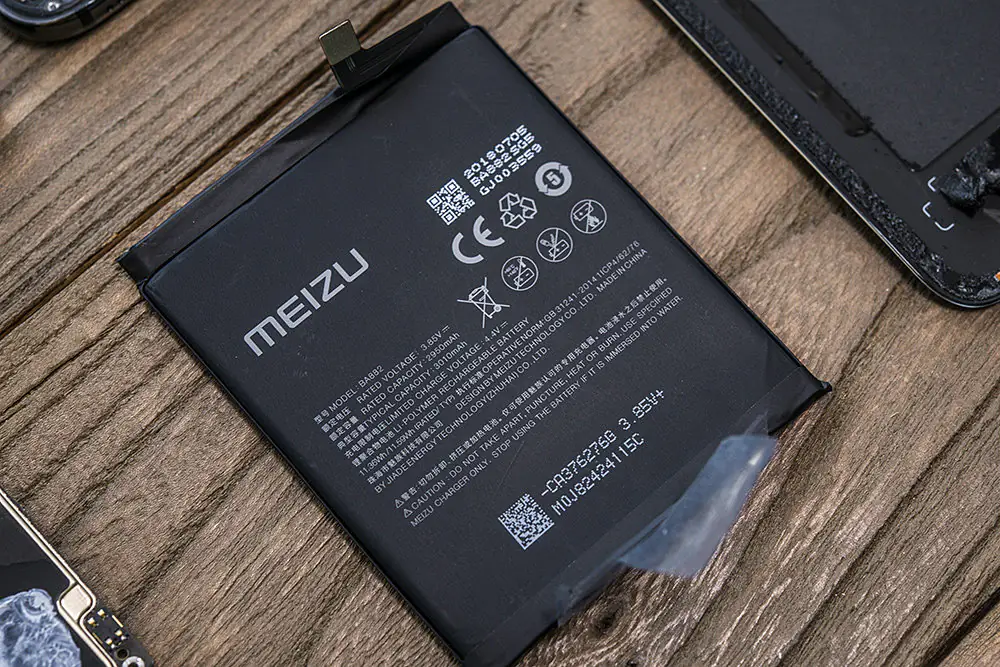
Its battery can also be removed. It has a capacity of 3010 mAh and supports 24W fast charging.
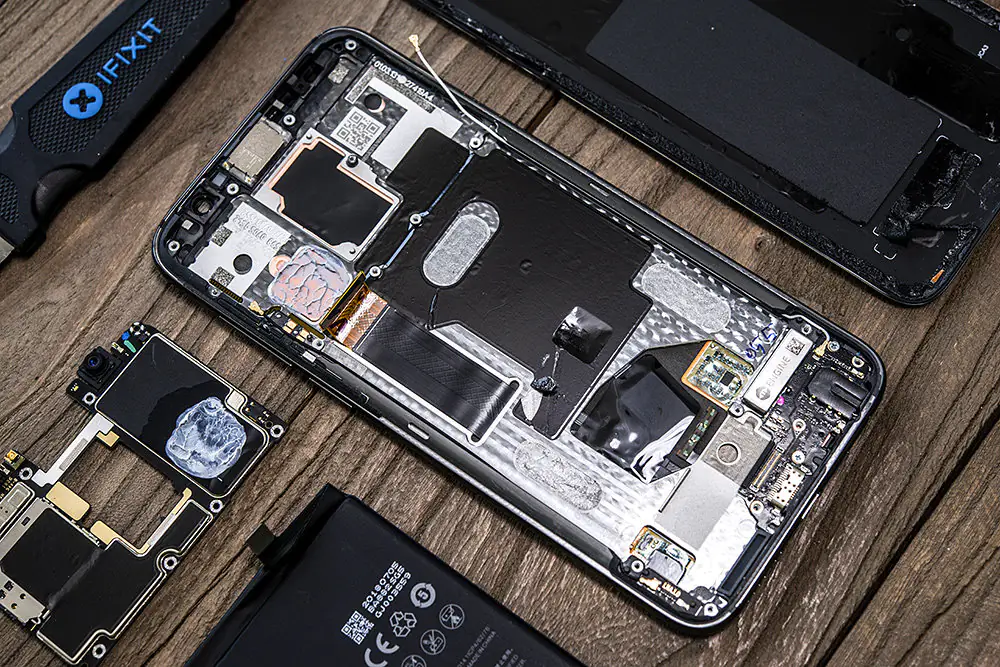
After removing the motherboard and battery, you can access the phone’s mid-frame. It is made of aluminum alloy, which is relatively lightweight. Currently, many smartphones use this material for their middle frame.
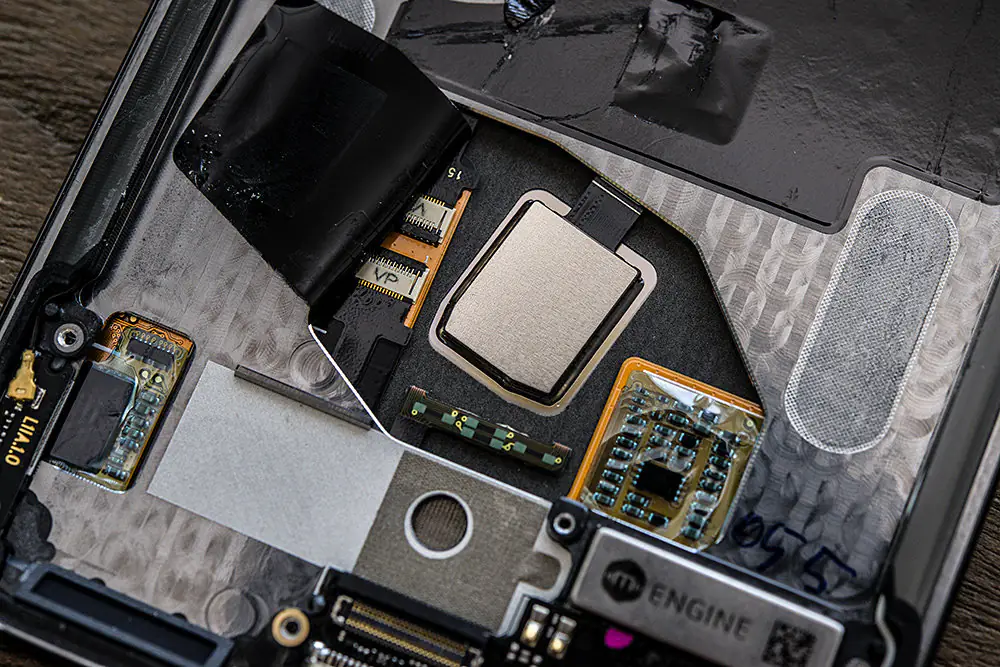
The mid-frame has an opening for the under-screen fingerprint sensor. Meizu specifically rotated the fingerprint sensor by 13.7 degrees to eliminate moiré patterns.
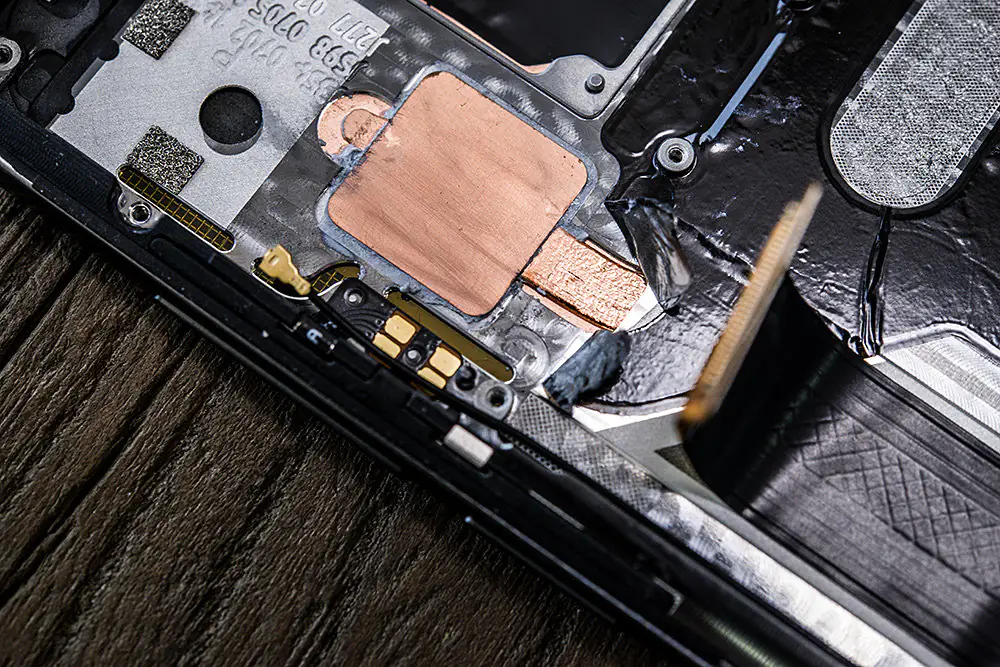
The heat pipe is embedded in the middle frame. To increase the heat dissipation area, a copper sheet is designed at the contact points between the heat pipes and the CPU. The heat pipes customized by Meizu have a thickness of 0.4 mm. When the temperature reaches a critical point, the vapor in the heat pipes carries away the heat generated by the motherboard, and it will liquefy once the temperature drops. In this way, the phone achieves better heat dissipation performance.
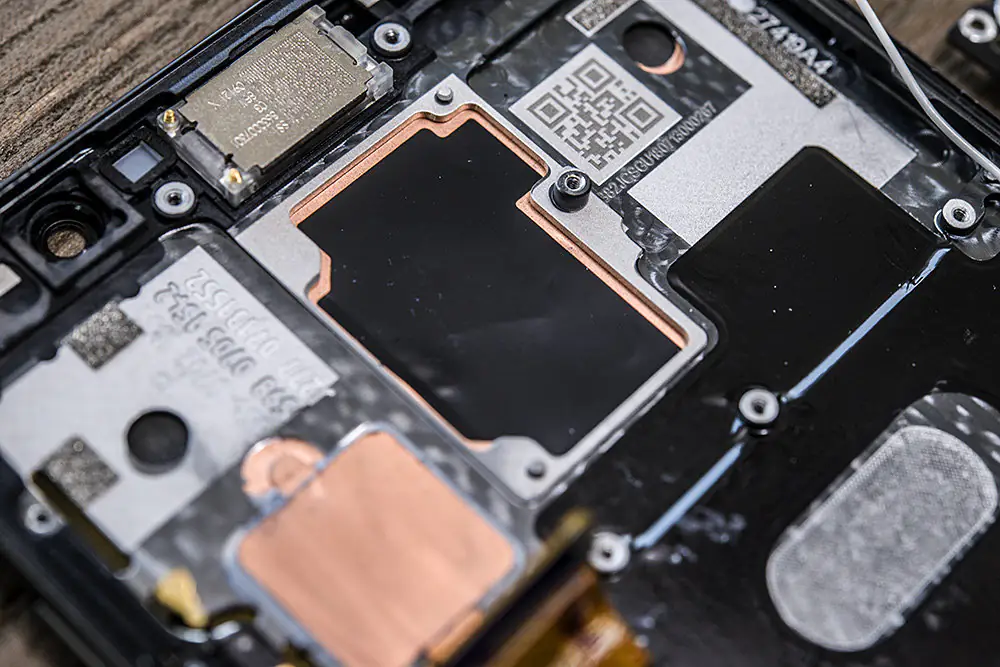
In addition to the aluminum alloy, the middle frame is also covered with copper foil. The copper foil can absorb heat from the motherboard, thereby achieving good heat dissipation.
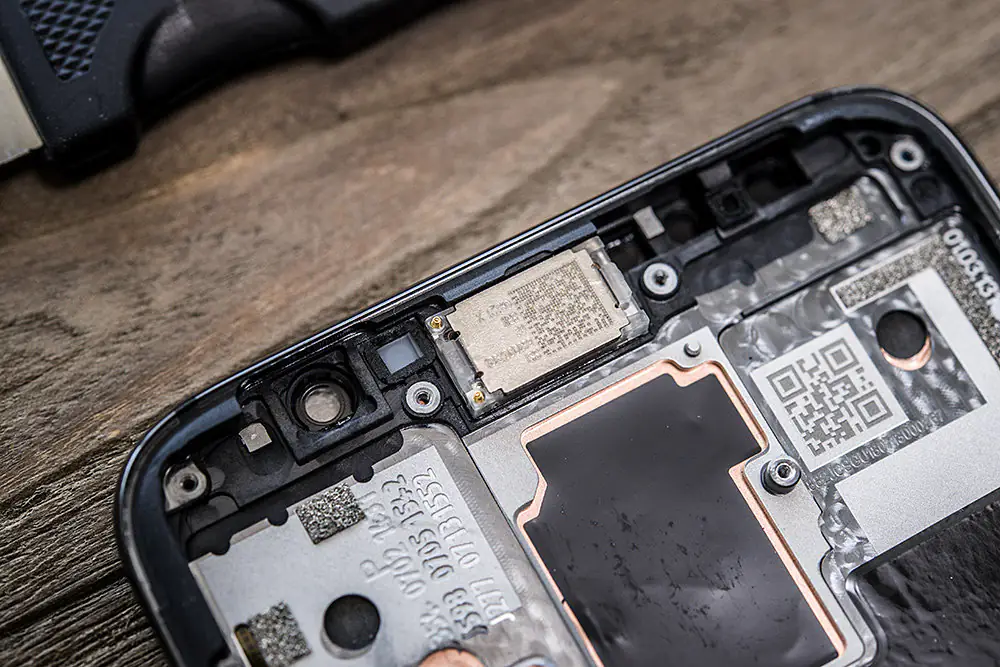
The earphones are placed in the top slot. This design aligns with Meizu’s simple and symmetric style.
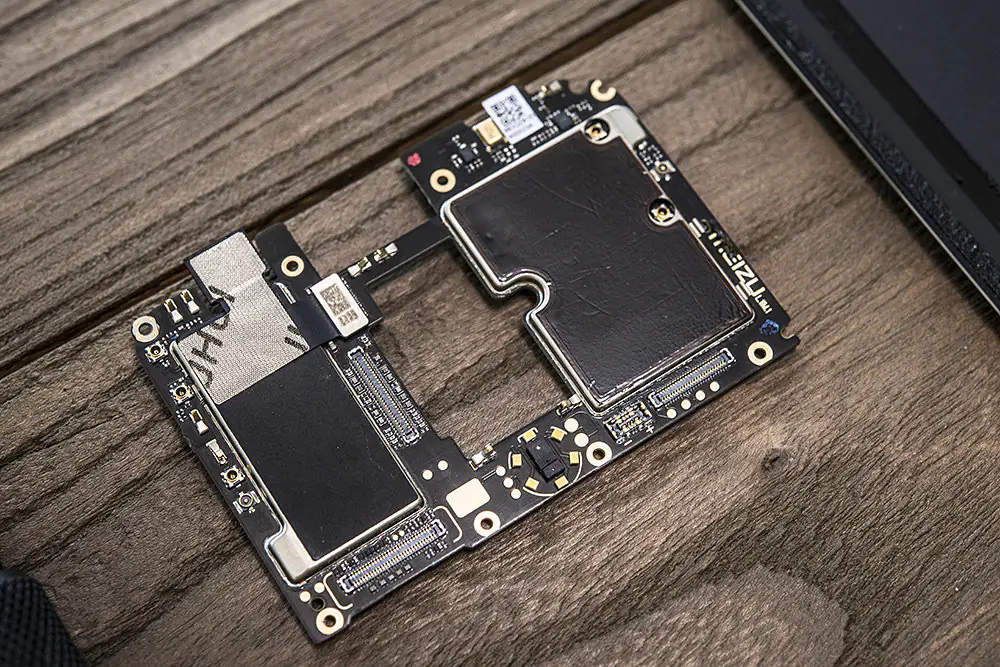
All the metal shields on the motherboard are removable, making the motherboard thinner but also increasing the difficulty of repairing the phone.
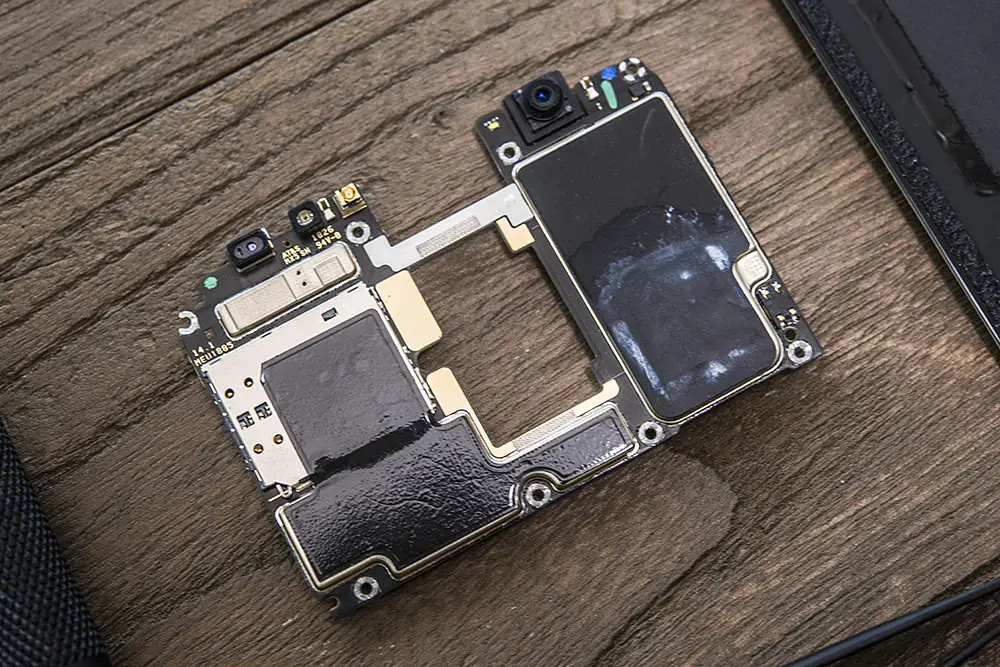
The main components on the back of the motherboard include the CPU and the power modules. These metal shields are also covered with graphite stickers that cannot be removed.
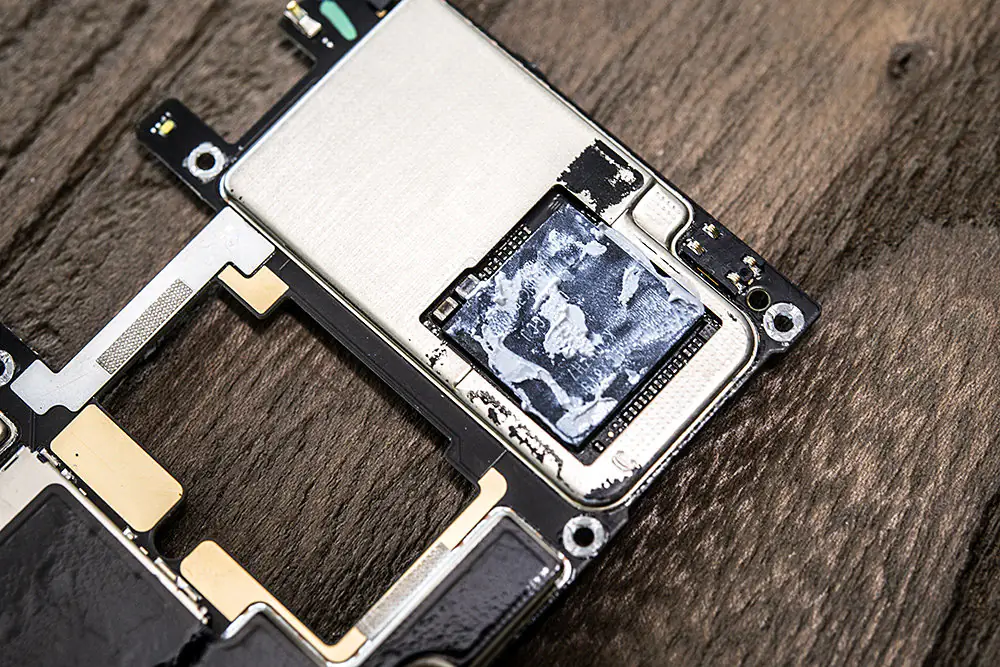
Peel off the thermal pad in the CPU area. We found that thermal paste has been applied to the CPU. This design is intended to enhance heat dissipation.
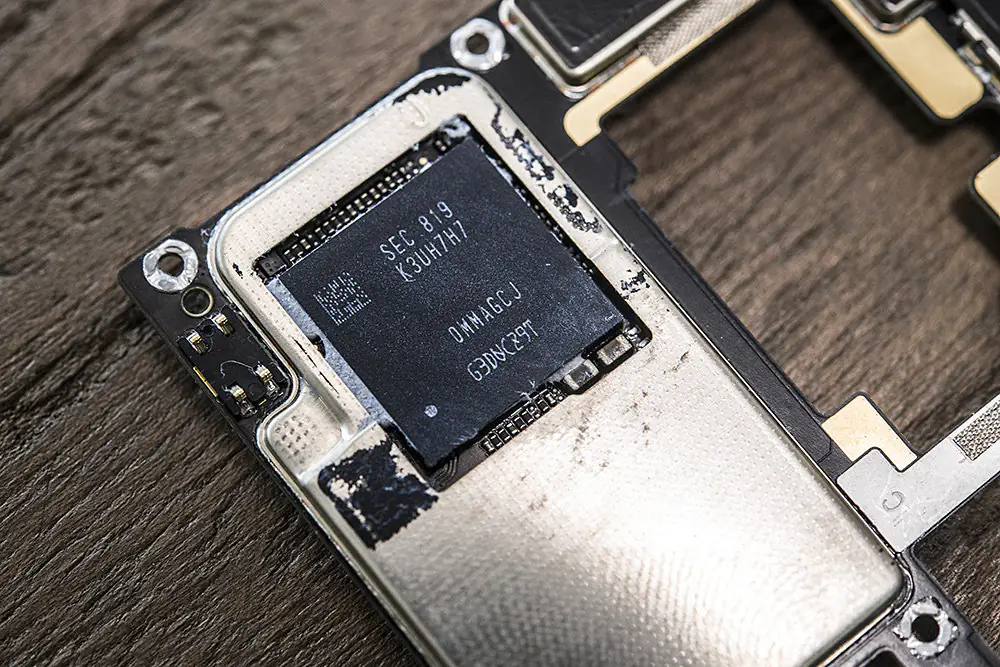
After removing the thermal paste, the memory chip can be accessed. The Qualcomm Snapdragon 845 processor is packaged together with the memory chip, so only the memory chip is visible. The CPU is soldered under the memory chip. This dual-layer stacked design saves more space on the motherboard.
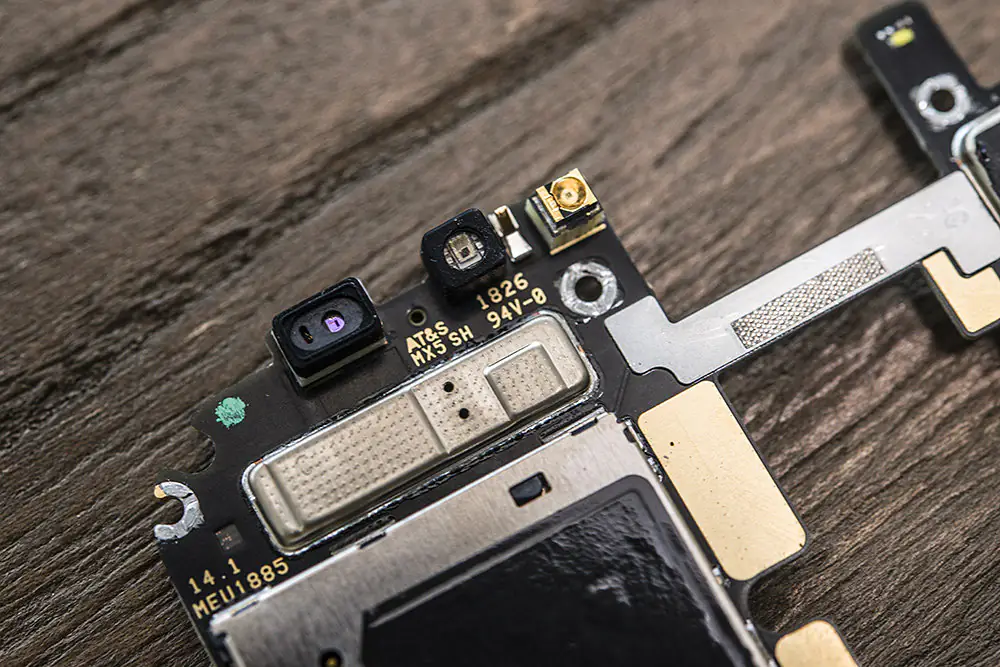
These are the proximity and light sensors.
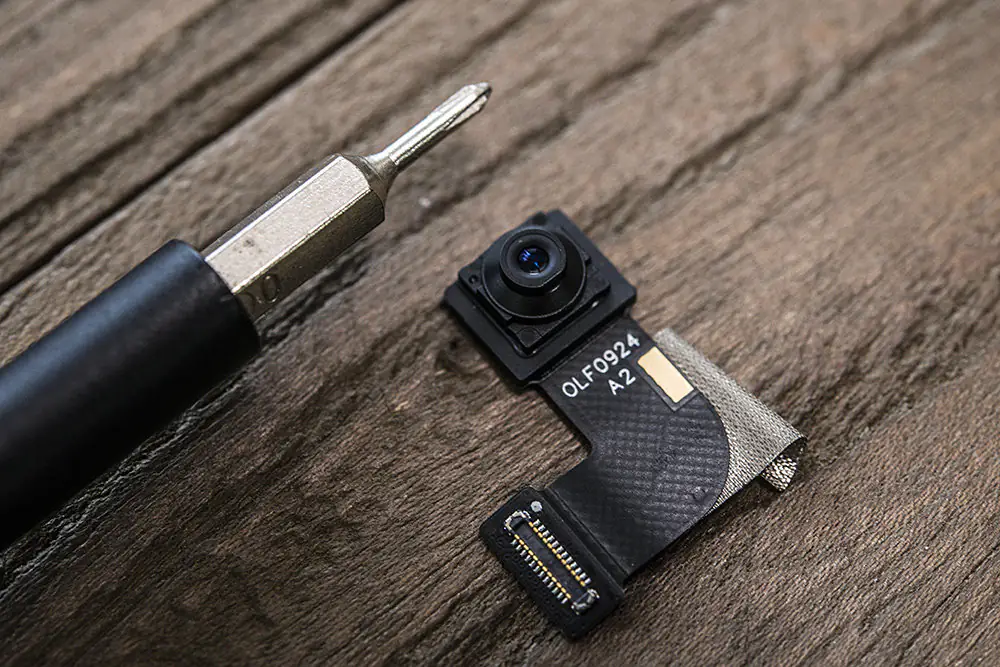
The smartphone comes with a 20MP front camera for selfies. Meizu has created the world’s smallest front camera, with a top bezel of only 7 mm. It is precisely this world’s smallest front camera that enables the phone to achieve an ultra-narrow top bezel.
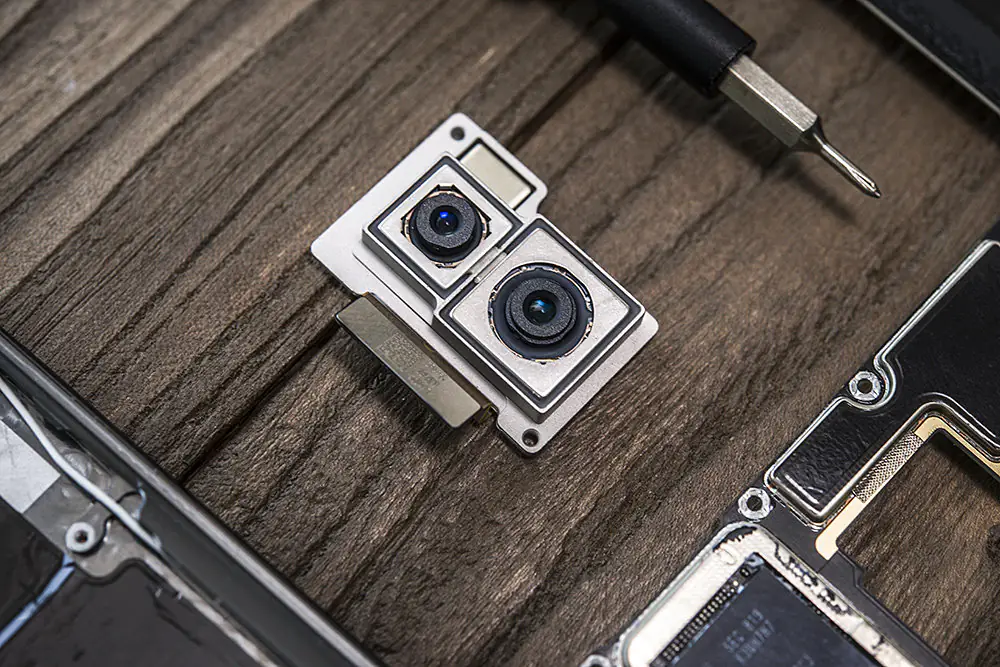
This phone features a dual rear camera setup with 12MP and 20MP sensors and uses a ring LED to enhance image quality. It also comes with Sony IMX380 and IMX350 sensors, allowing for 3x lossless zoom and bokeh effects. The Meizu 15 also uses the IMX380 sensor and the Snapdragon 845 processor to deliver excellent image quality.
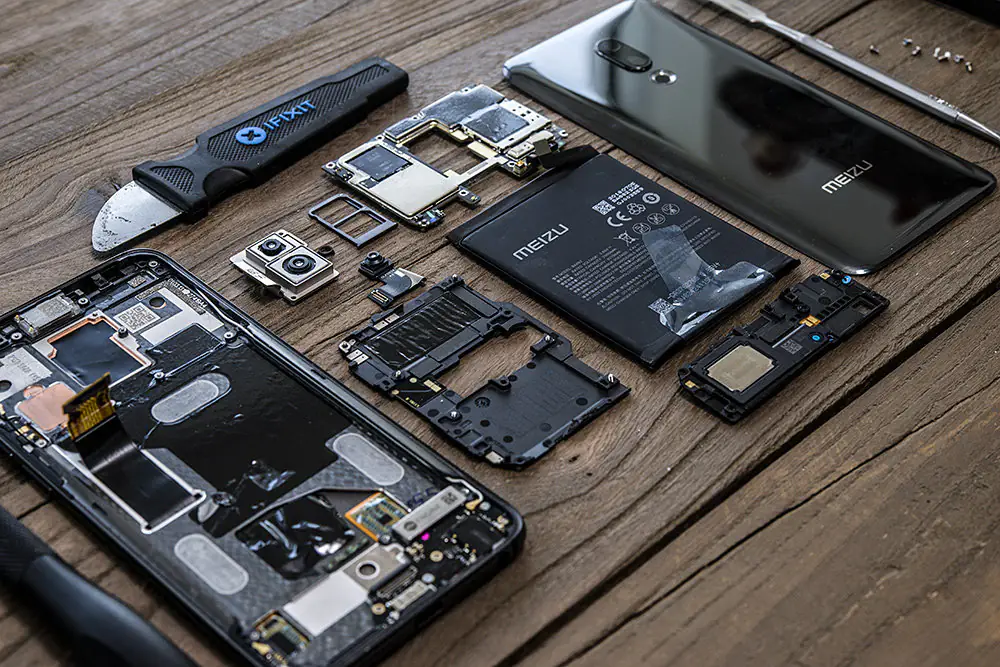
After the teardown, I found that the Meizu 16 has excellent workmanship and high-quality components, particularly its heat-dissipation design. As for the heat dissipation design, a layer of copper foil is placed on the middle frame, the motherboard is covered with graphite stickers, and the thermal grease is applied to the CPU. In the meantime, it also adopts a heat pipe to dissipate the heat.
Thank you for the great and detailed review. Can you explain how to apply the glass back cover on the phone after it was taken apart?
Great job, I love this phone. I have a question: Do you know where the Test Point is located on the motherboard? I would like to unlock the bootloader.