
As we all know, Huawei launched the Honor 10 last month. This phone has 6GB RAM and is powered by the Huawei AI Kirin 970 processor. It also has excellent photography capabilities. With its impressive appearance and high specifications, the Honor 10 has received great popularity among consumers. Today, we will take apart the phone to explore its internal structure and workmanship.
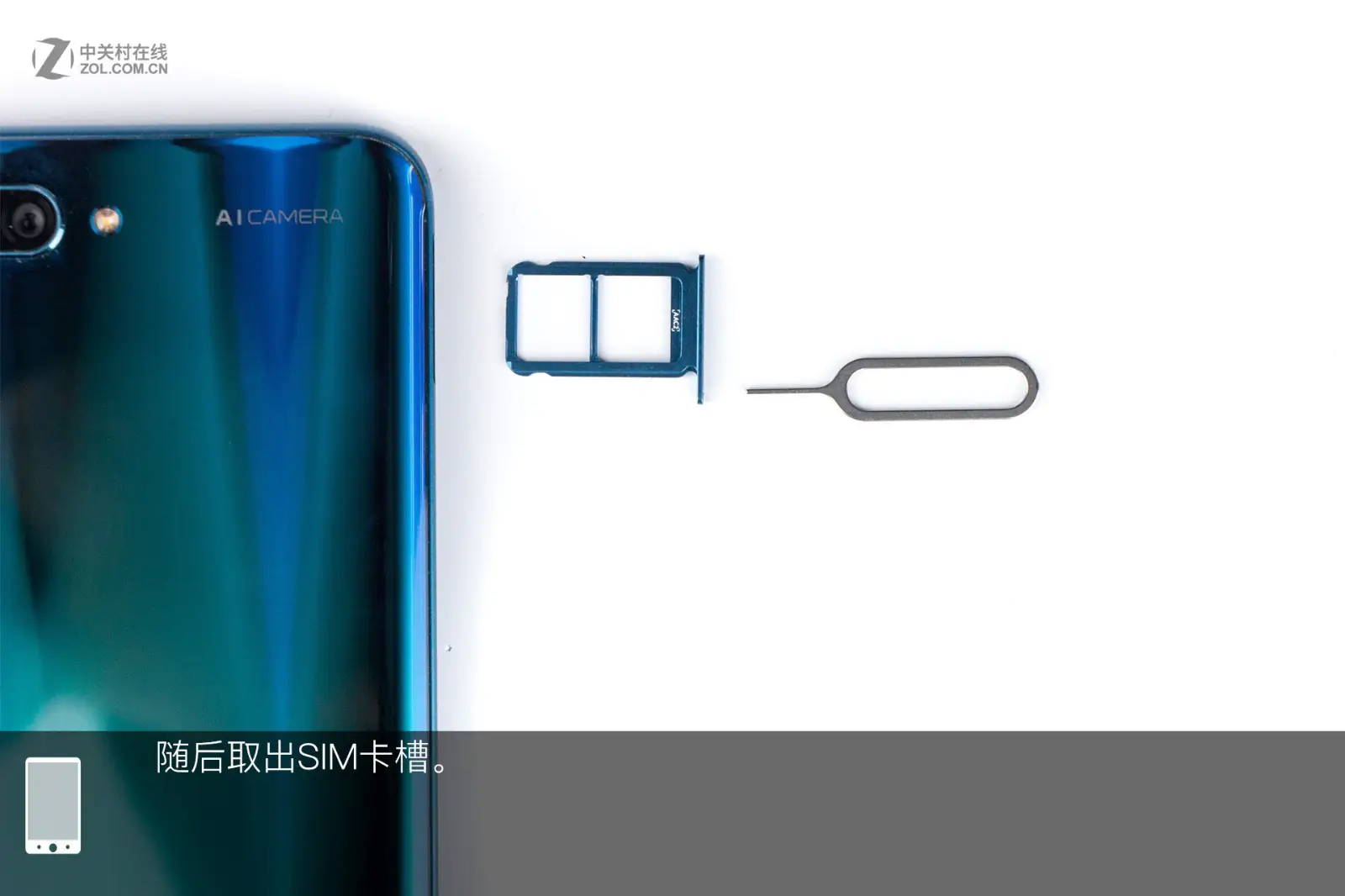
First, remove the SIM card tray.
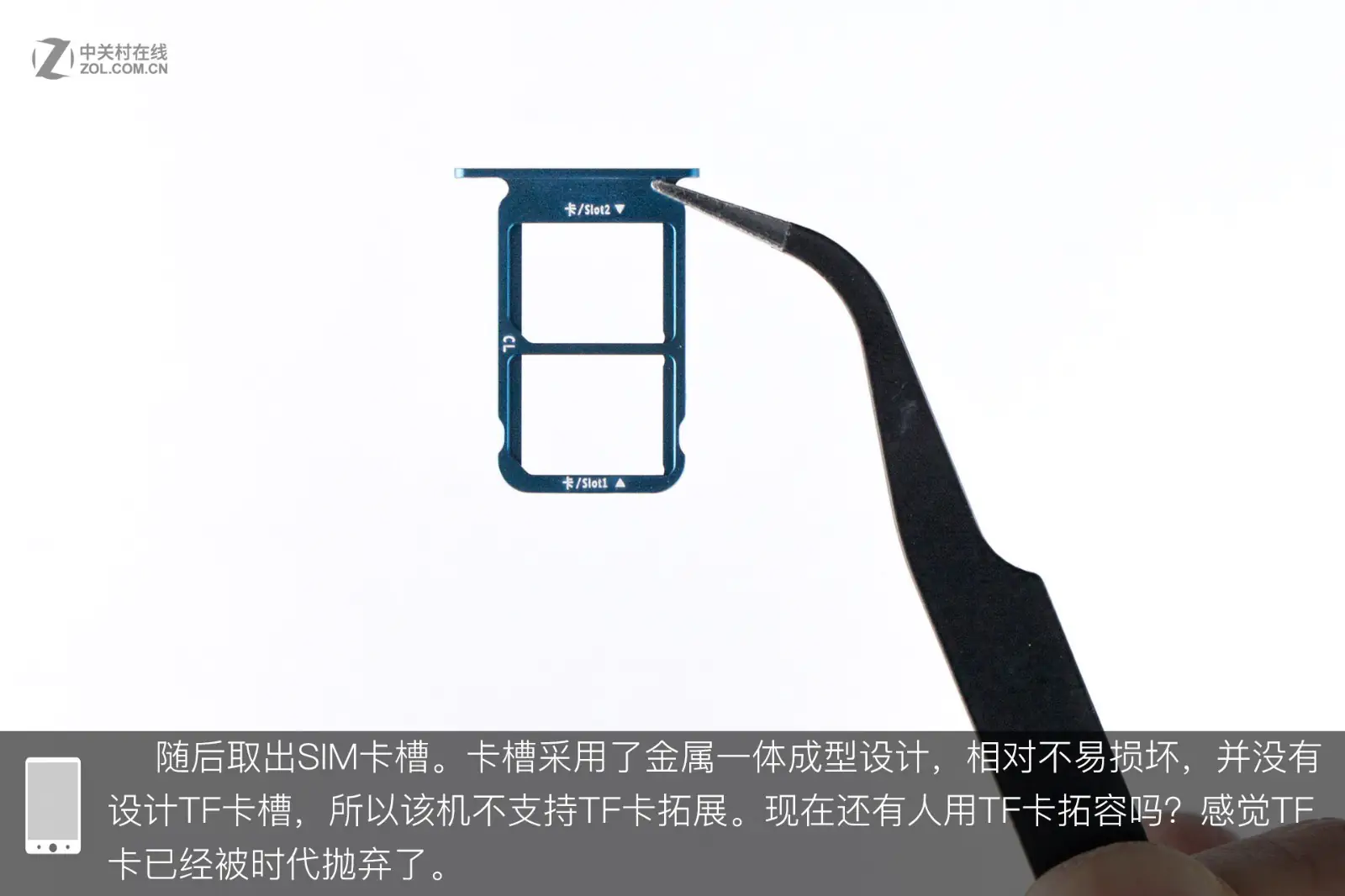
After taking out the SIM card tray, we found that it has a unibody metal design, which prevents it from easily breaking. In addition, the tray does not come with a TF card slot, which means the phone does not support TF card expansion.
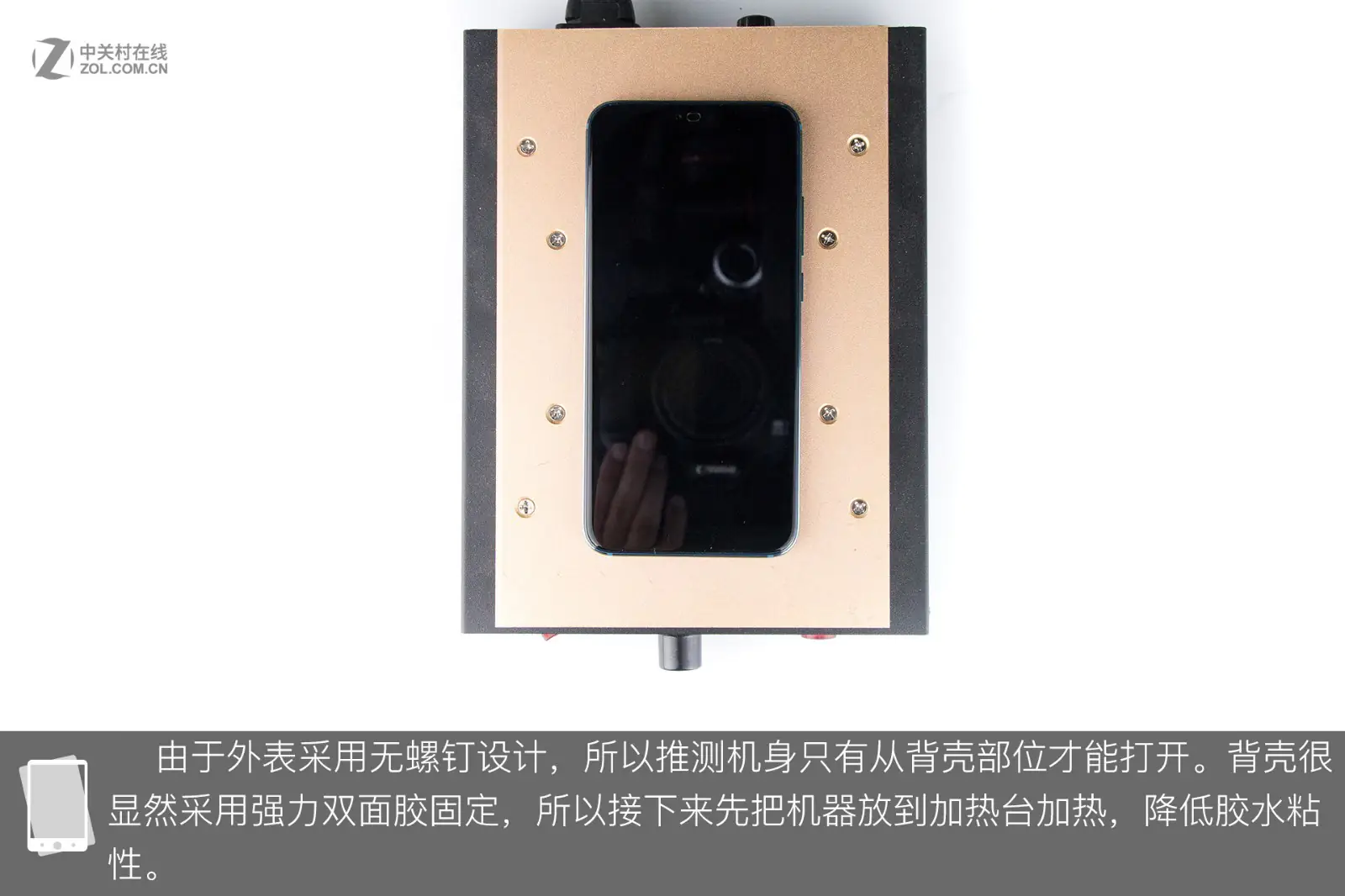
Since no screws were found on the surface of the phone, I decided to separate the back cover from the body to explore the internal structure. It turned out that the back cover was fixed with double-sided tape, so I heated the device to reduce the adhesive strength of the tape.
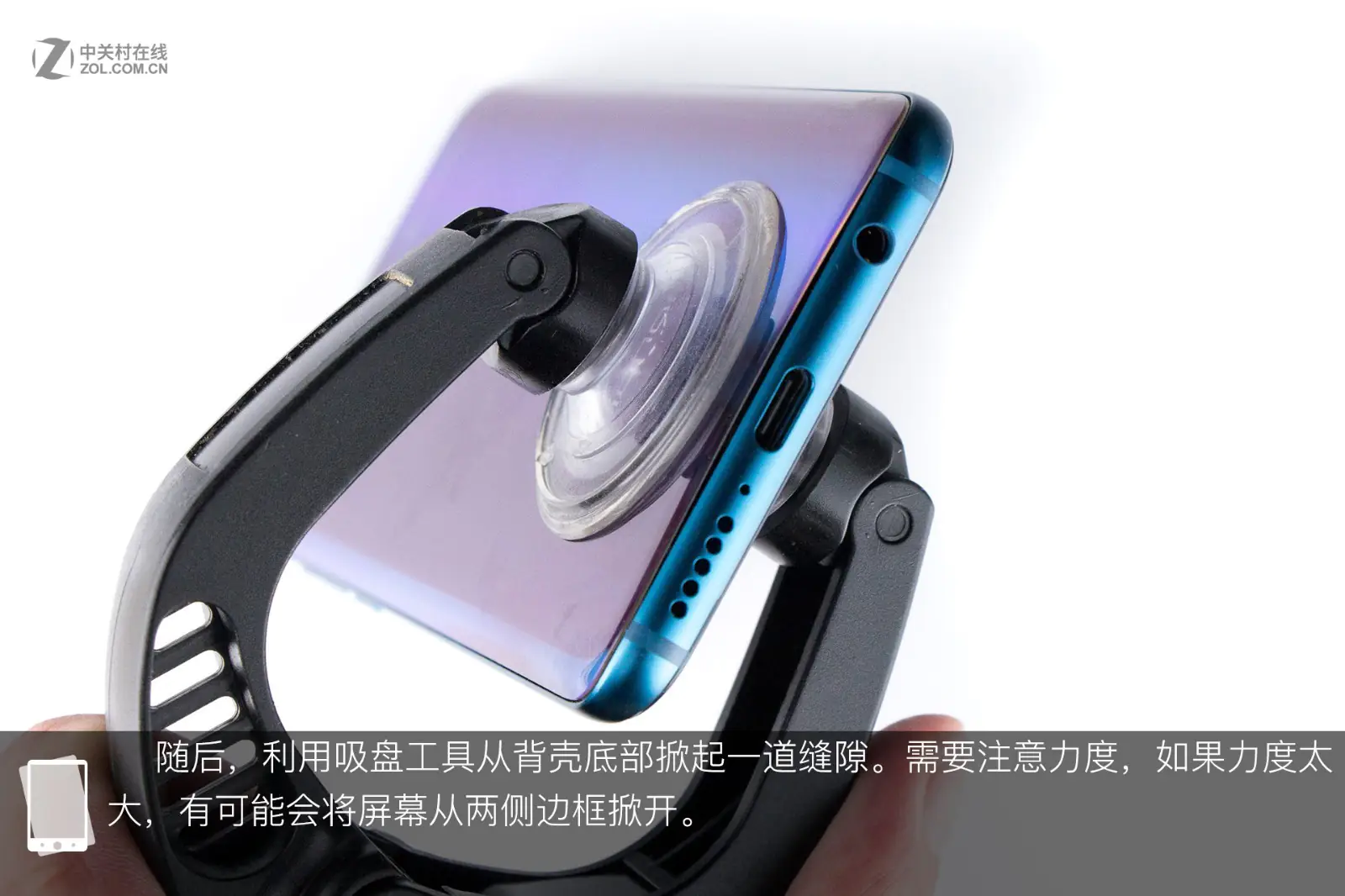
Then, use the suction cup to gently pry the back cover away from the phone body.
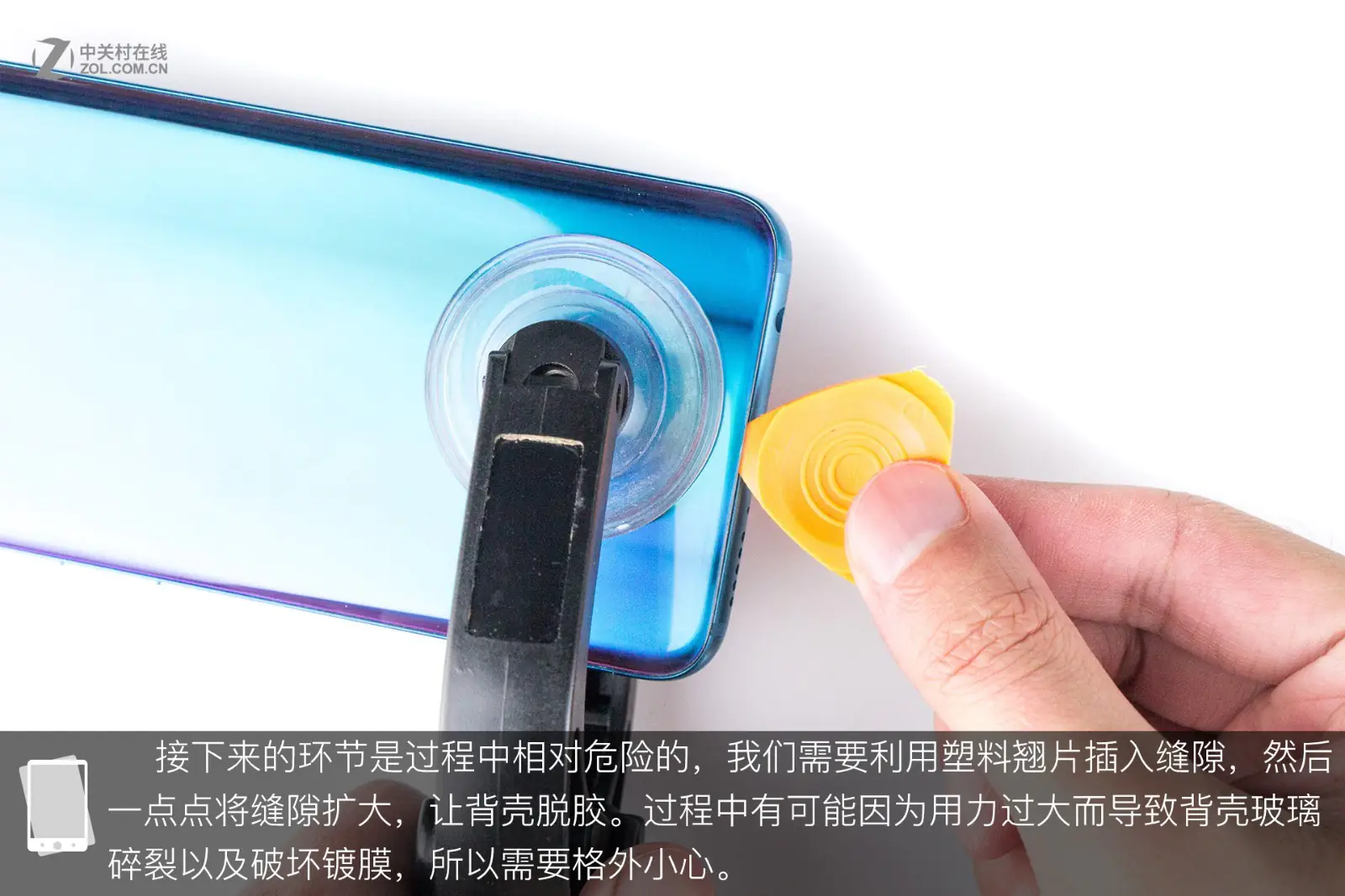
Next, I insert a pick into the gap and gradually pry it open to separate the back cover from the phone body. During the process, please avoid using excessive force, as it may break the glass or damage the coating on the back.
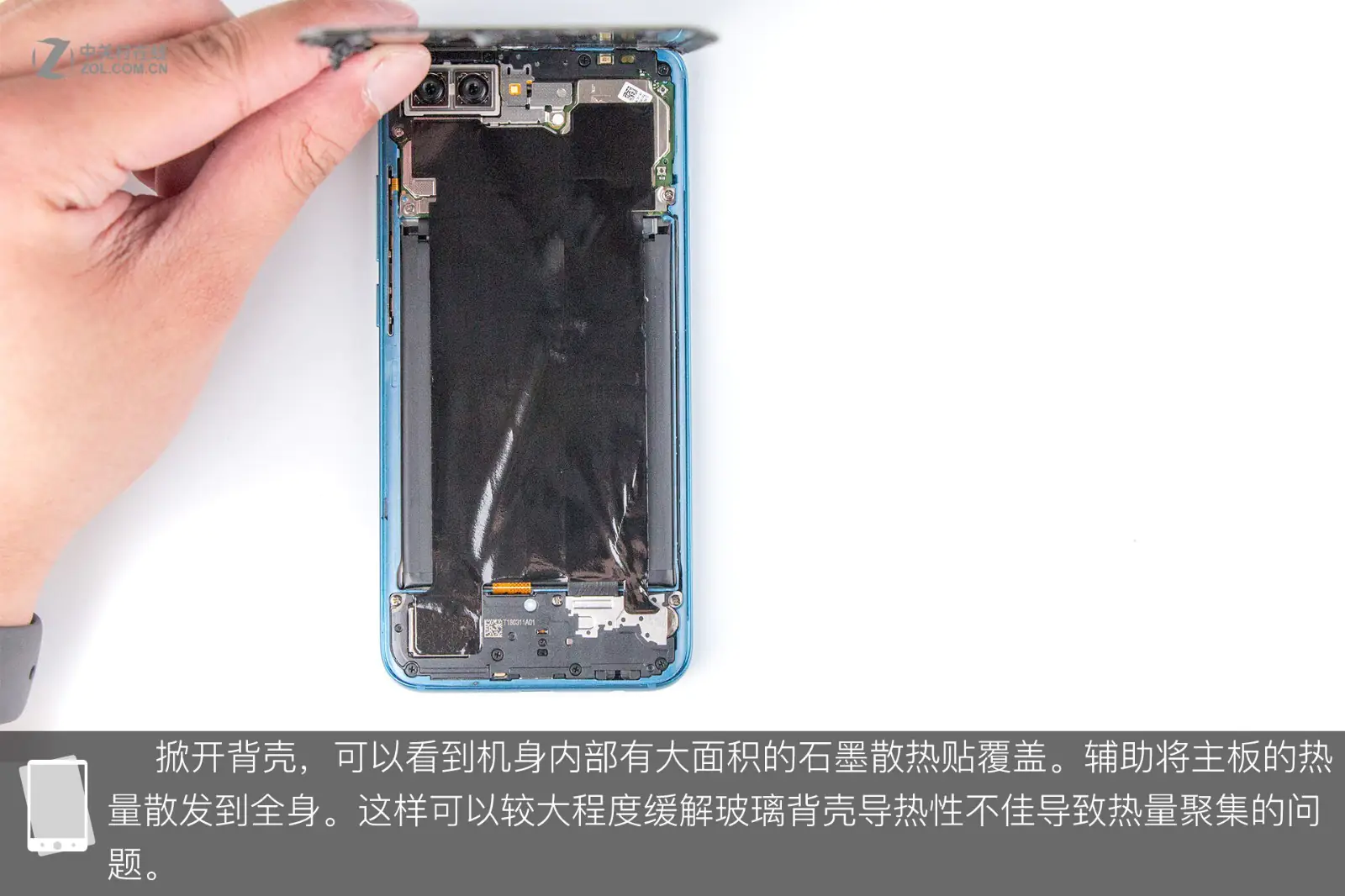
After removing the back cover, we can see that most components inside have been covered by graphite stickers. The sticker is used to help with heat dissipation from the motherboard, and this design can effectively solve the problem of heat accumulation caused by the poor heat dissipation performance of the glass back cover.
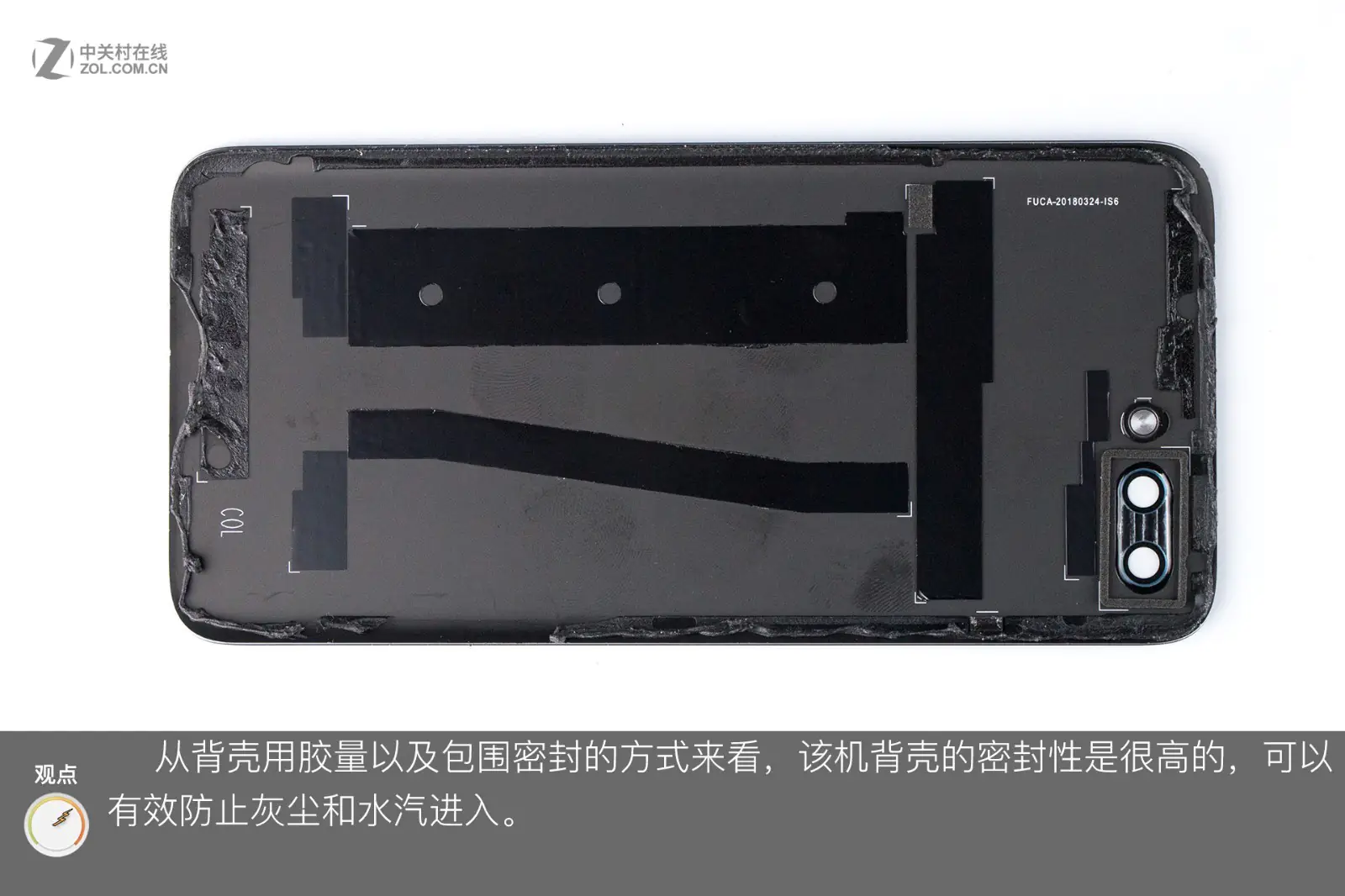
The edges of the back cover are sealed with glue, which can effectively prevent dust and water from entering the interior.
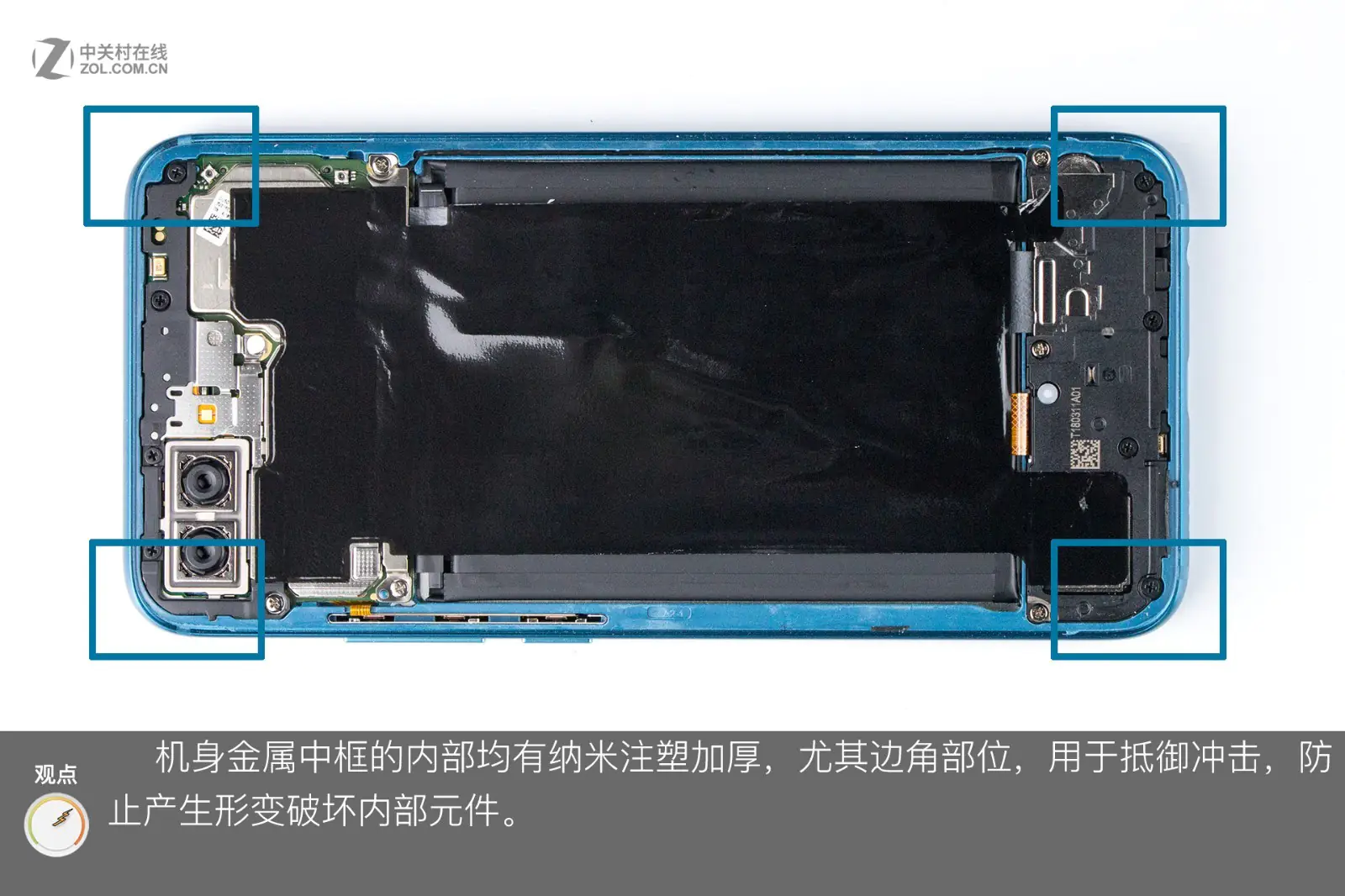
Its metal middle frame has been reinforced and thickened, especially at the four corners. These thickened parts mainly cushion the impact of the phone to protect the internal components from damage.
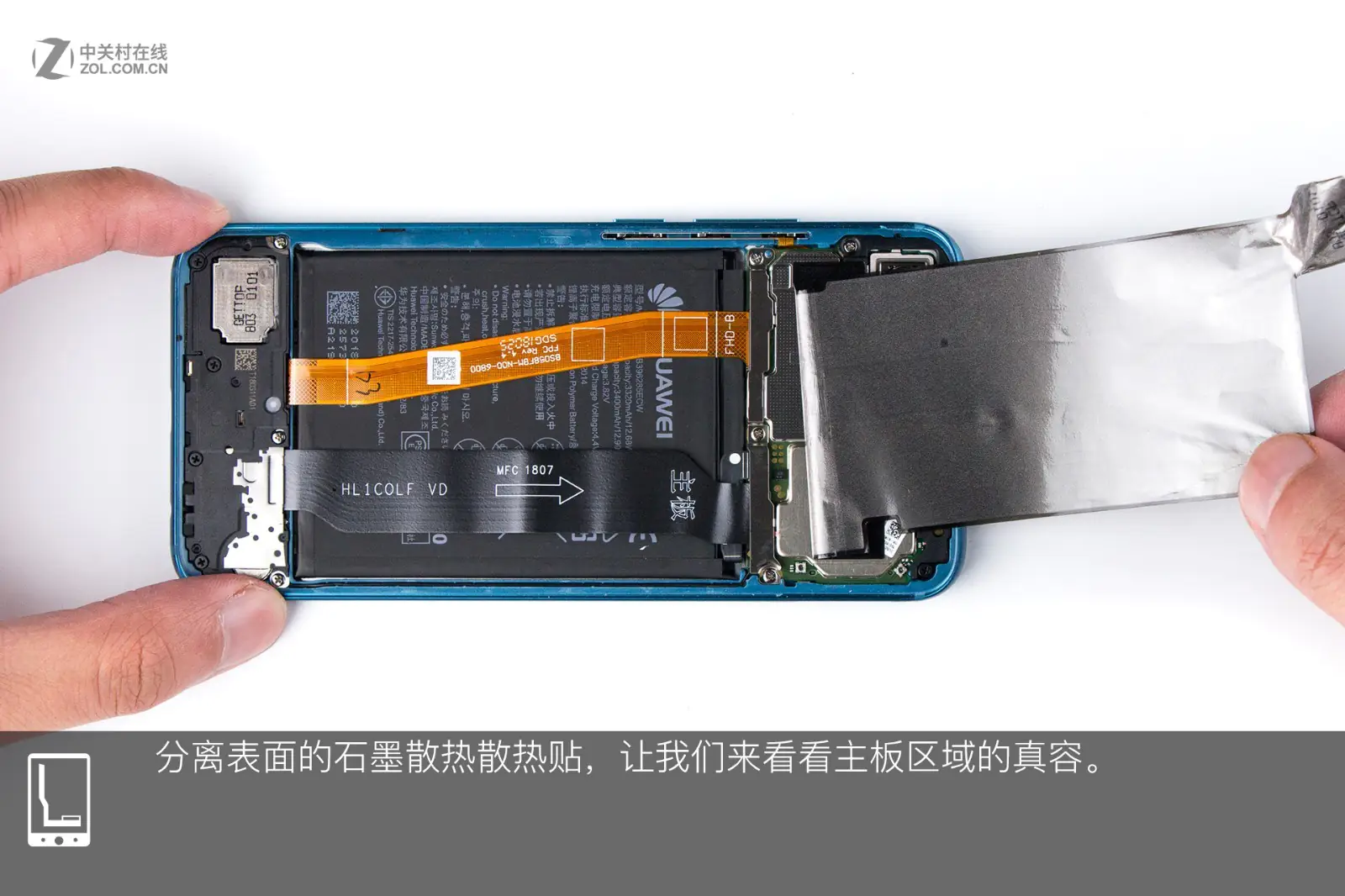
Uncover the graphite sticker, and you can access the battery and motherboard.
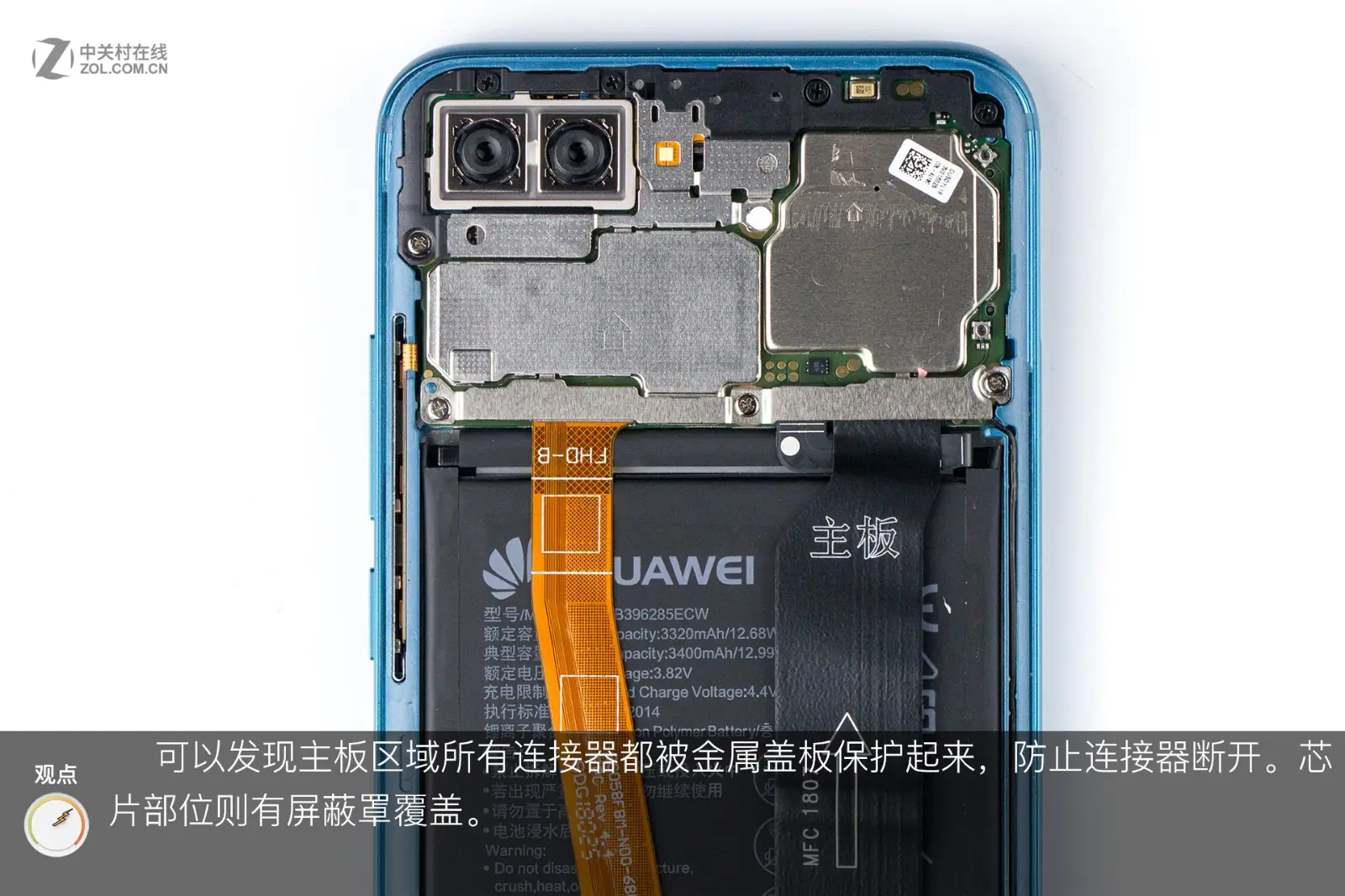
All the connectors on the motherboard are protected by a metal plate to avoid disconnection. The chip part is covered by metal shields.
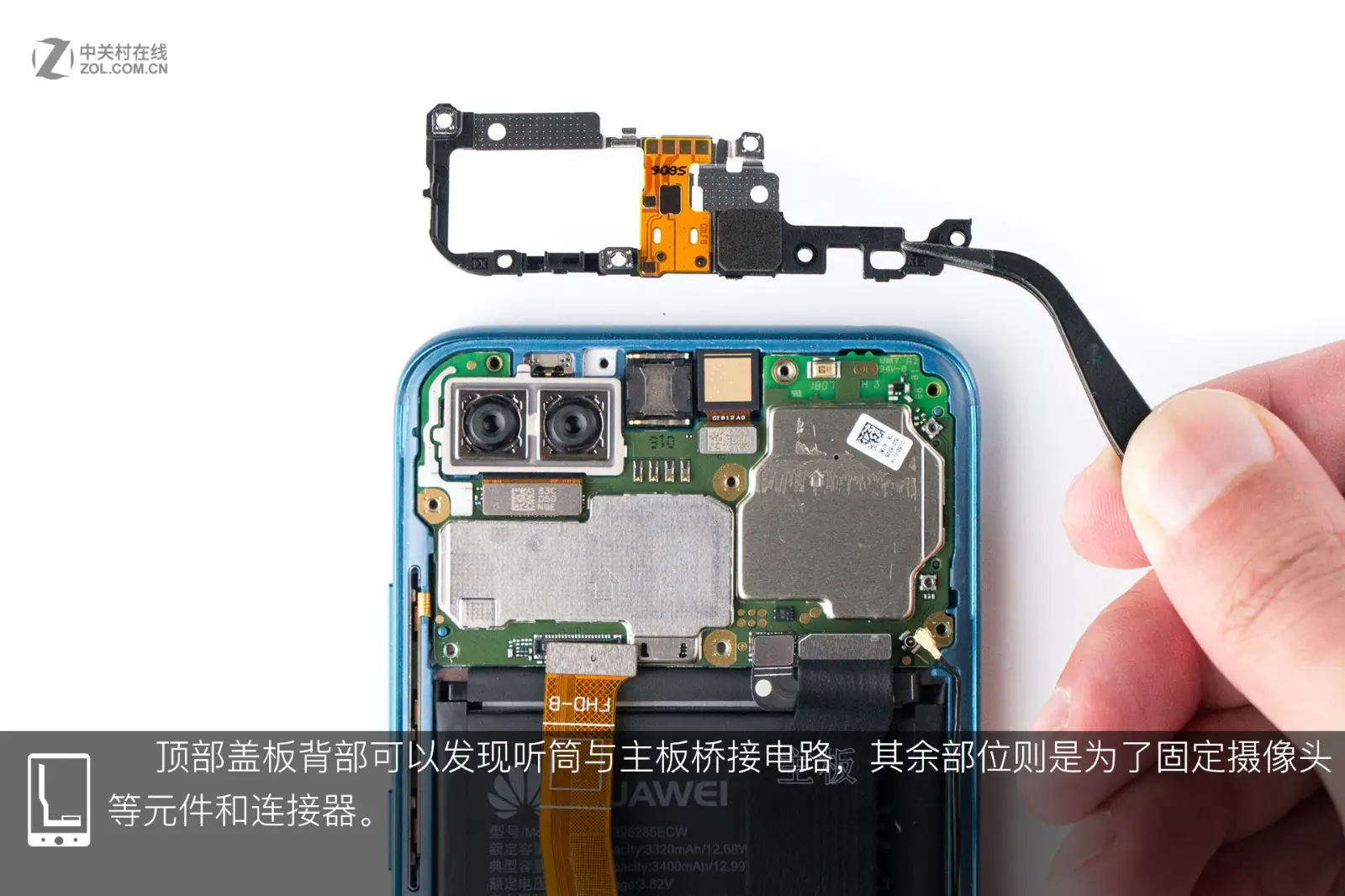
The bridge circuit between the headphones and the motherboard is located at the top of the back of the metal plate. The other part is used to secure the camera, connectors, and other components.
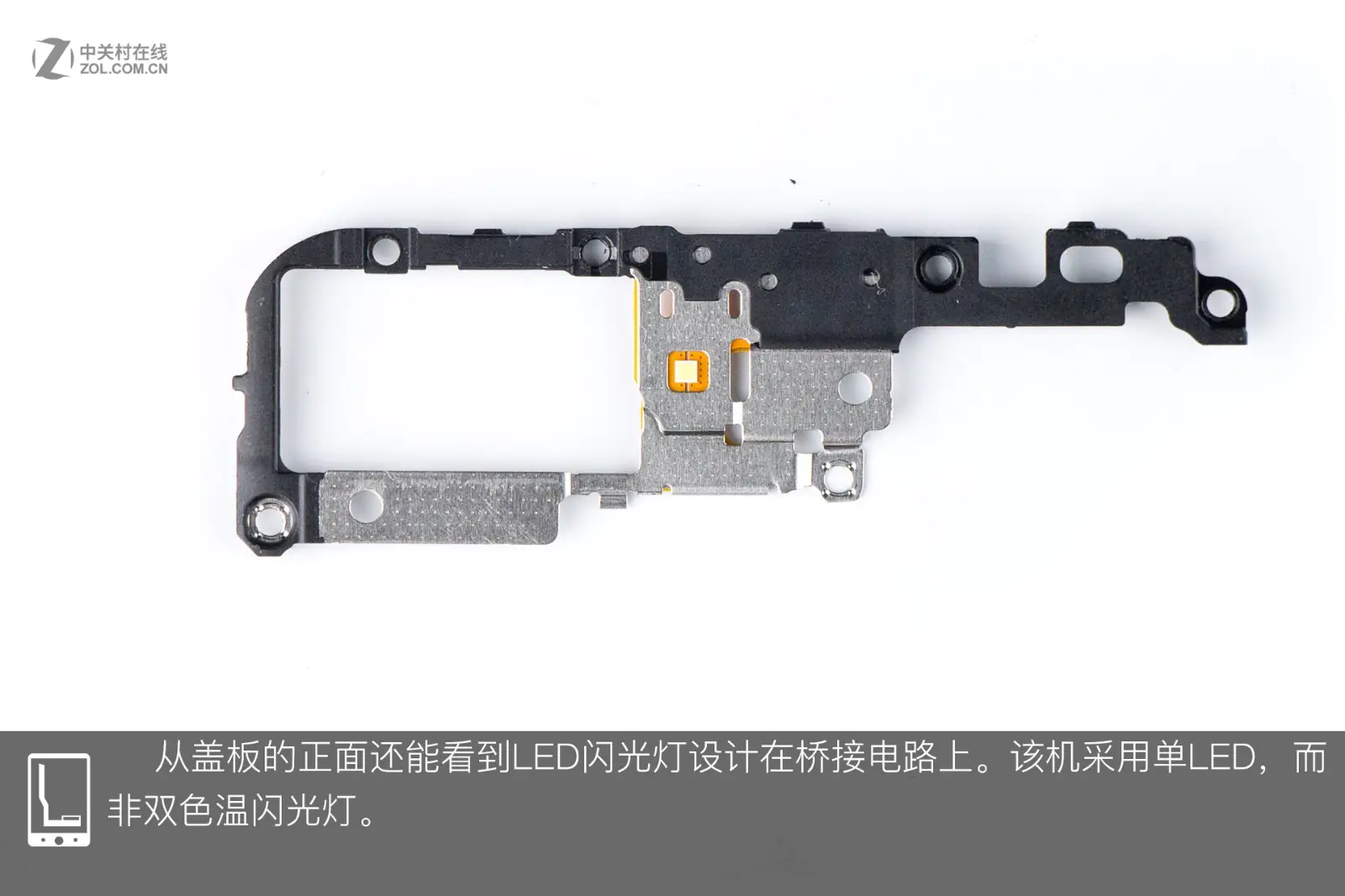
The LED flash is designed on the bridge circuit at the front of the metal plate. The phone comes with an LED flash.
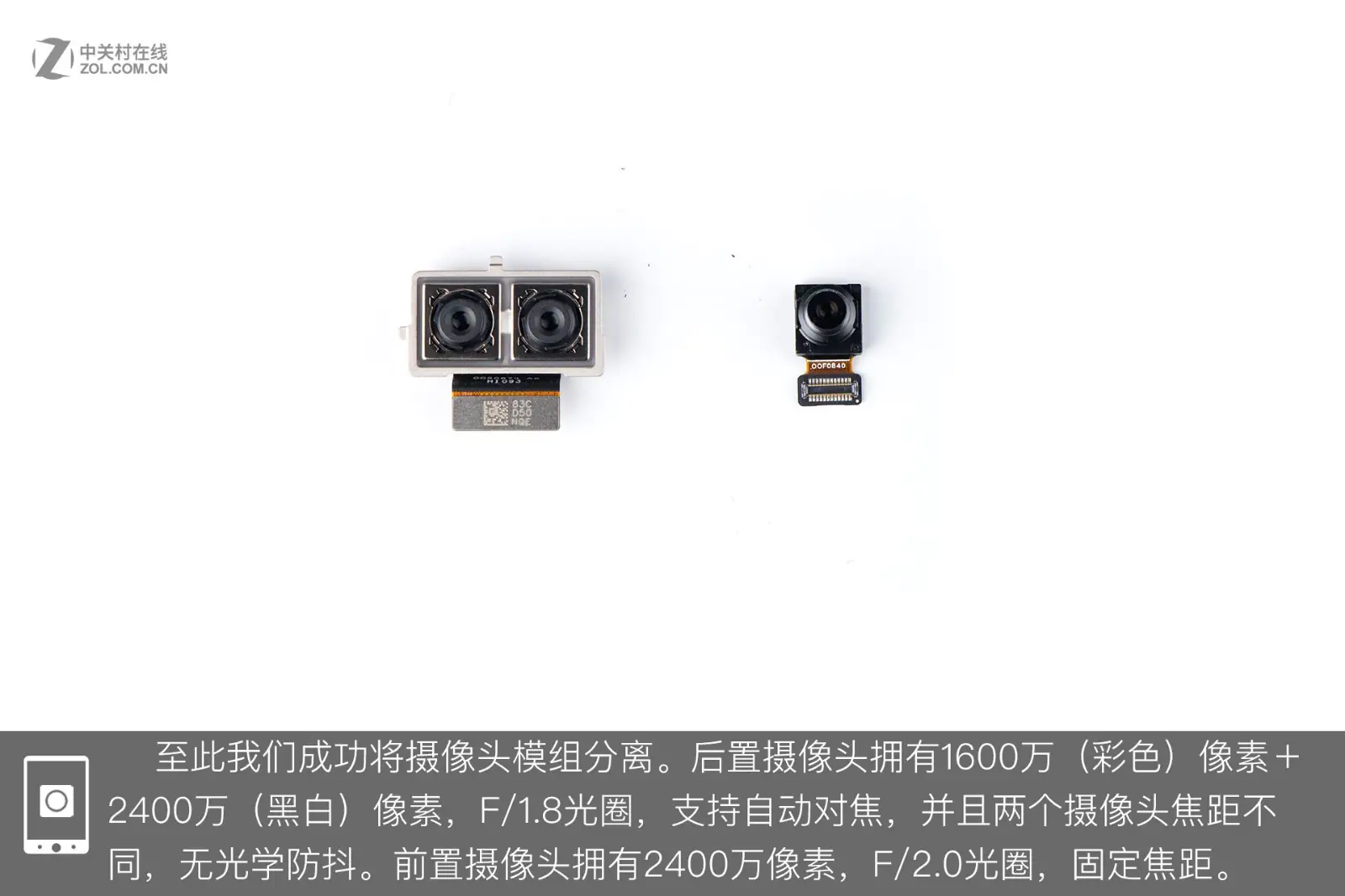
We have successfully disassembled the camera module. This smartphone features a dual rear camera setup with a 16MP sensor and a 24MP sensor. The dual-camera system supports autofocus but lacks optical image stabilization. It also comes with a 24MP front camera with an F/2.0 aperture.
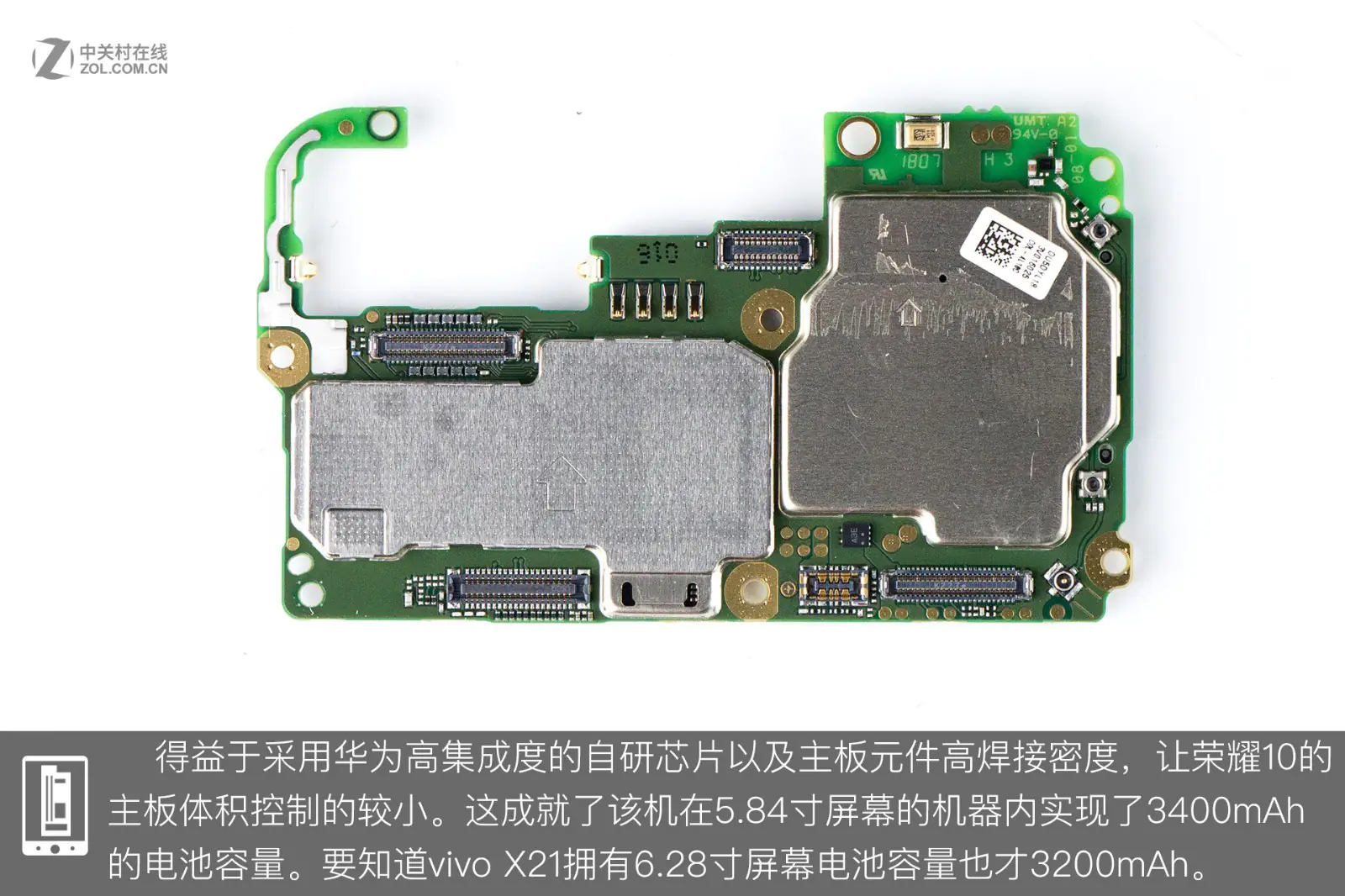
Thanks to the highly integrated chips developed by Huawei and the high-density components on the motherboard, the Honor 10 achieves a compact motherboard design. This is the key reason why its 5.84-inch body can pack a 3400mAh battery. After all, the Vivo X21 has a 6.28-inch screen but only packs a 3200mAh battery.
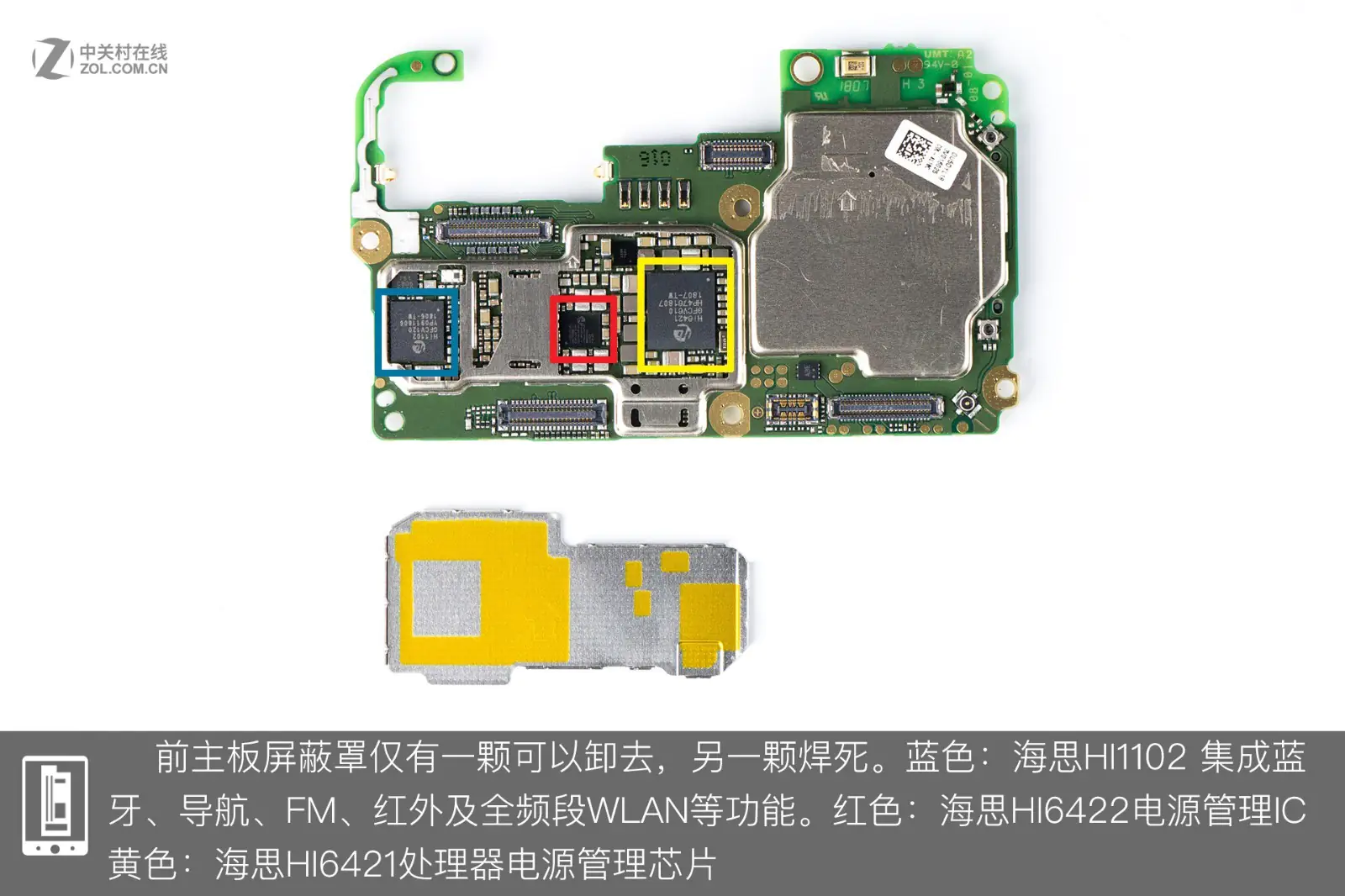
There is only a metal shield on the motherboard, which can be removed. The part with the blue box is a Hisilicon HI1102, which has Bluetooth, FMs, and other functions. The part with the red box is a Hisilicon HI6422 power management chip. The part with the yellow box is a Hisilicon HI6421 power management chip.
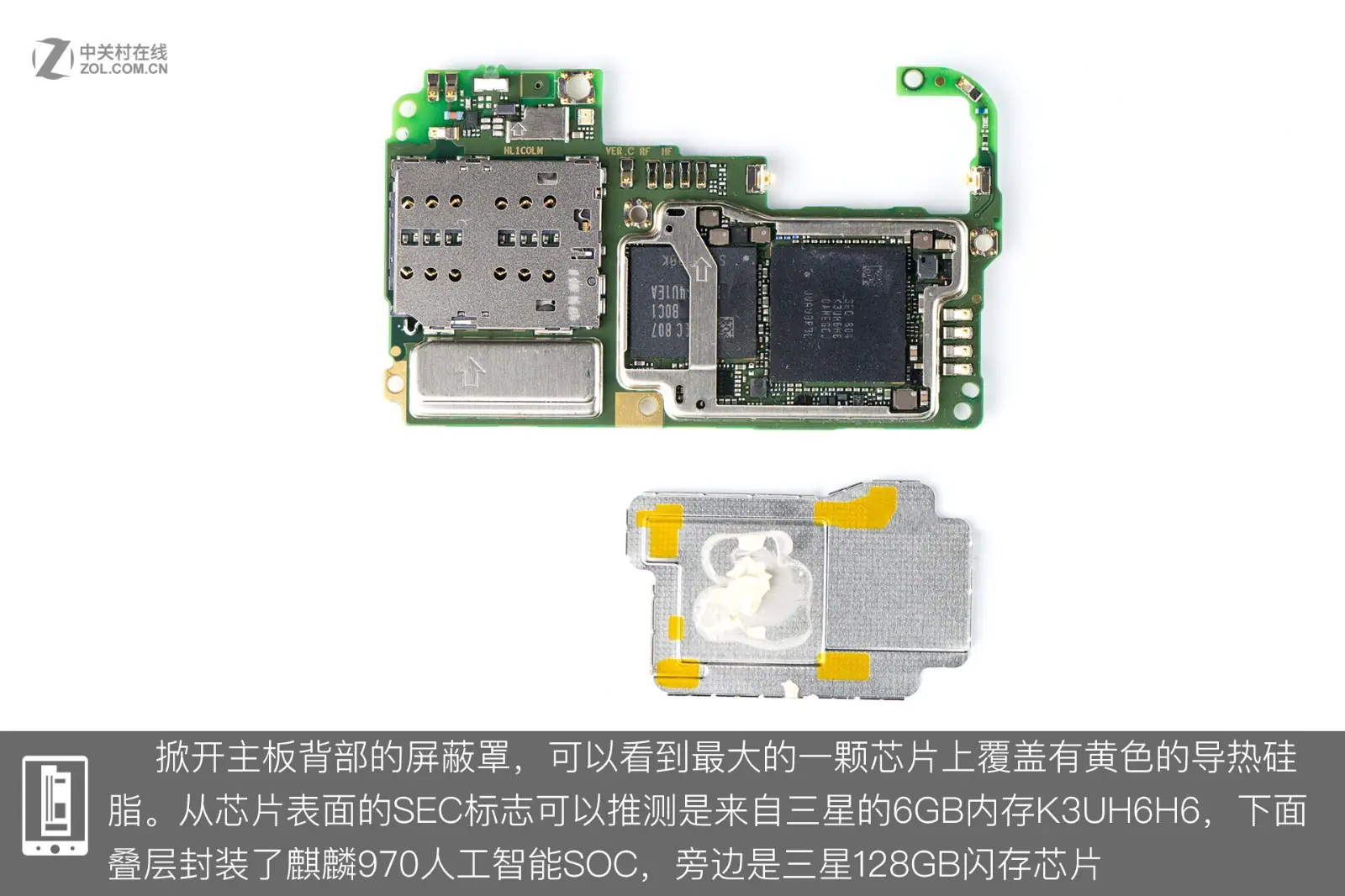
Remove the metal shield on the back of the motherboard, and we can see a chip covered with yellow thermal grease. According to the SEC label on the chip, we can infer that it is a Samsung 6GB K3UH6H6 chip. The Kirin 70 chip is sealed under it. The Samsung 128GB flash memory chip is located near the processor.
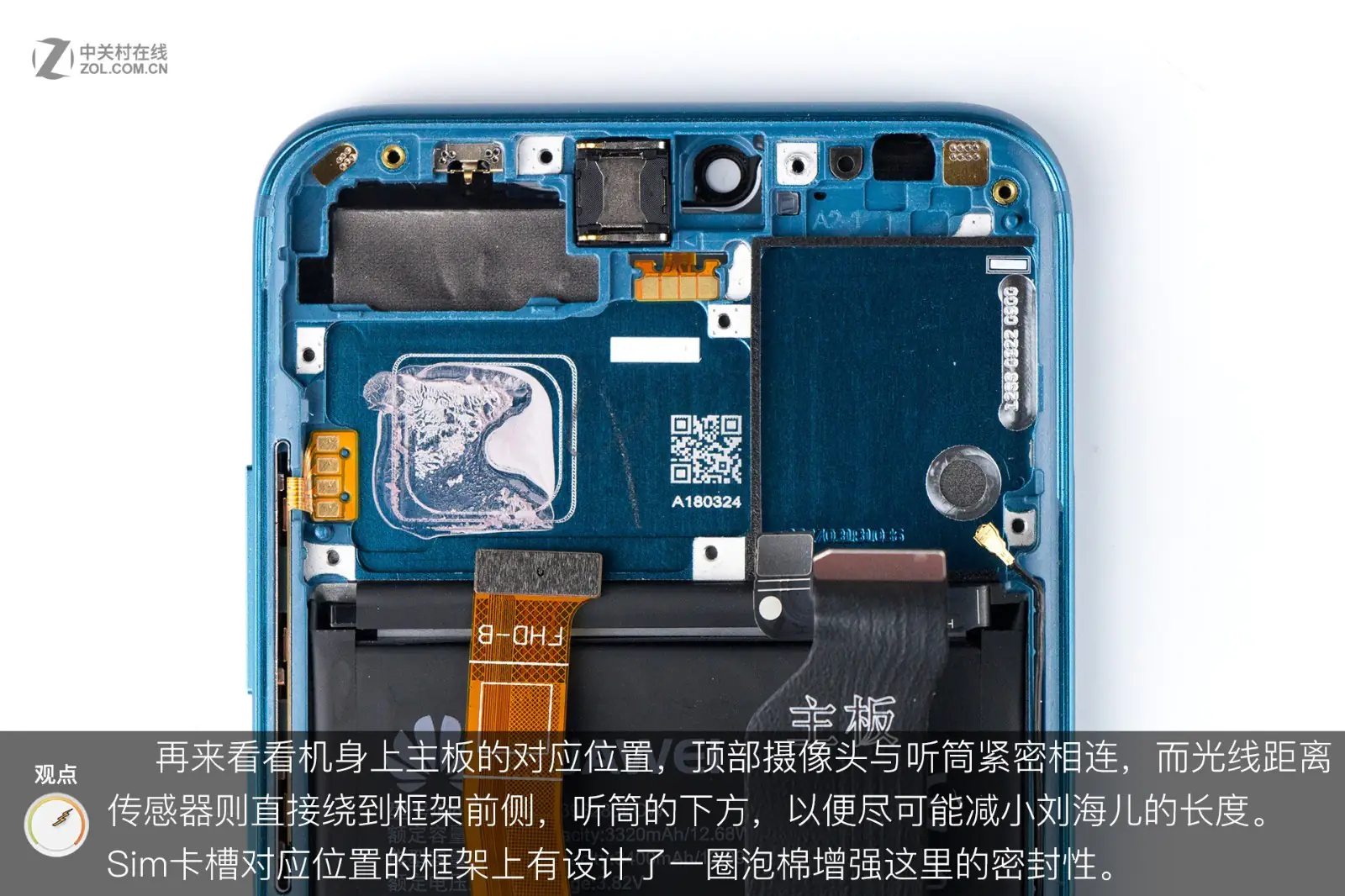
The camera and earphones are closely connected. The light distance sensor is located under the earphone. The foam is designed in the SIM card slot to improve its sealing.
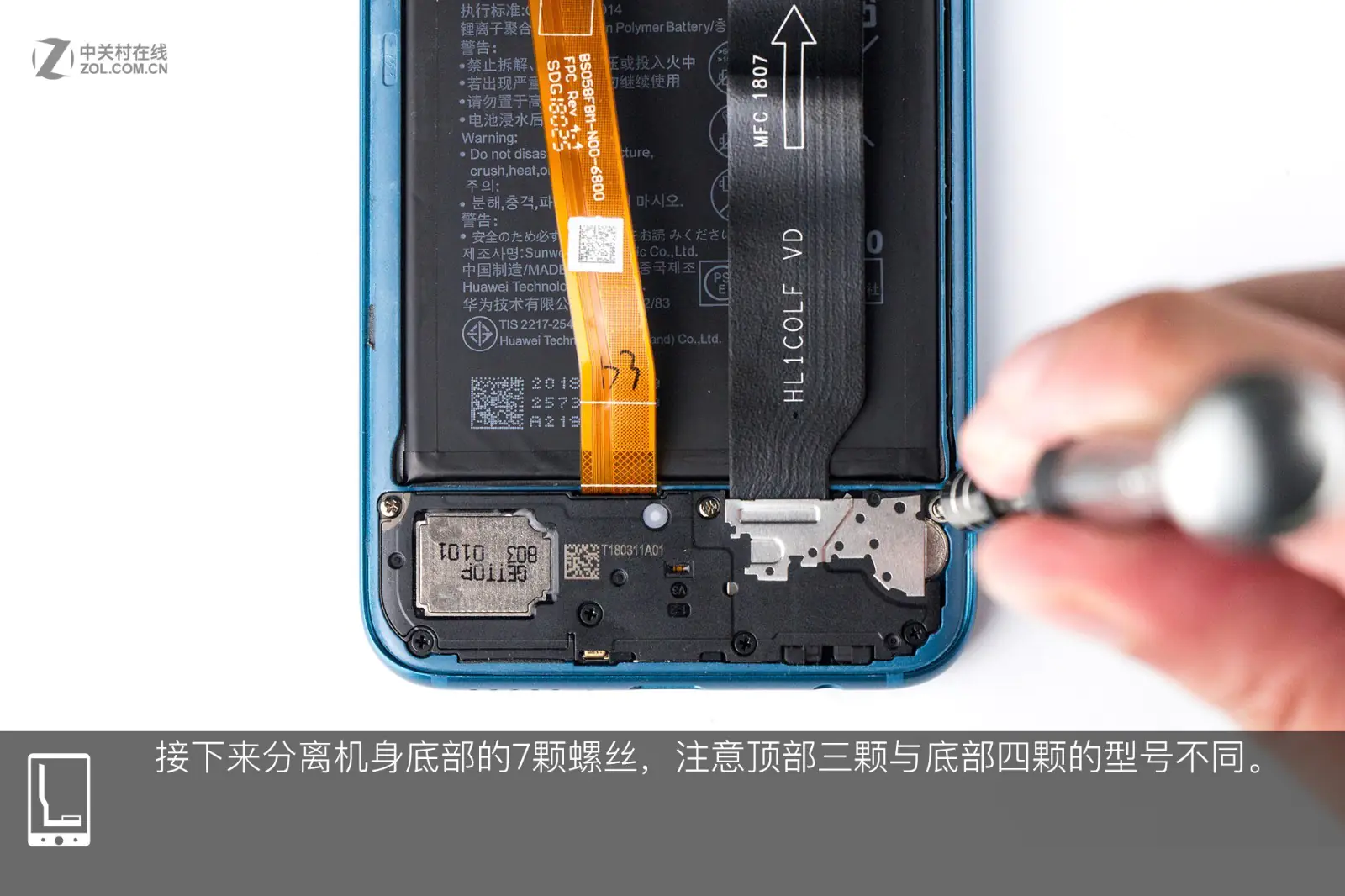
Now, remove the seven screws at the bottom.
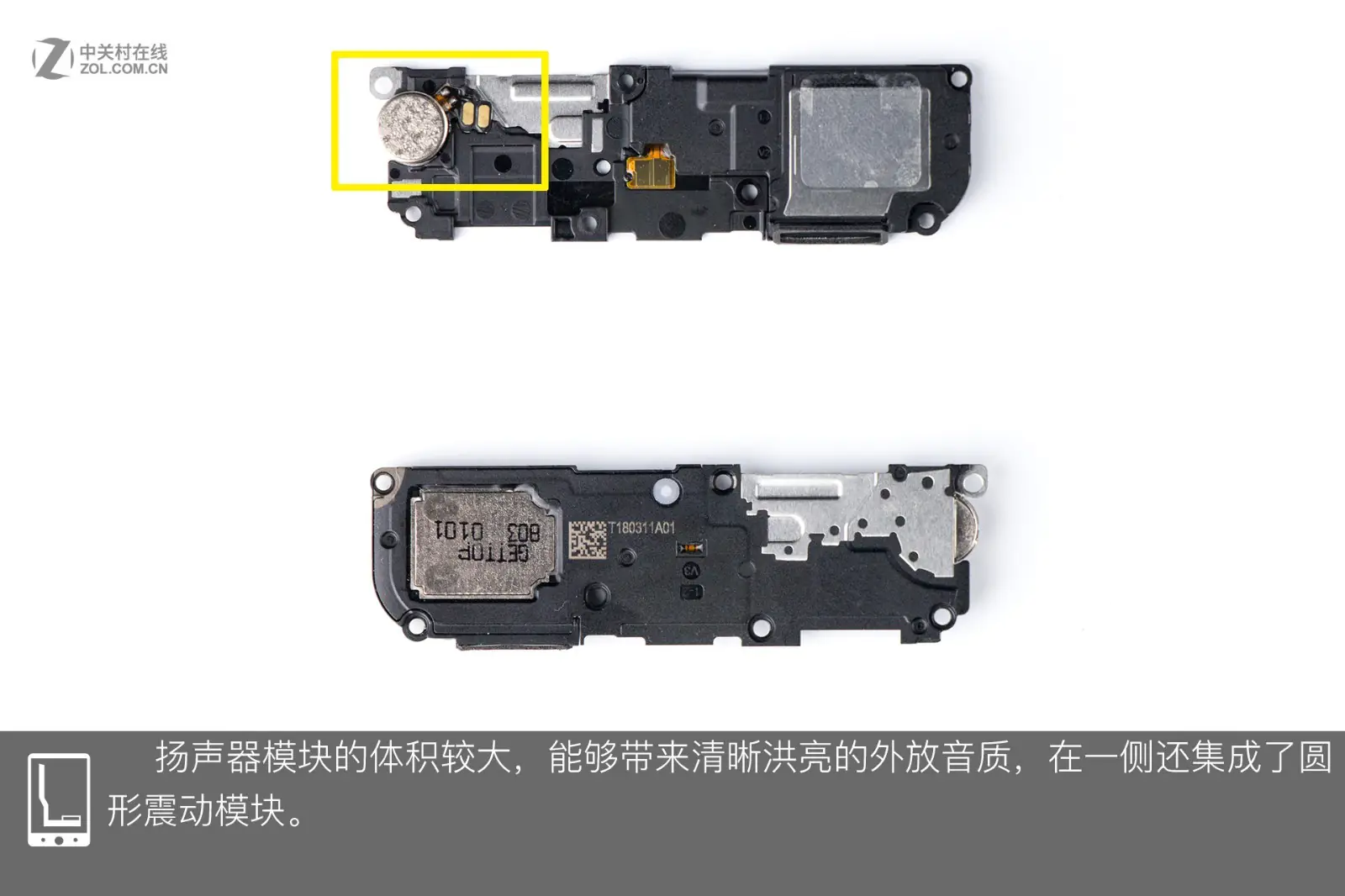
The speaker module can deliver loud and clear sound. We can also see the vibration module.
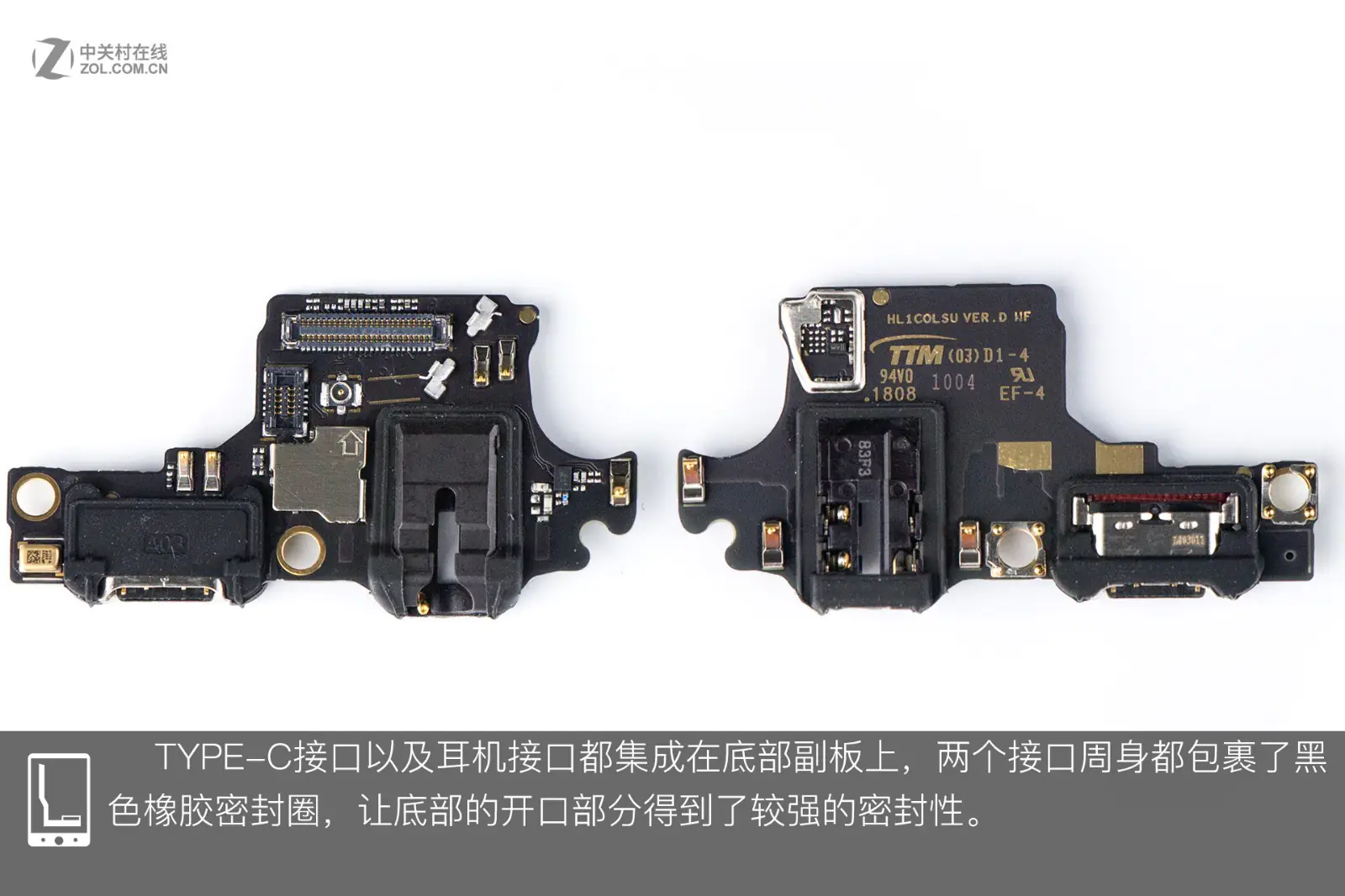
The Type-C port and earphone port have been integrated into the vice board. Two ports are covered by black rubber.
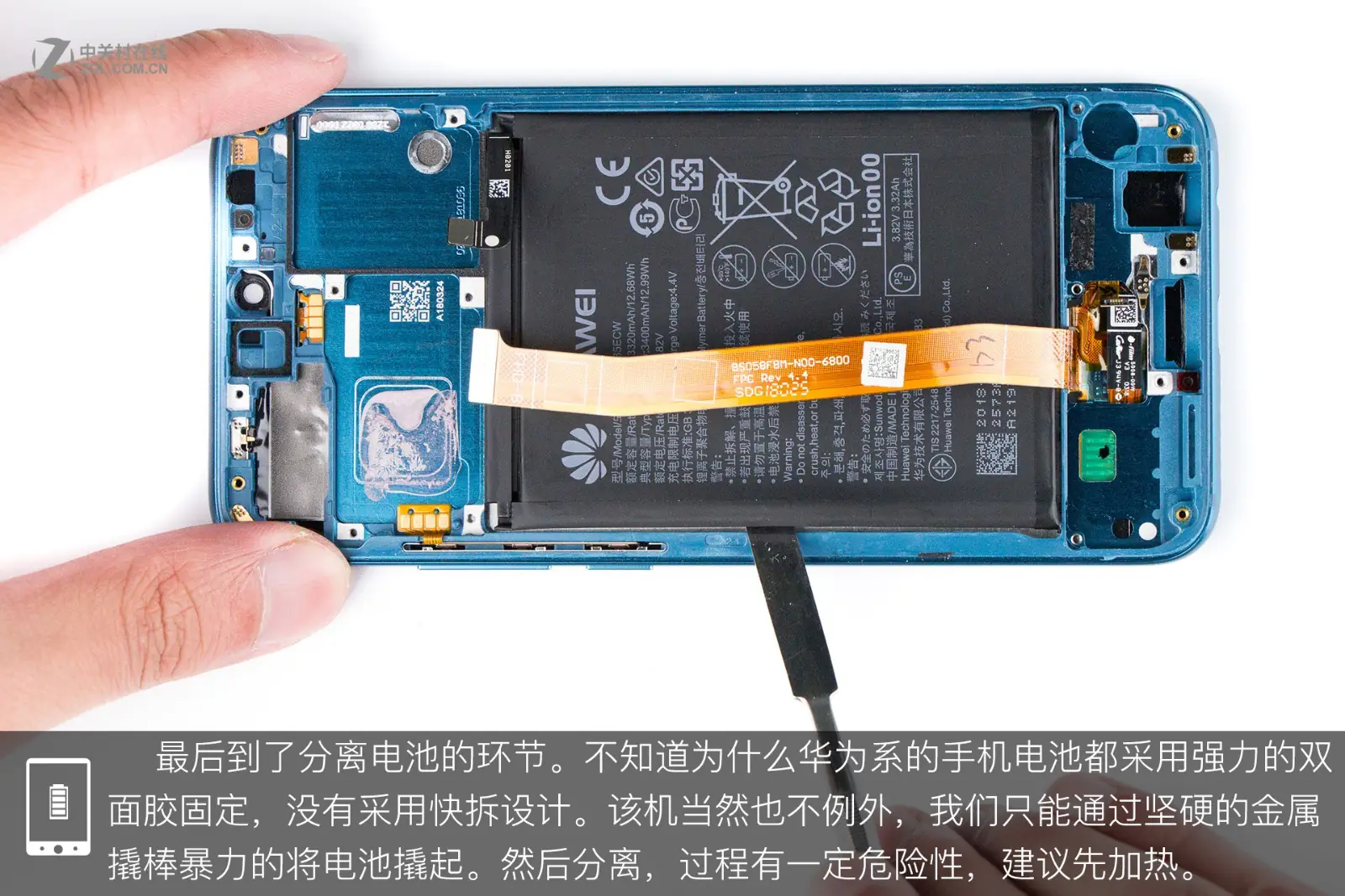
Then, we will remove the battery. This battery is secured with double-sided tape, so I have to pry it up with a pry tool.
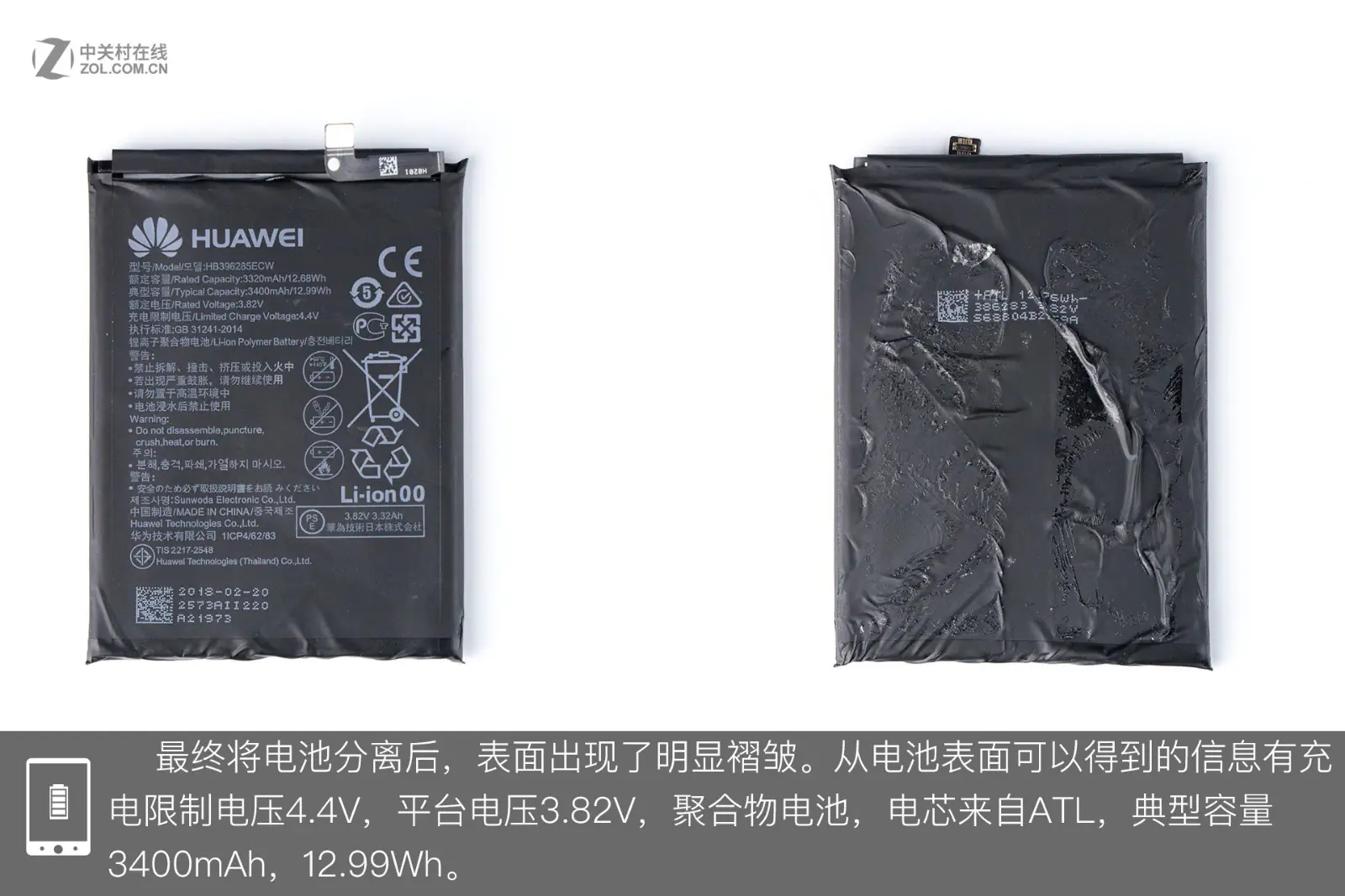
After removing the battery, we can see information on this battery. Its charge limit voltage is 4.4V, and its rated voltage is 3.82V. The battery cell is manufactured by ATL. The battery has a capacity of 3400mAh.
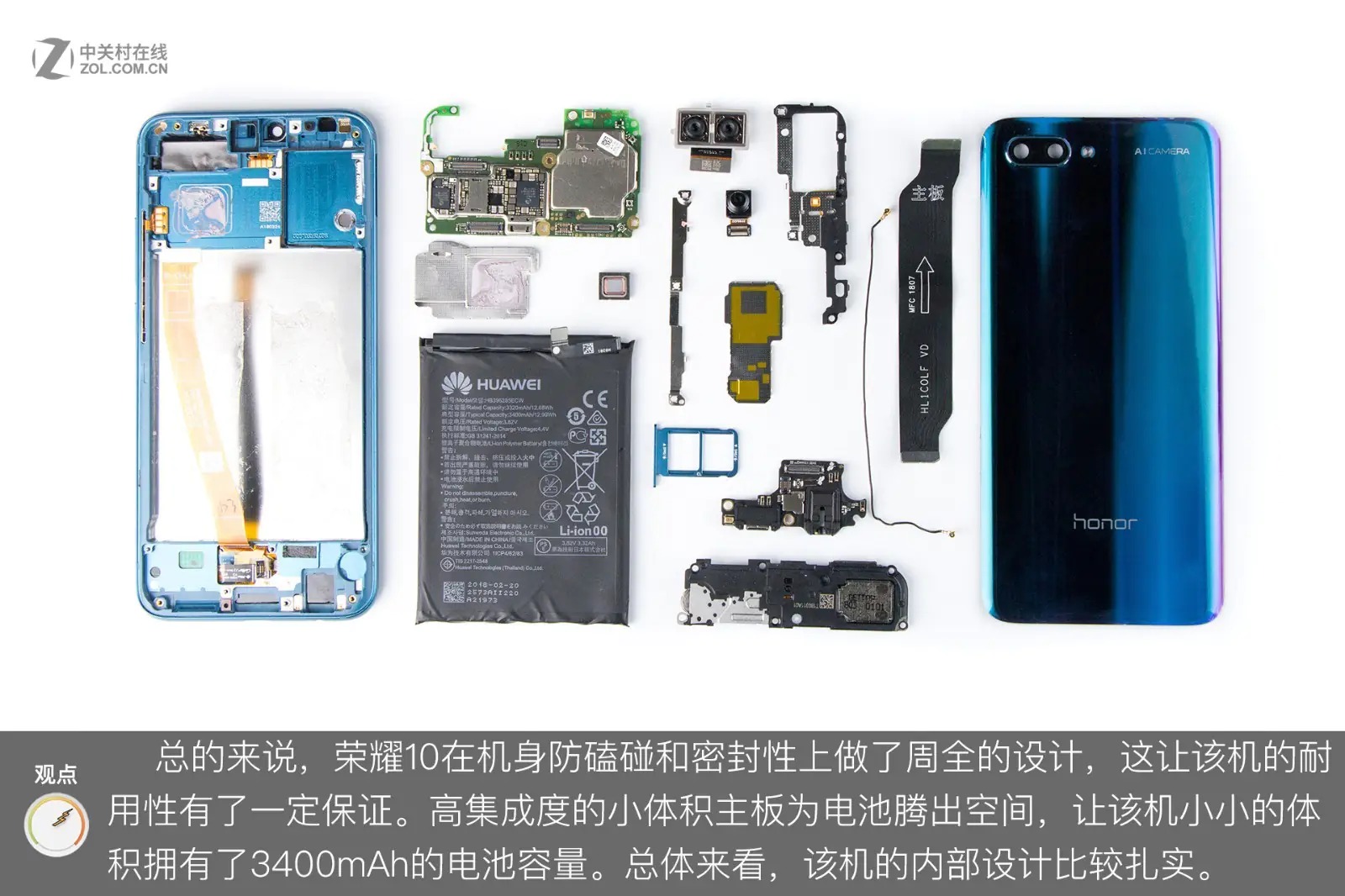
After the teardown, we found that the phone has a good sealing design, which enhances the durability of the body. The small motherboard provides more space for the 3400mAh battery. Overall, the Honor 10 has good workmanship and a reasonable internal design.